Isotype Controls: Revealing Non-Specificity in Drug Development
 Publication Date:2025-06-11
 Page Views:1826
Fc Engineering: A Core Strategy for Functional Optimization of Therapeutic Antibodies
In antibody drug development, Fc engineering finds broad and critical applications. It enhances antibody-dependent cellular cytotoxicity (ADCC) in the tumor microenvironment to increase tumor cell-killing efficacy; suppresses complement activation that may occur during autoimmune disease treatment, thereby reducing adverse drug reactions; extends antibody serum half-life by optimizing FcRn binding properties to decrease dosing frequency; and enables tissue-specific antibody delivery to improve drug accumulation in target tissues. Authoritative data from Nature Reviews Drug Discovery (2023) reveals that 87% of the 1,200 antibody therapeutics currently in global development employ Fc engineering—a proportion that has increased by 3.2-fold since 2018. This underscores the pivotal role and growing trajectory of Fc engineering in the field of antibody drug R&D.
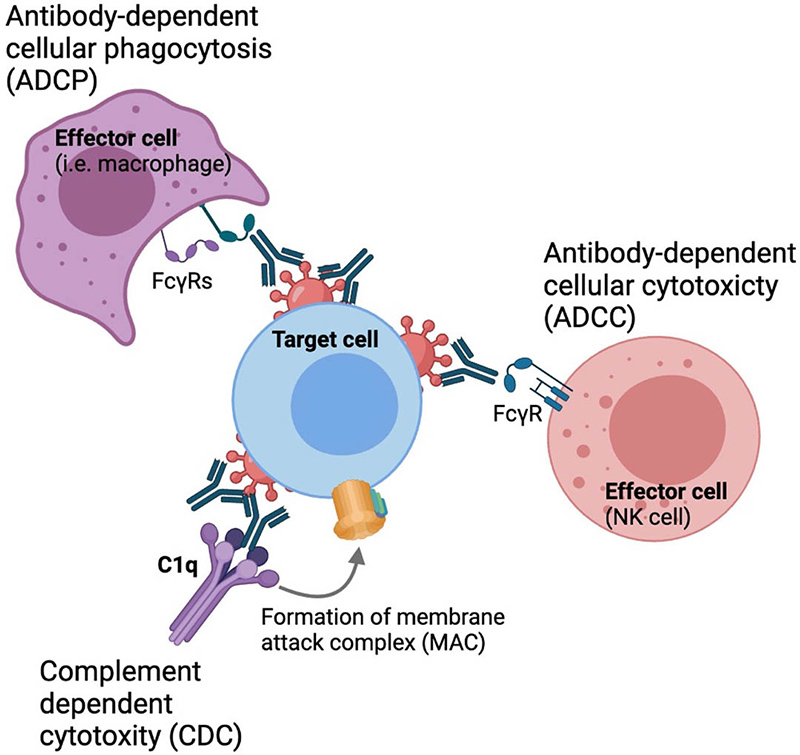
Fc-mediated effector functions
Fc Engineering Strategy Analysis and Quality Control with Isotype Controls
IgG1: Functional Versatility and Balancing Strategies
As the "workhorse" of therapeutic antibody development, IgG1 constitutes 65% of commercialized antibody therapeutics. Its Fc domain contains 12 critical functional sites where precise functional modulation can be achieved through "molecular switch" modifications.
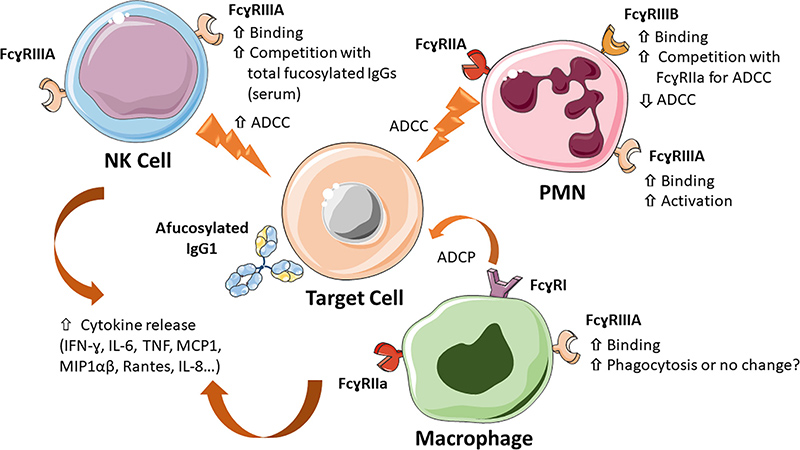
Major mechanisms of action of Fc core afucosylated IgG1 antibodies
In clinical applications, numerous successful Fc engineering case studies have robustly validated the effectiveness of this strategy. Roche's Ocrelizumab, featuring the D239E/L241E double mutation, demonstrated a 40-fold increase in Fc binding affinity to FcγRIIIa. This significantly enhanced the antibody's B-cell depletion efficiency, offering a more effective therapeutic approach for relevant diseases. AstraZeneca's Durvalumab employs the L234F/L235E/P331S triple mutation, reducing complement activation capacity to 0.01% of the wild-type level. This effectively mitigates potential adverse reactions associated with complement activation. Sanofi's Nirsevimab, incorporating the M252Y/S254T/T256E mutations, achieved a 10-fold increase in FcRn binding affinity at pH 6.0. This extended its serum half-life to 72 days, substantially reducing dosing frequency for patients and improving treatment adherence.
Selecting appropriate isotype controls is critical for accurately assessing the functional characteristics of engineered antibodies. Products like recombinant IgG1 Fc protein and IgG1 antibody isotype controls provide reliable reference benchmarks for experiments, ensuring result accuracy and reproducibility.
Featured Products: Recombinant IgG1 Fc Protein, IgG1 Antibody Isotype Control
IgG2: Natural Effector Functions and Engineering Approaches
IgG2 exhibits relatively weak natural effector functions, yet further engineering may be required to thoroughly inactivate residual activity in certain applications. For instance, Remanezumab—a migraine-targeting anti-CGRP antibody—incorporates A330S/P331S double mutations to eliminate complement binding capacity, ensuring the drug acts exclusively through signal-blocking mechanisms.
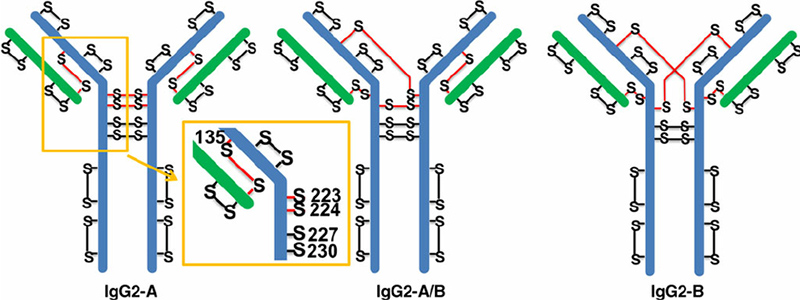
IgG2 and its disulfide isoforms
Selecting matched isotype controls, such as recombinant IgG2 Fc protein and IgG2 antibody isotype controls, prevents structural mismatch interference. This ensures experimental reliability and provides accurate data support for drug development.
Featured Products: Recombinant IgG2 Fc Protein, IgG2 Antibody Isotype Control
IgG4: Hinge Stability Engineering and Low Effector Function Profiles
The Fab arm of IgG4 exchange capability once raised safety concerns, but engineered modifications have led to a remarkable transformation. For stability enhancement, Merck’s Pembrolizumab employs an S228P mutation, significantly reducing aggregation rates after 28 days of storage at 37°C while substantially lowering FcγRIIa binding activity—improving both stability and safety. For fine-tuning effector functions, Sanofi’s Dupilumab utilizes S228P/L235E double mutations to minimize residual ADCC activity to negligible levels, further reducing adverse reaction risks.
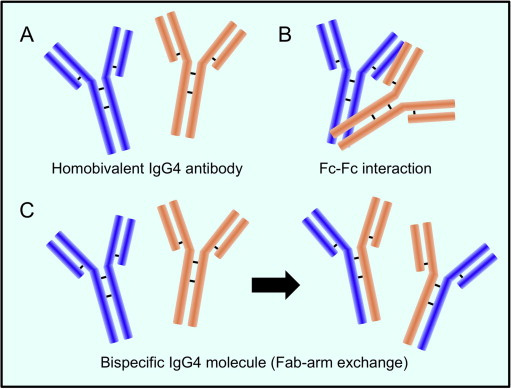
Structural uniqueness of IgG4 antibodies
When engineering IgG4 antibodies, selecting appropriate isotype controls is critical for accurate evaluation. Our recombinant IgG4 Fc protein and IgG4 antibody isotype controls meet this need, providing reliable reference standards for drug development.
Featured Products: Recombinant IgG4 Fc Protein, IgG4 Antibody Isotype Control
IgG3 and IgE: Engineering Specialized Subtypes
IgG3 features an extended hinge region (62 amino acids-four times longer than that of IgG1), granting potent complement activation but also rendering it susceptible to metalloprotease cleavage. Its 7-day serum half-life limits clinical utility. The Fc domain of IgE exhibits picomolar affinity for FcεRI receptors, enabling exceptional specificity. Novartis’ Omalizumab targets the Cε3 domain of free IgE, reducing mast cell surface IgE receptor occupancy by 95%, offering an effective therapeutic approach for allergic diseases.
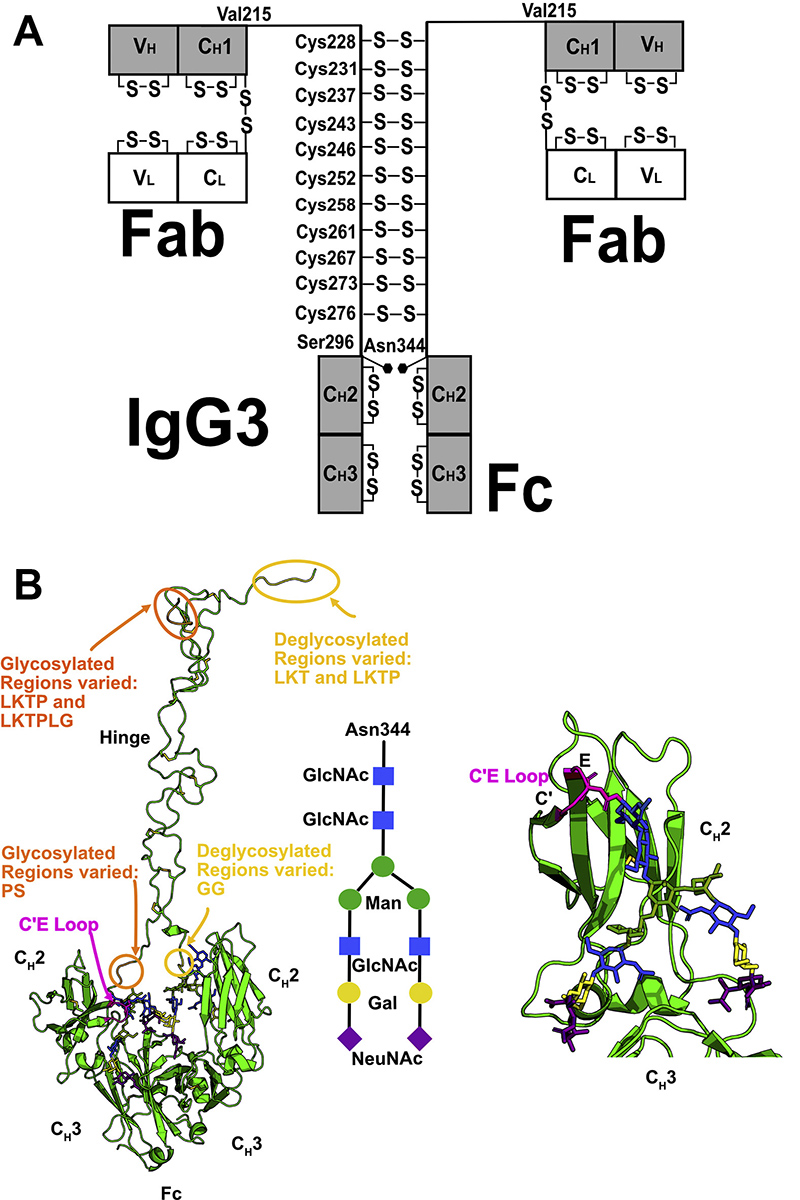
Human IgG3 domains and glycosylation
For the engineering of these specialized subtypes, our recombinant IgG3 Fc protein, IgE Fc protein, and IgG3 antibody isotype controls fulfill critical benchmarking needs. These products deliver reliable reference data for drug development, enabling deeper insights into the properties and functions of specialized antibodies and accelerating therapeutic innovation.
Featured Products: Recombinant IgG3 Fc Protein, IgG3 Antibody Isotype Control, Recombinant IgE Fc Protein
ACROBiosystems' Comprehensive Fc Isotype Control Solutions for Biopharmaceutical Innovation
Fc engineering plays a pivotal role throughout antibody drug development, enabling critical functional optimizations—from enhancing tumor-killing capacity and preventing cytokine storms to extending serum half-life and improving structural stability.
We offer dual-format isotype control products featuring wild-type and mutant Fc variants. The native wild-type Fc protein preserves its original conformation, making it ideal for foundational research and control experiments. The mutant Fc is engineered based on clinically validated antibody mutation sites, precisely tailored to meet the engineering requirements of over 20 FDA-approved antibody therapeutics. Flexible options include His/Flag/Biotin/Avitag™ tags, ensuring compatibility across diverse applications such as FACS, ELISA, and SPR. Our solutions provide comprehensive, specialized support for antibody drug R&D and validation, thereby accelerating breakthroughs and advancements in the biopharmaceutical field.
>> ComboX|Recombinant Serum Albumin

>> ComboX, A Combination of Universal Solutions
Reference
1. Phelps M, Balazs A B. Contribution to HIV prevention and treatment by antibody-mediated effector function and advances in broadly neutralizing antibody delivery by vectored immunoprophylaxis[J]. Frontiers in Immunology, 2021, 12: 734304. https://doi.org/10.3389/fimmu.2021.734304
2. Golay J, Andrea A E, Cattaneo I. Role of Fc core fucosylation in the effector function of IgG1 antibodies[J]. Frontiers in Immunology, 2022, 13: 929895. https://doi.org/10.3389/fimmu.2022.929895
3. Jones L M, Zhang H, Cui W, et al. Complementary MS methods assist conformational characterization of antibodies with altered S–S bonding networks[J]. Journal of the American Society for Mass Spectrometry, 2013, 24(6): 835-845. https://doi.org/10.1007/s13361-013-0582-4
4. Moriyama M, Tanaka A, Maehara T, et al. T helper subsets in Sjögren's syndrome and IgG4-related dacryoadenitis and sialoadenitis: a critical review[J]. Journal of autoimmunity, 2014, 51: 81-88. https://doi.org/10.1016/j.jaut.2013.07.007
5. Spiteri V A, Goodall M, Doutch J, et al. Solution structures of human myeloma IgG3 antibody reveal extended Fab and Fc regions relative to the other IgG subclasses[J]. Journal of Biological Chemistry, 2021, 297(3). https://doi.org/10.1016/jjbc.2021.100995
 Popular ArticlesRelated RecommendationsPopular Events
 Why CAR-T Works in Blood Cancers but Struggles in Solid Tumors2026-05-27Page Views:11
 Universal CAR Detection Solutions: Broad Compatibility, Higher Efficiency!2026-05-25Page Views:21
 Comprehensive Guide to CAR-T Targets in Solid and Hematologic Malignancies2026-05-21Page Views:155
 Bispecific Antibody Lanscape: Evolution, Breakthroughs, and Prospects2026-05-21Page Views:150
 CD19 as a CAR-T Target: Biology, Limitations, and Alternative Strategies2026-05-20Page Views:126




 Related Products