


TNF/TNFR Superfamily for Immunology Research and Drug Discovery
>> Scroll to view
| Application Area | Key Biological Functions | Representative Drugs & Mechanism of Action |
|---|---|---|
|
Autoimmune Diseases |
Inflammation suppression, B-cell regulation, anti-fibrosis effects |
Infliximab: Chimeric anti-TNF-α mAb; binds soluble/membrane-bound TNF-α, blocks TNF receptor binding, reduces pro-inflammatory cytokine release, inhibits inflammatory infiltration & tissue damage. Adalimumab: Fully human anti-TNF-α mAb; sustains TNF-α neutralization, reduces synovial inflammation, alleviates joint damage. Etanercept: TNF receptor fusion protein; competitively binds TNF-α, blocks inflammatory signaling, reduces inflammatory mediator production. Telitacicept: Fusion protein; dually inhibits B cell survival factors BAFF & APRIL, reduces aberrant B cell activation/autoantibody production, regulates B cell immune imbalance. |
|
Cancer Therapy |
Immune activation, apoptosis induction, precise targeting |
Ibritumomab tiuxetan: Anti-CD20 mAb conjugated to chelator tiuxetan via thiourea covalent bond; chelates radioactive Y-90, which releases β-rays to induce cell death via free radical generation in target and adjacent cells. |
|
Bone Metabolic Diseases |
Inhibition of bone resorption, prevention and treatment of bone metastasis |
Denosumab: Fully human anti-RANKL mAb; binds RANKL, blocks its interaction with osteoclast surface RANK receptor, inhibits osteoclast activation, proliferation & survival, reduces bone resorption, increases bone mineral density, lowers bone-related event (fracture, bone pain) and bone metastasis risk. |
|
Neurodegenerative Diseases |
Neuroprotection, myelin regeneration, slowing disease progression |
XPro1595: Modified soluble TNF inhibitor; selectively neutralizes soluble TNF-α, reduces neuroinflammation, protects neurons from damage. Spares transmembrane TNF-α signaling, preserves physiological immune regulation, lowers demyelination risk. |
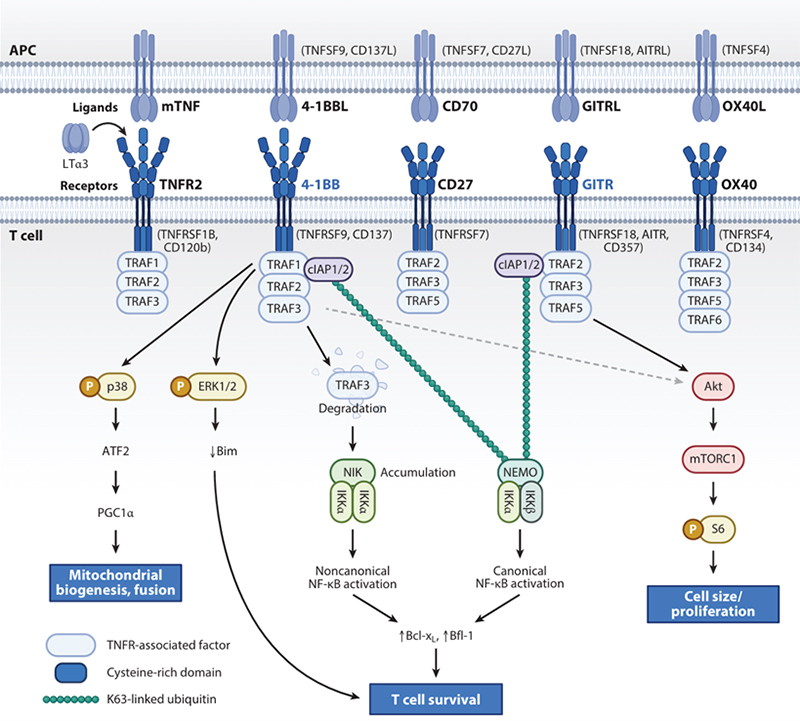
Co-stimulatory TNFRSF members on T cells, along with their ligands and representative signaling pathways.
Source: doi: 10.1146/annurev-immunol-082423-040557
Target-overexpressing cell lines and reporter cell lines;
ELISA- and TR-FRET-based inhibitor screening kits.
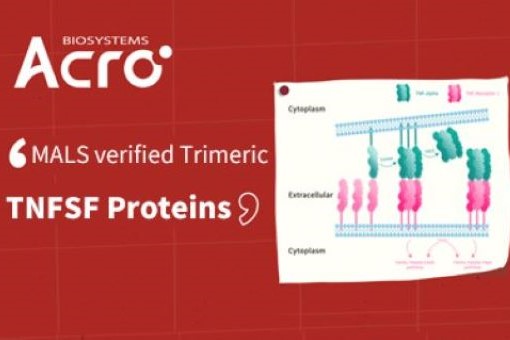
 Members of the TNFSF family, including OX40L, CD40L, CD27L, 4-1BBL, GITRL and CD30L, typically exist as membrane-anchored or soluble homotrimers in their native state.
The trimeric structure can effectively promote binding to the corresponding receptors and further activate downstream signaling pathways. Recombinant proteins that preserve the native trimeric conformation more accurately mimic physiological ligand–receptor interactions.
For antibody discovery, immunization with correctly assembled trimeric proteins enables recognition of native conformational epitopes, increasing the likelihood of generating functional antibodies that block receptor–ligand interactions.
Maintaining the correctly folded native conformations also preserve high biological activity, providing reliable reagents for target validation, antibody screening, and TNF/TNFR-targeted drug discovery.
Product Features of Target Proteins
High purity verified by MALS/HPLC
High bioactivity verified by ELISA/SPR/FACS and other assays
Applicable to multiple scenarios such as neutralizing antibody verification
Strict QC testing ensures high batch-to-batch consistency
Product List
| Ligand | Receptor |
|---|---|
| 4-1BB Ligand | 4-1BB |
| APRIL | BCMA |
| APRIL | TACI |
| BAFF | BCMA |
| BAFF | BAFFR |
| BAFF | TACI |
| CD27 Ligand | CD27 |
| CD30 Ligand | CD30 |
| CD40 Ligand | CD40 |
| Fas Ligand | Fas |
| GITR Ligand | GITR |
| LIGHT | HVEM |
| LIGHT | LTβR |
| LT-β | LTβR |
| Ligand | Receptor |
|---|---|
| LT-α | TNFR1 |
| LT-α | TNFR2 |
| OX40 Ligand | OX40 |
| TNFSF11 | RANK |
| TNFSF11 | OPG |
| TNF-α | TNFR1 |
| TNF-α | TNFR2 |
| TRAIL | TRAIL R3 |
| TRAIL | TRAIL R4 |
| TRAIL | TRAIL R1 |
| TRAIL | TRAIL R2 |
| TL1A | DR3 |
| TWEAK | TWEAK R |
Validation Data
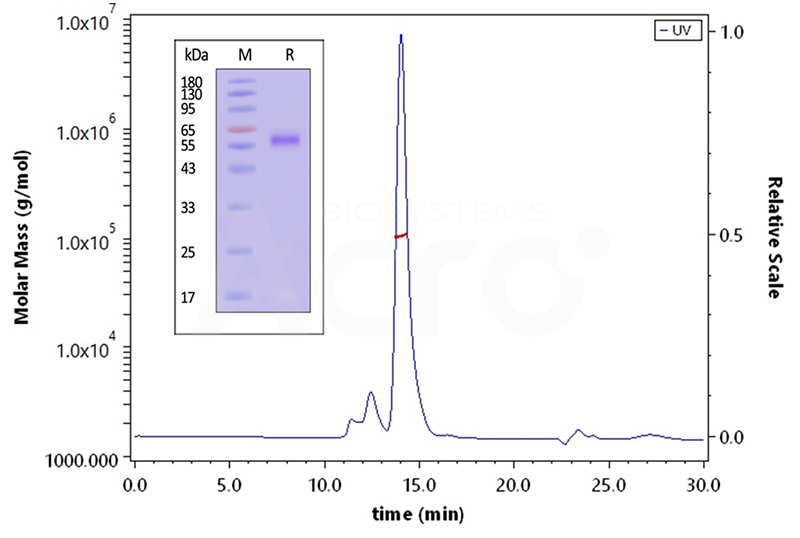
Human 4-1BB Protein, Mouse IgG2a Fc Tag on SDS-PAGE under reducing (R) condition. The gel was stained with Coomassie Blue. The purity of the protein is greater than 95% (With Star Ribbon Pre-stained Protein Marker). The purity of Human 4-1BB Protein, Mouse IgG2a Fc Tag (Cat. No. 41B-H5256) is more than 85% and the molecular weight of this protein is around 95-125 kDa verified by SEC-MALS.
Request Report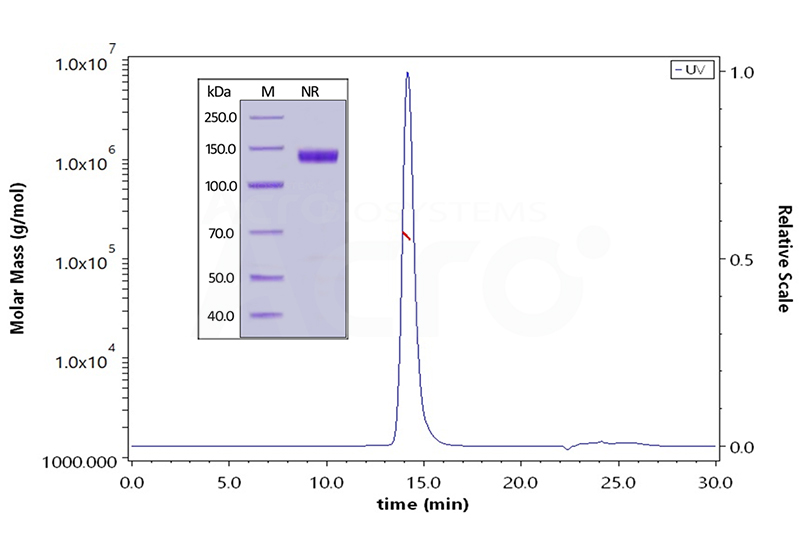
Human CD27 Ligand Protein, Fc Tag on SDS-PAGE under non-reducing (NR) condition. The gel was stained with Coomassie Blue. The purity of the protein is greater than 95%. The purity of Human CD27 Ligand Protein, Fc Tag (Cat. No. CDL-H5266) is more than 85% and the molecular weight of this protein is around 160-190 kDa verified by SEC-MALS.
Request Report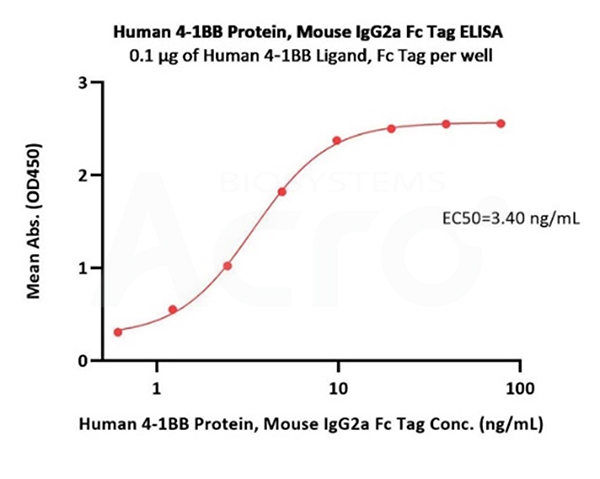
Immobilized Human 4 1BB Ligand, Fc Tag at 1 μg/mL (100 μL/well) can bind Human 4-1BB Protein, Mouse IgG2a Fc Tag (Cat. No. 41B-H5256) with a linear range of 0.6-5 ng/mL (QC tested).
Request Protocol
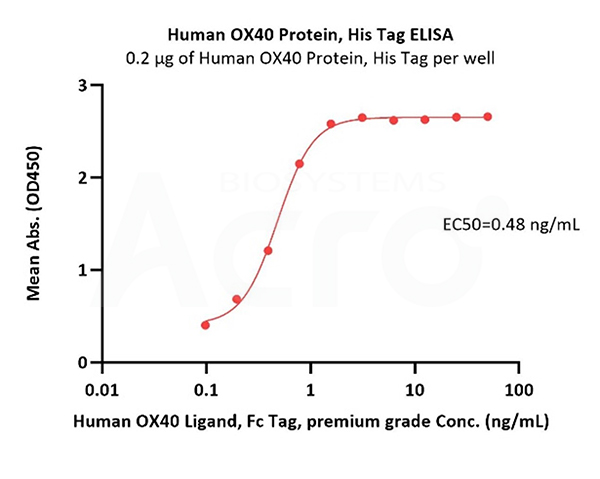
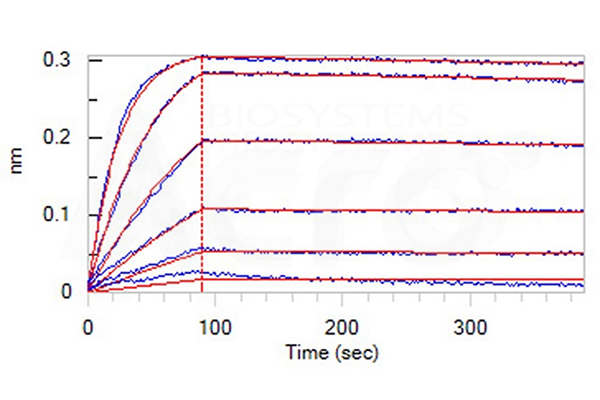
Loaded Biotinylated Human OX40, Avitag,His Tag (Cat. No. TN4-H82E4) on SA Biosensor, can bind Human OX40 Ligand Protein, His Tag (Cat. No. OXL-H52Q8) with an affinity constant of 0.127 nM as determined in BLI assay (ForteBio Octet Red96e) (Routinely tested).
Request Protocol
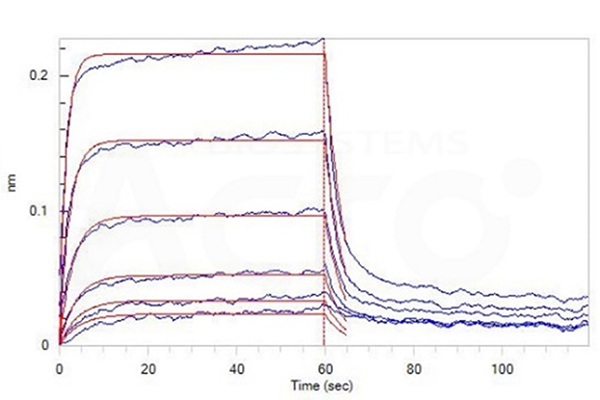
Loaded Human BAFF Protein, Fc Tag (Cat. No. BAF-H5261) on Protein A Biosensor, can bind Biotinylated Human BCMA, His,Avitag (Cat. No. BCA-H82E4) with an affinity constant of 0.69 μM as determined in BLI assay (ForteBio Octet Red96e) (Routinely tested).
Request Protocol
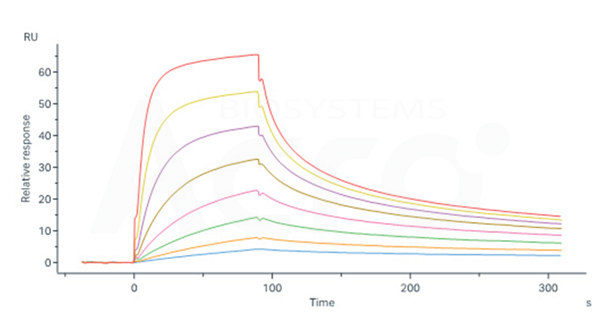
Human DR3 Protein, His Tag (Cat. No. TN5-H52H3) immobilized on CM5 Chip can bind Human TL1A, His Tag (Cat. No. TLA-H5243) with an affinity constant of 45.8 nM as determined in a SPR assay (Biacore 8K) (Routinely tested).
Request Protocol
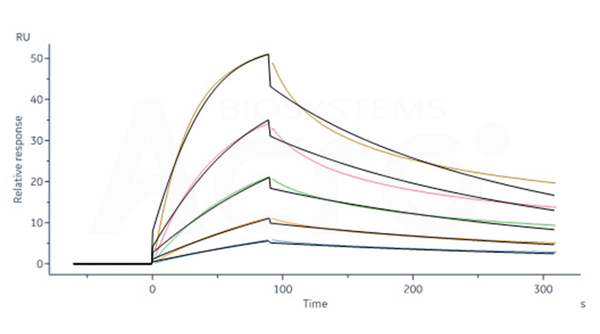
Human CD40 Protein, Fc Tag (Cat. No. CD0-H5253) captured on Protein A Chip can bind Human CD40 Ligand, His,Flag Tag, premium grade (Cat. No. CDL-H52Db) with an affinity constant of 1.20 nM as determined in a SPR assay (Biacore 8K) (Routinely tested).
Request Protocol
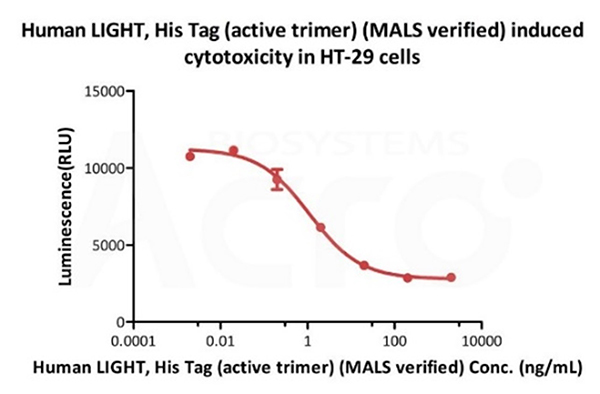
Human LIGHT Protein, His Tag (Cat. No. LIT-H5242) induced cytotoxicity in HT-29 cells. The ED50 for this effect is 1.11-3.87 ng/mL (Routinely tested).
Request Protocol
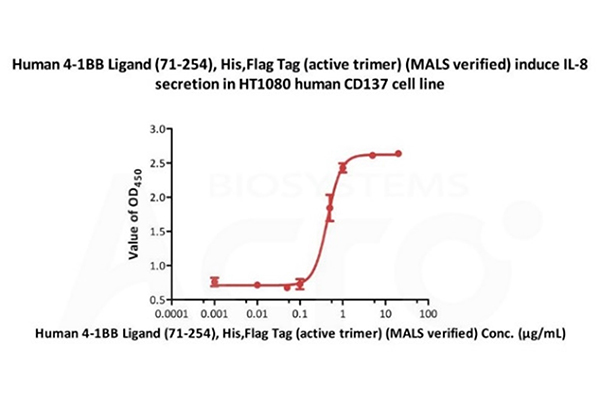
Human 4-1BB Ligand (71-254) Protein, His, Flag Tag (Cat. No. 41L-H52D4) induce IL-8 secretion in HT1080 human CD137 cell line. The EC50 for this effect is 0.20-0.44 μg/mL (Routinely tested).
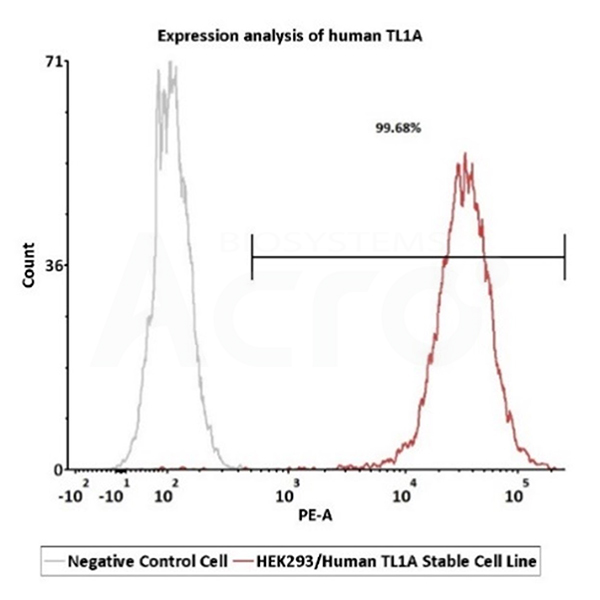
Expression analysis of human TL1A on HEK293/Human TL1A Stable Cell Line by FACS.Cell surface staining was performed on HEK293/Human TL1A Stable Cell Line (Cat.No. CHEK-ATP142) or negative control cell using anti-human TL1A Antibody followed by staining with PE anti-human IgG Fc Antibody.
Request Protocol
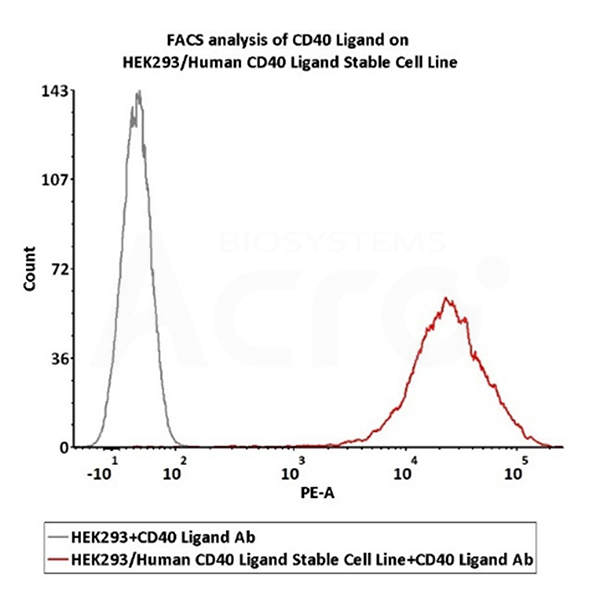
FACS analysis of CD40 Ligand on HEK293/Human CD40 Ligand Stable Cell Line.FACS assay shows that CD40 Ligand Antibody can bind to HEK293/Human CD40 Ligand Stable Cell Line (Cat.No. CHEK-ATP041). HEK293/Human CD40 Ligand Stable Cell Line was red line, Negative control HEK293 cells was grey line (QC tested).
Request Protocol
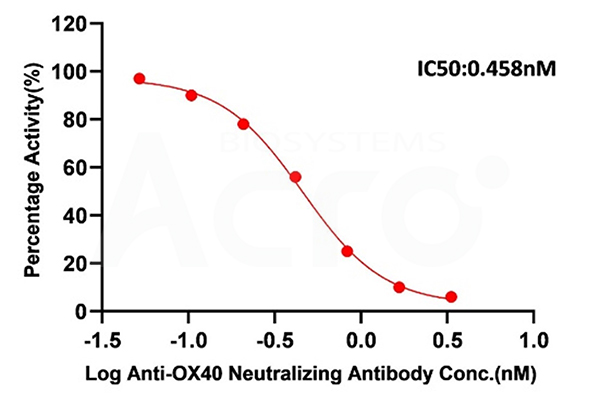
INHIBITION OF OX40[Biotinylated]: OX40 Ligand BINDING BY ANTI-OX40 NEUTRALIZING ANTIBODY Serial dilutions of Anti-OX40 Neutralizing antibody (Catalog # EP162-C04) (1:1 serial dilution, from 0.5 μg/mL to 0.0078125 μg/mL) was added into OX40[Biotinylated]: OX40 Ligand binding reactions. The assay was performed according to the protocol described below. Background was subtracted from data points prior to log transformation and curve fitting (QC tested).
Request Protocol
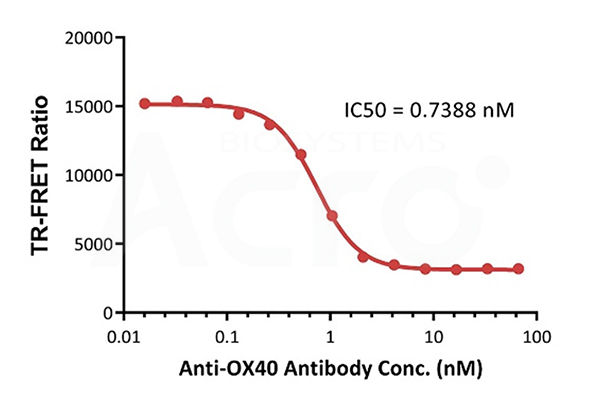
Inhibition of Europium-chelate labeled Human OX40 Ligand protein: FA Labeled Human OX40 Protein binding by Anti-OX40 Antibody Premix serial dilutions of Anti-OX40 Antibody (1:2 serial dilution, from 10 μg/mL to 0.0024 μg/mL (66.67-0.016 nM)) and FA Labeled Human OX40 Protein. Then add Human OX40 Ligand Protein Europium-chelate and incubate at room temperature (20℃-25℃) for 1 hours. Detection was performed with IC50 of 0.7388nM. The assay was performed according to the above-described Datasheet (QC tested).
Request Protocol
Related Product Recommendations
Resource download
- Overview of the TNF/TNFR Superfamily
- Product Features of Target Proteins
- Product List
- Validation Data
- Related Product Recommendations
- Resource download



Online Message
[North America]: 1 Innovation Way, Newark, DE 19711, USA [Switzerland]: ACRObiosystems AG, c/o Zug Dammstrasse Centre AG, Dammstrasse 19, 6300 Zug Switzerland
Email:order@acrobiosystems.com
Copyright © 2025 ACROBiosystems. All Rights Reserved