
BsAbs Targeting Immunomodulatory Checkpoints for Cancer Therapy

The development of immune checkpoint inhibitors (ICIs) has revolutionized the standard of care for cancer treatment, among which blocking the PD-1/PD-L1 signaling pathway is one of the most successful immunotherapeutic strategies to date.
Studies have shown that the development of novel bsAbs targeting immune checkpoints is an effective strategy to overcome these challenges. This type of bsAbs can address the compensatory mechanisms among multiple immune checkpoints by blocking them, thereby enhancing therapeutic efficacy. Furthermore, bsAbs can more precisely bridge immune cells and tumor cells decrease adverse reactions as well as drug dosage.
To support relevant research, we have developed over 500 products for immune checkpoint proteins, along with functional cell lines, inhibitor screening kits, and PK assay kits. This suite of products meets the needs of the entire workflow—from immunology studies, antibody screening and characterization, and stability determination to late-stage production quality control—helping to accelerate the research and development of immunotherapies.
Click to View More Detailed Information icon
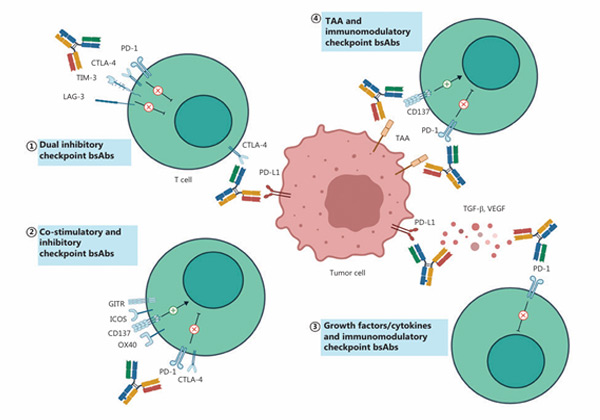
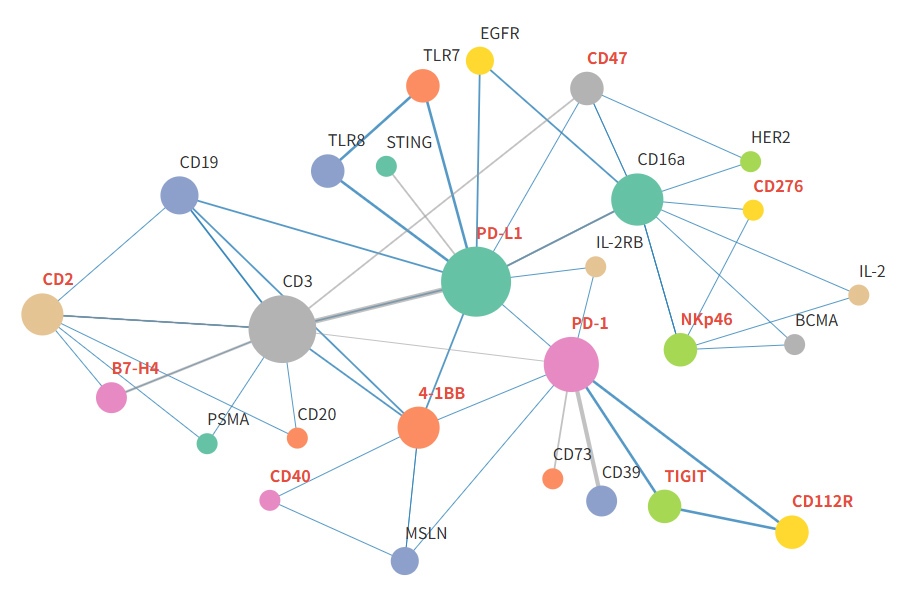
The bsAbs targeting immunomodulatory checkpoints

The bsAbs targeting immunomodulatory checkpoints. The checkpoint-targeted bsAbs are mainly divided into three categories: targeting dual inhibitory checkpoints (①); targeting co-stimulatory and inhibitory checkpoints (②); and targeting immunomodulatory checkpoints and non-checkpoint targets (③④).
Source:doi: 10.20892/j.issn.2095-3941.2023.0002

Classification of BsAbs Targeting Immune Checkpoints
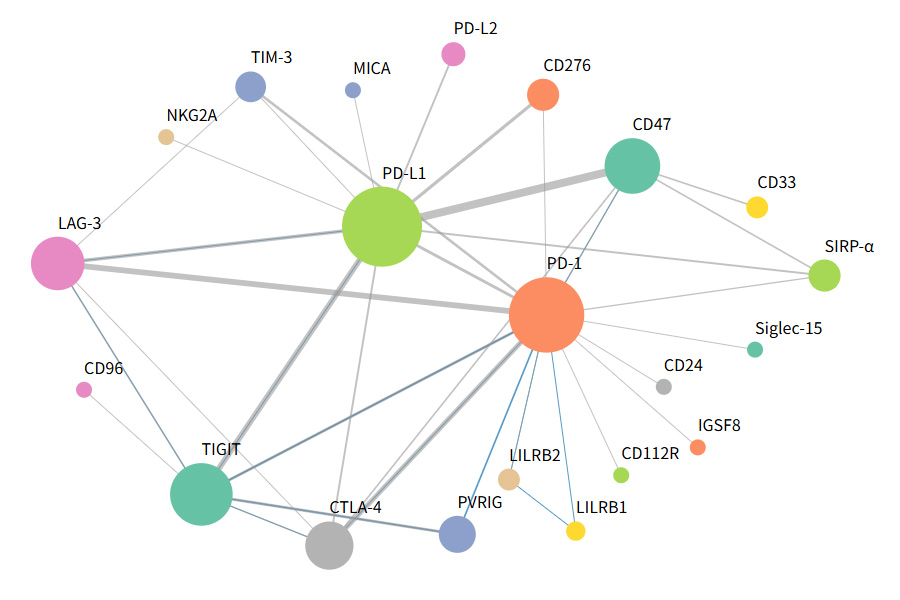
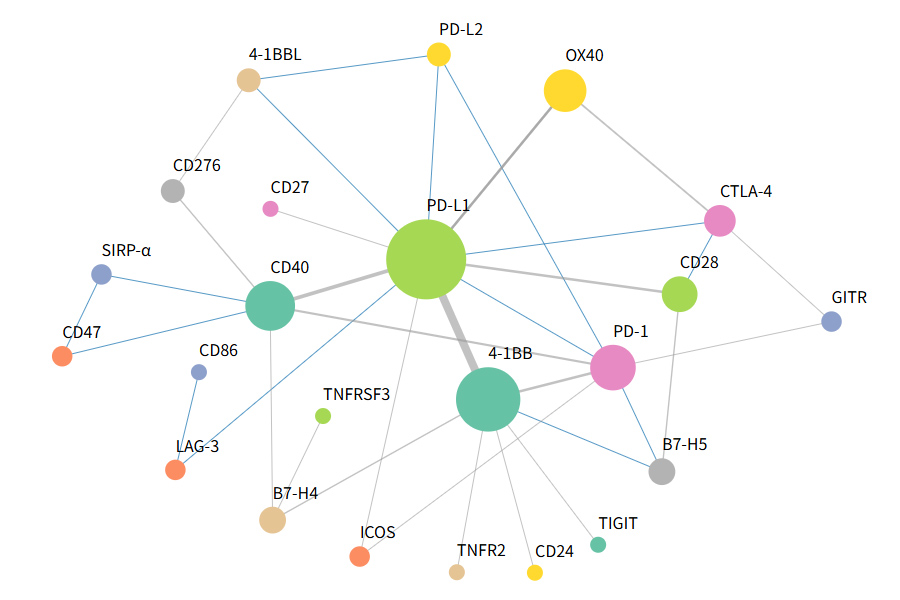
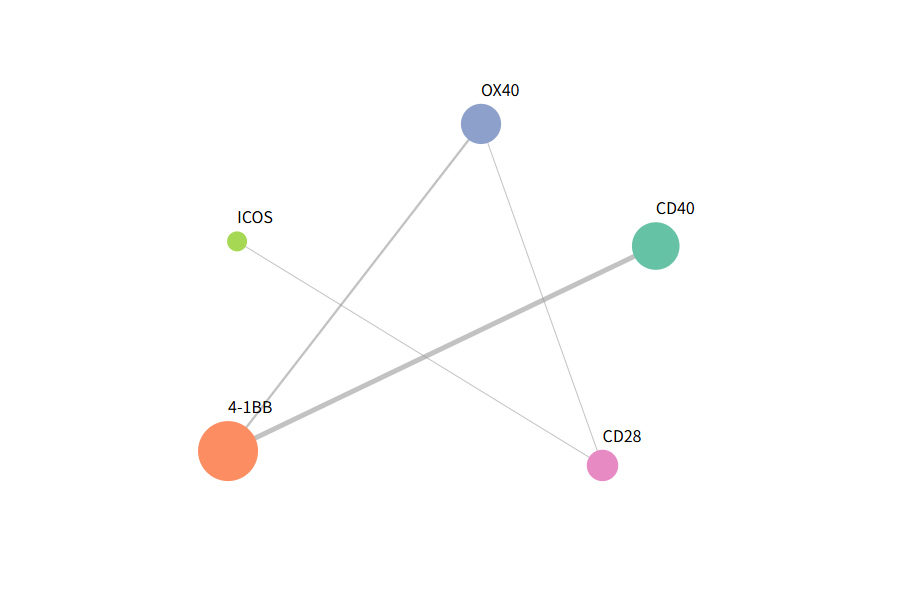
BsAbs targeting immune checkpoints can be mainly classified into the following types:
Targeting dual co-inhibitory immune checkpoints
Targeting dual co-stimulatory immune checkpoints
Targeting co-stimulatory and co-inhibitory immune checkpoints
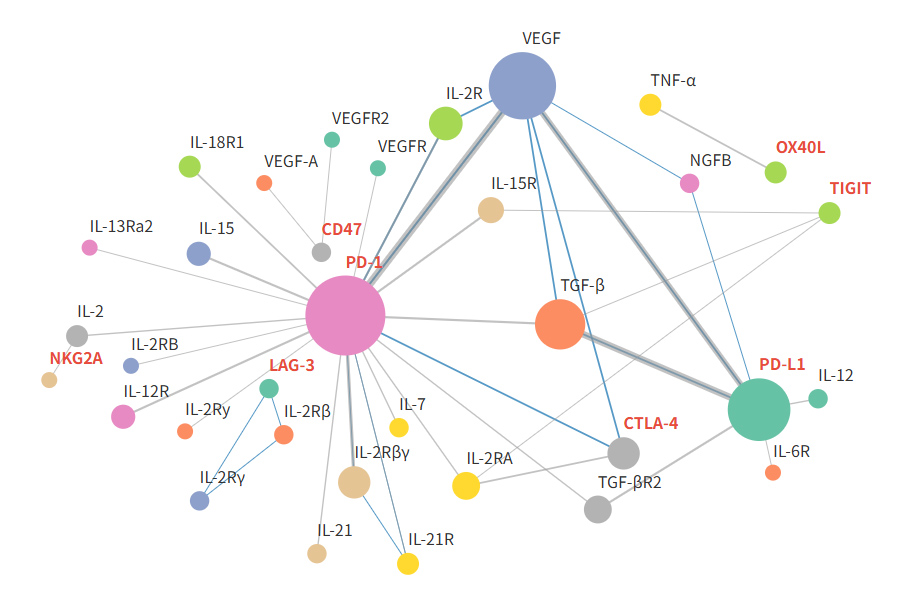
Targeting immune checkpoints, cytokines, and their receptors
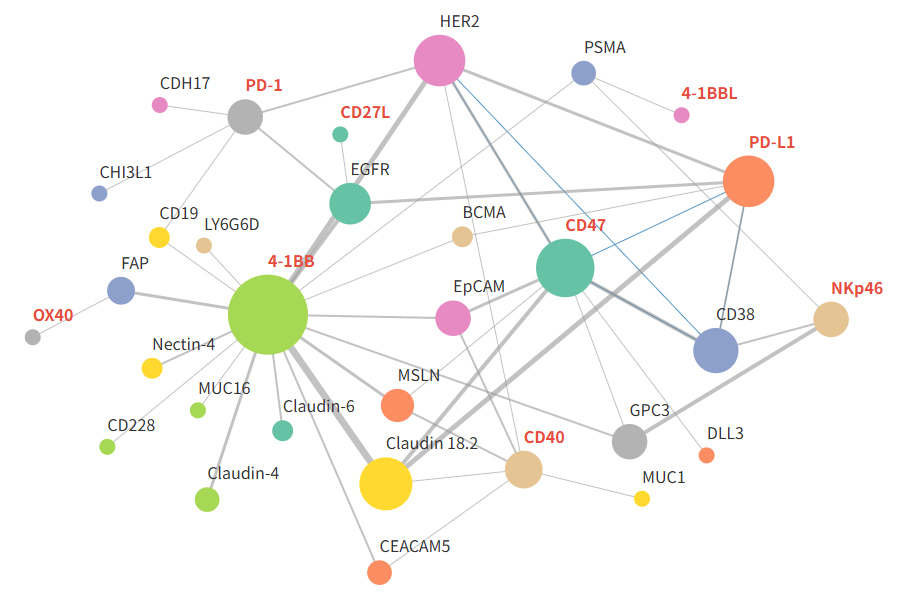
Targeting immune checkpoints and TAAs
Targeting immune checkpoints and other non-immune checkpoints

Validation Data

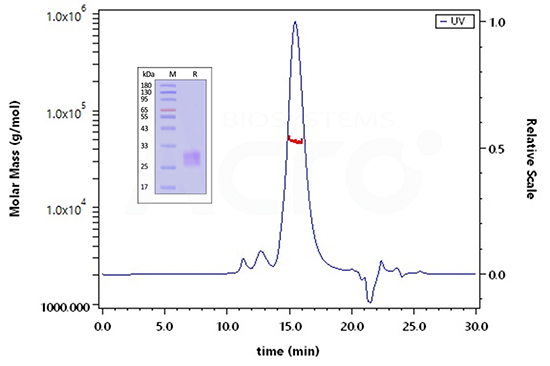
SEC-MALS Validation for Protein Structure and Purity

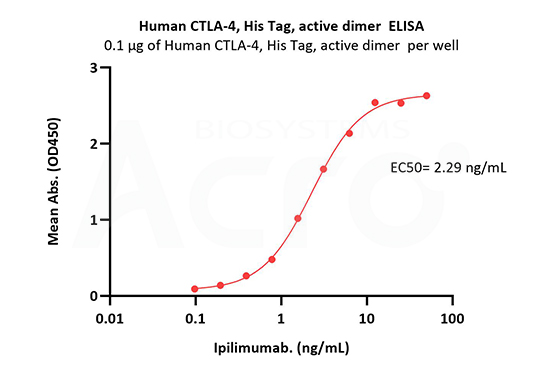
The purity of Human CTLA-4, His Tag (Cat. No. CT4-H52H9) is more than 90% and the molecular weight of this protein is around 45-60 kDa verified by SEC-MALS.

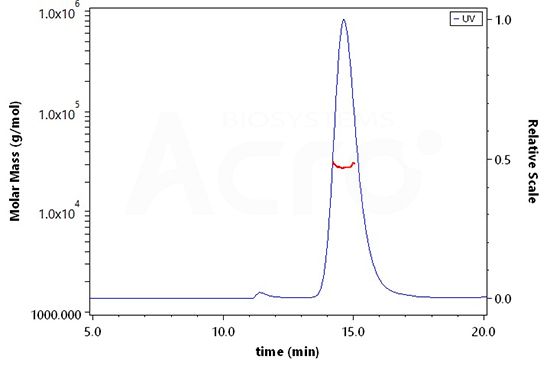
SEC-MALS Validation for Protein Structure and Purity

The purity of Biotinylated Human 4-1BB, His,Avitag (Cat. No. 41B-H82E6) is more than 90% and the molecular weight of this protein is around 25-35 kDa verified by SEC-MALS.

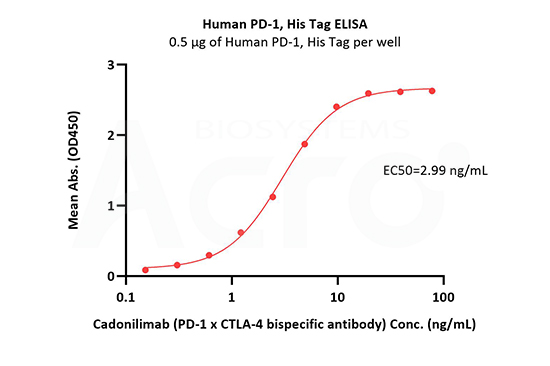
The binding activity to bsAbs was verified by ELISA

Immobilized Human PD-1, His Tag (Cat. No. PD1-H5221) at 5 μg/mL, add increasing concentrations of Cadonilimab (PD-1 x CTLA-4 bispecific antibody) and then add Biotinylated Human CTLA-4, Fc,Avitag (Cat. No. CT4-H82F3) at 0.2 μg/mL. Detection was performed using HRP-conjugated Streptavidin (Acro, Cat. No. STN-NH913) with sensitivity of 2.99 ng/mL (Routinely tested).

Request Protocol

The binding activity to bsAbs was verified by ELISA

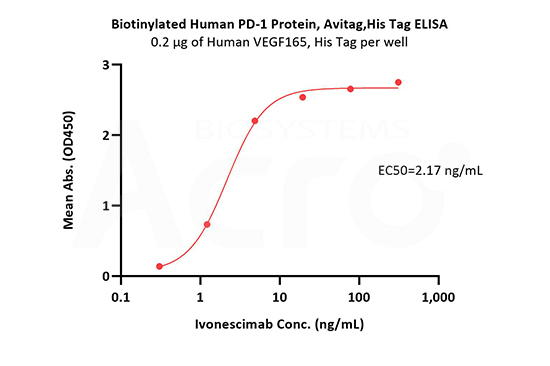
Immobilized Human VEGF165, His Tag (Cat. No. VE5-H5248) at 2 μg/mL, add increasing concentrations of Ivonescimab and then add Biotinylated Human PD-1 Protein, Avitag,His Tag (Cat. No. PD1-H82E4) at 2 μg/mL. Detection was performed using HRP-conjugated Streptavidin (Acro, Cat. No. STN-NH913) with sensitivity of 2.17 ng/mL (Routinely tested).

Request Protocol

The binding activity to Abs was verified by ELISA

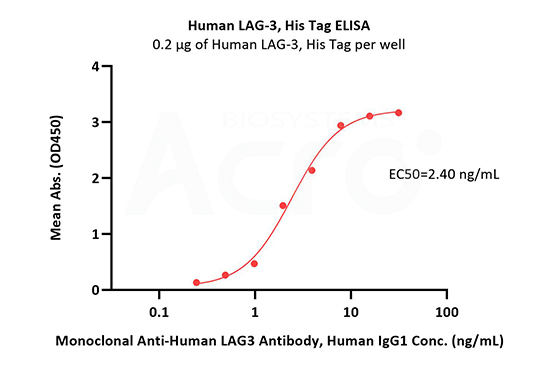
Immobilized Human LAG-3, His Tag (Cat. No. LA3-H5222) at 2 μg/mL (100 μL/well) can bind Monoclonal Anti-Human LAG3 Antibody, Human IgG1 with a linear range of 0.2-4 ng/mL (QC tested).

Request Protocol

The binding activity to Abs was verified by ELISA

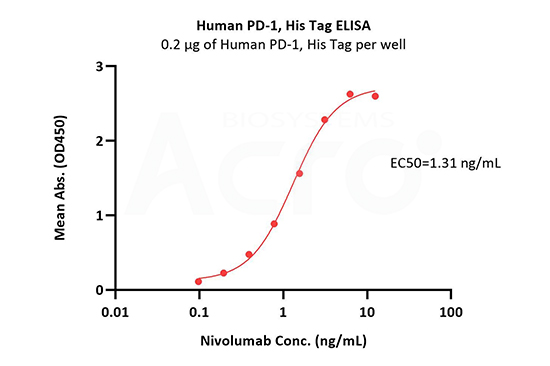
Immobilized Human PD-1, His Tag (Cat. No. PD1-H5221) at 2 μg/mL (100 μL/well) can bind Nivolumab with a linear range of 0.1-3 ng/mL (Routinely tested).

Request Protocol

The binding activity to Abs was verified by BLI/SPR
The binding activity to Abs was verified by SPR/BLI

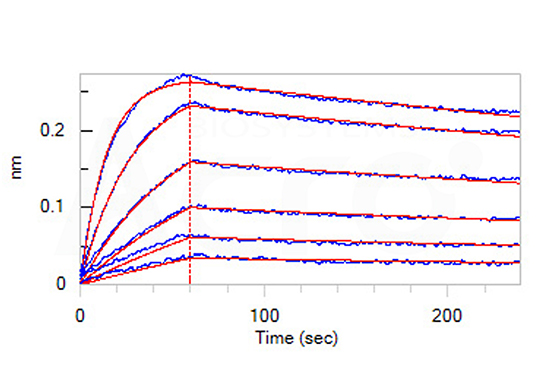
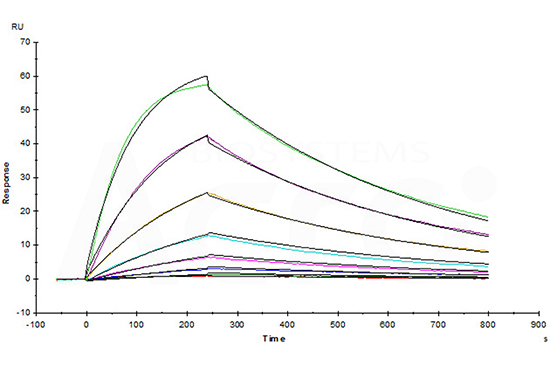
Loaded Anti-OX40 MAb(Human IgG1) on AHC Biosensor, can bind Human OX40 Protein, His Tag (Cat. No. OX0-H5224) with an affinity constant of 6.03 nM as determined in BLI assay (ForteBio Octet Red96e) (Routinely tested).

Request Protocol

The binding activity to Abs was verified by SPR/BLI

Anti-LAG-3 MAb (Human IgG1) captured on CM5 chip via Anti-Human IgG Fc antibodies surface, can bind Human LAG-3, His Tag (Cat. No. LA3-H5222) with an affinity constant of 4.57 nM as determined in a SPR assay (Biacore T200) (Routinely tested).

Request Protocol

Neutralizing Antibody Screening

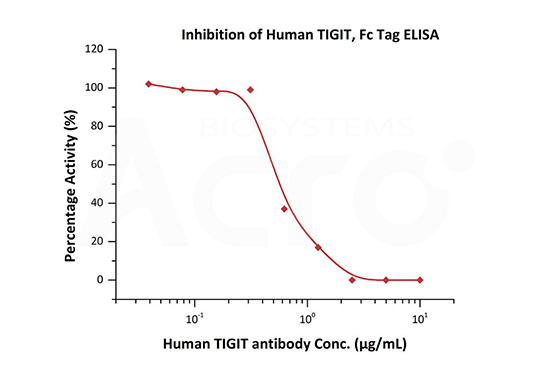
Serial dilutions of Human TIGIT Neutralizing antibody were added into Human TIGIT, Fc Tag (Cat. No. TIT-H5254): Biotinylated Human CD155, Fc,Avitag (Cat. No. CD5-H82F6) binding reactions. The half maximal inhibitory concentration (IC50) is 0.55834 μg/mL (Routinely tested).

Request Protocol

Neutralizing Antibody Screening

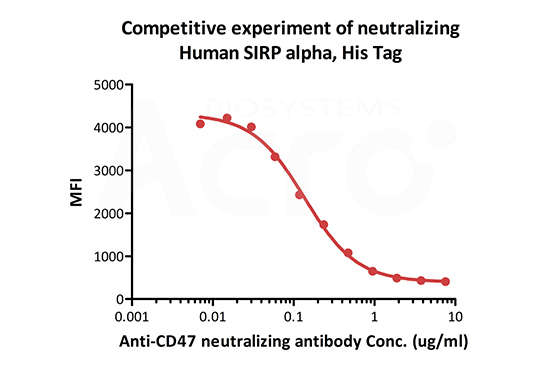
FACS analysis shows that the binding of Human SIRP alpha, His Tag (Cat. No. SIA-H5225) to Jurkat expressing CD47 was inhibited by increasing concentration of neutralizing Anti-CD47 antibody. The concentration of SIRP alpha used is 1 μg/mL.

Request Protocol
Pharmacokinetic Analysis - PK Analysis

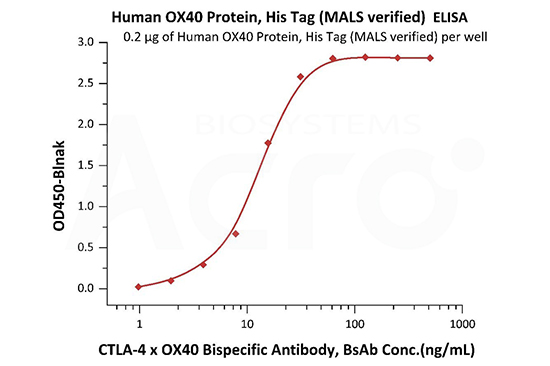
Quantitative Analysis of CTLA-4 x OX40 Bispecific Antibody in Human Serum by Intact Assay. Immobilized Human OX40 Protein, His Tag (MALS verified) (Cat. No. OX0-H5224) at 2 μg/mL, add increasing concentrations of CTLA-4 x OX40 bispecific antibody in 50% Human serum and then add Biotinylated Human CTLA-4, His, Avitag (Cat. No. CT4-H82E3) at 0.2 μg/mL. Detection was performed using HRP-conjugated streptavidin with sensitivity of 4 ng/mL (Intact assay, Routinely tested).

Request Protocol

Pharmacokinetic Analysis - PK Analysis

Quantitative Analysis of CTLA-4 x OX40 Bispecific Antibody in Human Serum by Intact Assay Immobilized Human CTLA-4, His Tag, active dimer (Cat. No.CT4-H52H9) at 2 μg/mL, add increasing concentrations of CTLA-4 x OX40 Bispecific Antibody in 50% Human serum and then add Biotinylated Human OX40, Avitag,His Tag(Cat. No. TN4-H82E4) at 1 μg/mL. Detection was performed using HRP-conjugated streptavidin with sensitivity of 4 ng/mL (Intact assay, Routinely tested).

Request Protocol

Resource

FAQ

Q

How can simultaneous binding to both targets be confirmed for a checkpoint bispecific antibody?

A dual-target bridging assay uses one antigen for capture and the other for detection, making the signal dependent on engagement of both targets. ACROBiosystems provides paired recombinant antigens, including biotinylated detection formats, with demonstrated PD-1 × CTLA-4 and PD-1 × VEGF assay configurations. These examples support reagent selection for simultaneous-binding studies alongside separate measurements of each binding arm.
Q

How is each arm’s binding affinity measured within an intact checkpoint bispecific antibody?

Each arm’s affinity can be characterized by measuring binding to its corresponding antigen using SPR, BLI, or other suitable affinity methods. Method selection depends on the molecular format, antigen properties, and measurement needs. ACROBiosystems provides checkpoint proteins with different tags and biotinylation options to support varied assay configurations, with product-specific activity and structural data informing reagent selection.
Q

What assays are needed to assess both blocking activities of a dual-checkpoint bispecific antibody?

Each blocking activity requires separate assessment of the relevant receptor–ligand interactions. For a PD-1 × CTLA-4 molecule, these include PD-1–PD-L1/PD-L2 and CTLA-4–CD80/CD86 interactions. ACROBiosystems supplies recombinant receptor–ligand pairs and corresponding inhibitor screening kits, supporting individual blocking profiles through configurable assays or established kit formats. Product-specific validation data help match the reagents to each intended interaction.
Q

Which assays support target-dependent activation studies of co-stimulatory checkpoint bispecifics?

Co-culture reporter assays can assess receptor activation in the presence of cells expressing the second target, with target-negative controls supporting the comparison. For PD-L1 × 4-1BB studies, ACROBiosystems provides 4-1BB reporter cells and PD-L1-expressing cells at different expression levels. Product data demonstrate their combined use in bispecific antibody assays, providing a starting configuration for studying target-dependent activation.
Q

How can checkpoint bispecific antibodies retaining both target-binding activities be quantified in serum?

A dual-target capture–detection assay can quantify molecules able to engage both assay antigens under the test conditions. ACROBiosystems demonstrates this approach with CTLA-4 × OX40 antibodies in 50% human serum, using an immobilized antigen and a biotinylated partner. The corresponding proteins support assay development, while calibration, matrix effects, and target interference require validation for the intended molecule and sample type.
Q

How can binding be compared across checkpoint bispecific antibodies with different valencies?

Comparisons require consistent antigen presentation and clear reporting of antibody molarity and binding-site number, because valency can affect apparent binding through avidity. ACROBiosystems offers His-tagged, Fc-tagged, and biotinylated checkpoint proteins, with SEC-MALS characterization for selected products. These structural data help define antigen valency, while alternative capture formats support consistent assay configurations across the bispecific molecules being compared.
  • Background
  • Classification of BsAbs Targeting Immune Checkpoints
  • Validation Data
  • Resource
  • FAQ