


 Nov 2, 2026
 Page Views:61


The UNITY Setback Raises New Questions for FcRn-Targeted Therapies
On October 8, 2026, argenx discontinued its Phase III UNITY study of efgartigimod SC in Sjögren's disease following an interim futility analysis. Yet FcRn inhibition has already demonstrated clinical value in other autoimmune indications.
Why does a clinically validated therapeutic mechanism lead to different outcomes across diseases?
The UNITY setback brings this question into sharper focus. Alongside emerging next-generation FcRn inhibitors, it highlights the need to distinguish target engagement, pharmacodynamic effects, and disease-specific clinical benefit—and to understand what early-stage characterization can establish before clinical development.
FcRn Inhibition: Established Clinical Validation, Different Disease Outcomes
The neonatal Fc receptor (FcRn) plays a critical role in maintaining circulating IgG homeostasis. By binding IgG in acidic endosomes and protecting it from lysosomal degradation, FcRn enables IgG recycling and extends its circulating half-life.
Inhibiting this interaction accelerates IgG clearance, providing a therapeutic strategy for diseases mediated by pathogenic IgG autoantibodies.
The clinical relevance of FcRn inhibition has been established across multiple autoimmune indications. Efgartigimod has received regulatory approval for generalized myasthenia gravis (gMG) and chronic inflammatory demyelinating polyneuropathy (CIDP), while nipocalimab received FDA approval for warm autoimmune hemolytic anemia (wAIHA) in August 2026.
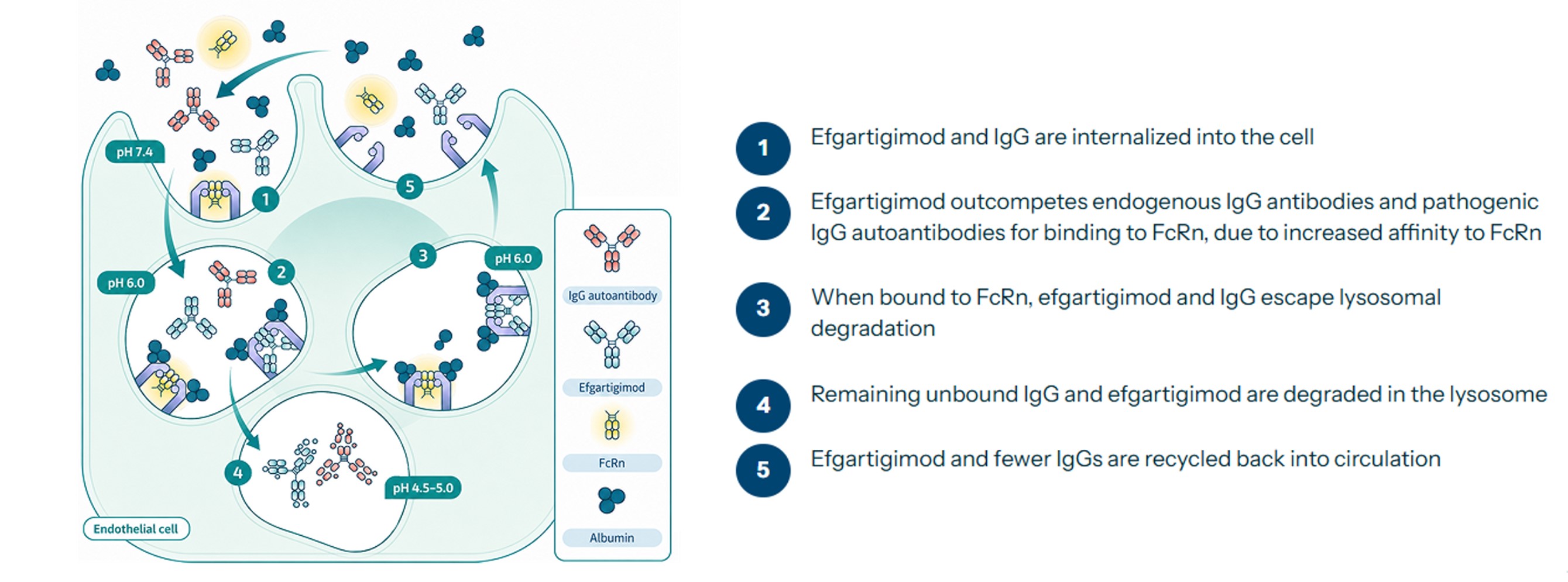
Figure 1. Mechanism of action of efgartigimod
Efgartigimod competes with endogenous IgG for FcRn binding, reducing IgG recycling and promoting lysosomal degradation.
However, clinical success in these indications contrasts with the recent UNITY outcome in Sjogren's disease.
Sjögren's disease involves complex immune mechanisms, including B-cell dysregulation, glandular inflammation, and multiple inflammatory pathways. Although anti-SSA/SSB antibodies are important disease biomarkers, their presence does not fully capture disease activity or clinical heterogeneity.
Earlier Phase II RHO data suggested potential clinical benefit, with a numerically higher proportion of patients achieving improvement in at least three components of the Composite of Relevant Endpoints for Sjögren's Syndrome (CRESS) at Week 24 (45.5% versus 11.1%).
However, the subsequent Phase III UNITY study was discontinued after an interim futility analysis indicated that its primary endpoint—change from baseline in clinESSDAI at Week 48—could not be met. The two studies also differed in administration route, treatment duration, and primary efficacy endpoints.
The reasons for UNITY's outcome remain under investigation. Nevertheless, the contrasting clinical evidence illustrates a central consideration for FcRn-targeted drug development: the therapeutic effects of IgG reduction must be evaluated in the context of individual disease mechanisms and clinical endpoints.
| Drug | Indication | Clinical Status | Key Findings | Ref. |
|---|---|---|---|---|
| Efgartigimod | Generalized myasthenia gravis (gMG); Chronic inflammatory demyelinating polyneuropathy (CIDP) | FDA-approved | Approved for both indications in eligible adult patient populations | [1] |
| Nipocalimab | Warm autoimmune hemolytic anemia (wAIHA) | FDA-approved (Aug 2026) | First FDA-approved treatment for wAIHA | [2] |
| Nipocalimab | Systemic lupus erythematosus (SLE) | Phase III ongoing (GARDENIA) | Phase II JASMINE study met its primary endpoint at Week 24 | [3] |
| Efgartigimod | Immune-mediated necrotizing myopathy (IMNM); Dermatomyositis (DM) | Phase III topline results reported (ALKIVIA) | Primary endpoint met in the combined population and IMNM subgroup; numerical improvement without statistical significance in the DM subgroup | [4] |
| Efgartigimod | Sjögren's disease | Phase III discontinued (UNITY) | Discontinued following an IDMC recommendation based on an interim futility analysis | [5] |
Figure 2. Clinical development landscape of FcRn-targeted therapies (Source: argenx. Reproduced from Efgartigimod Case Study [4].)
Next-Generation FcRn Inhibitors: Beyond IgG Reduction
With FcRn inhibition clinically validated in several autoimmune diseases, next-generation development is increasingly focused on optimizing the pharmacological profiles of candidate molecules.
Three priorities are shaping these efforts:
1. IgG-lowering activity: Optimizing the magnitude and dose response of IgG reduction.
2. Pharmacodynamic durability: Extending the duration of IgG reduction to support more convenient dosing regimens.
3. Albumin-related effects: Evaluating the impact of FcRn inhibition on albumin homeostasis.
Recent programs illustrate how developers are addressing these priorities through different molecular designs.
Viridian Therapeutics reported that VRDN-006 reduced IgG levels in a Phase I healthy volunteer study while preserving albumin and LDL levels.
Its next-generation candidate VRDN-008 incorporates a bispecific, half-life-extended design. In a single-dose, high-dose head-to-head study in non-human primates, VRDN-008 demonstrated a longer half-life and more sustained IgG reduction than efgartigimod. As reported in Viridian's second-quarter 2026 update, Phase I healthy volunteer data were expected in the second half of 2026.
Meanwhile, argenx has continued advancing next-generation FcRn programs. ARGX-213 is being developed with a goal of supporting monthly dosing, while ARGX-124 is undergoing early clinical evaluation.
Together, these programs reflect a broader shift toward differentiation through IgG-lowering profiles, pharmacodynamic durability, and molecular engineering. These priorities also bring greater attention to the molecular interactions and inhibitory properties of FcRn-targeted candidates during early drug discovery.
From FcRn Binding to Candidate Characterization
As FcRn inhibitor designs diversify, early-stage characterization supports the comparison of candidate molecules with different binding and inhibitory profiles.
Three complementary experimental approaches address key questions in FcRn-targeted drug discovery:
Direct binding analysis using ELISA/SPR/BLI to characterize FcRn interactions, binding affinity, and kinetics.
TR-FRET competition assays to evaluate inhibition of the FcRn-IgG interaction and compare candidate activity.
FcRn-expressing stable cell lines to assess receptor-associated binding in a cellular context.
ACROBiosystems provides a portfolio of FcRn research tools supporting these applications, including recombinant FcRn proteins, TR-FRET competition assays, FcRn-expressing stable cell lines, and molecular interaction analysis services to support FcRn-targeted drug discovery and candidate characterization.
>>> Click to learn more our Fc Receptors