


 Sep 28, 2026
 Page Views:156


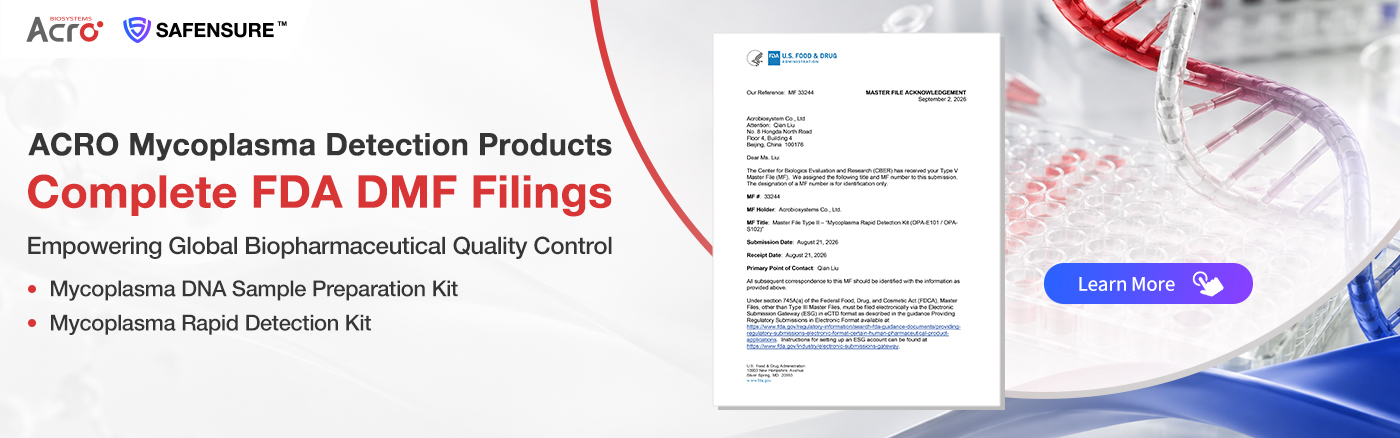
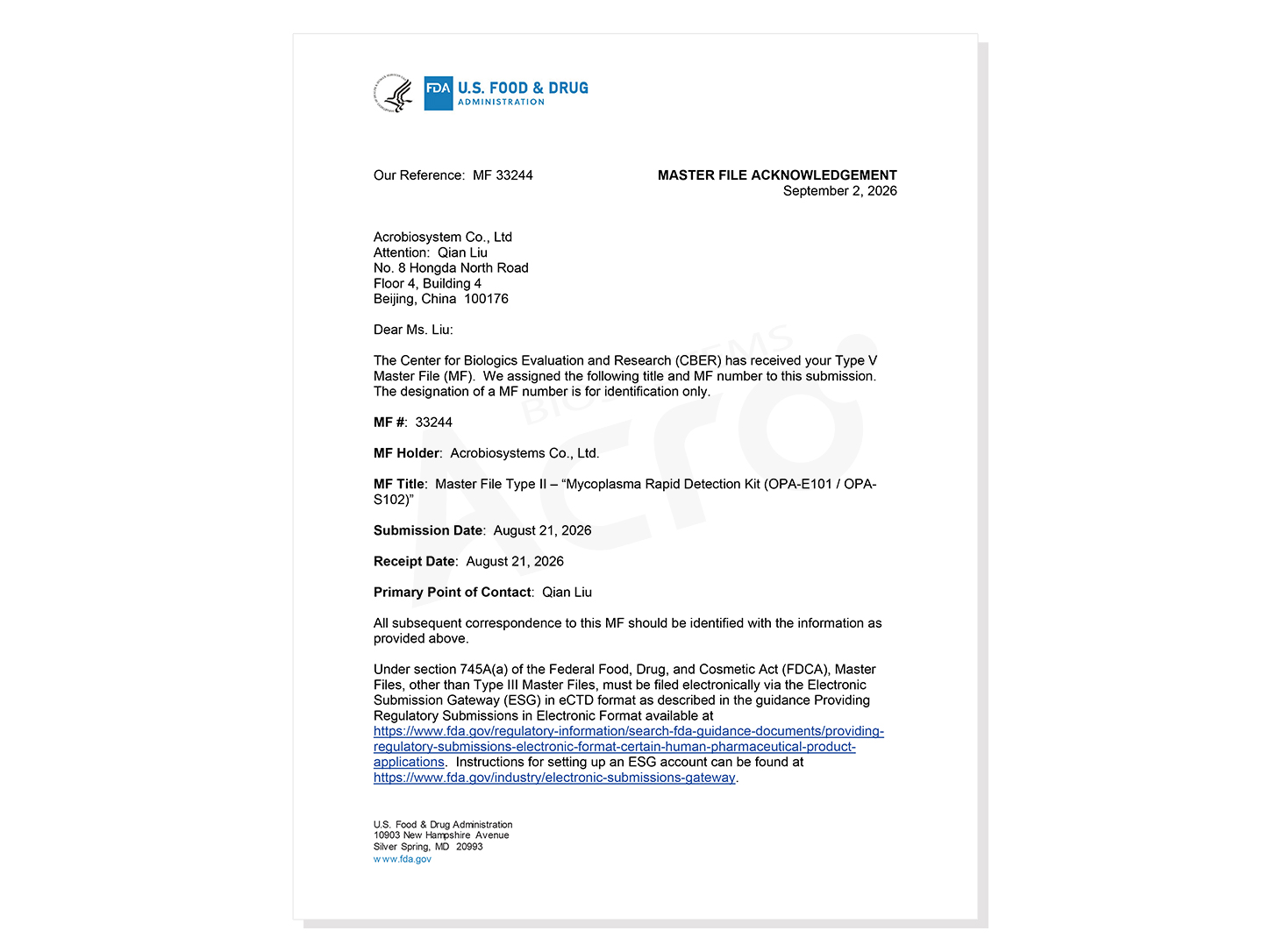
Recently, ACROBiosystems' Mycoplasma DNA Sample Preparation Kit (Magnetic Beads) and Mycoplasma Rapid Detection Kit (qPCR) have completed FDA Drug Master File (DMF) filings, further strengthened our compliance support framework and providing biopharmaceutical companies with enhanced technical and regulatory support for quality control, regulatory submissions, and supplier evaluation.
What Is an FDA DMF?
A Drug Master File (DMF) is a confidential submission to the U.S. Food and Drug Administration (FDA) that provides detailed information related to products, processes, facilities, controls, and other technical aspects relevant to drug manufacturing. DMFs allow proprietary information to be submitted confidentially while enabling authorized applicants to reference the information in their regulatory submissions.
The FDA may review the relevant DMF information as part of that application when it is referenced in an applicable submission, such as an IND, NDA, ANDA, BLA, or related regulatory filing. A Letter of Authorization (LOA) from the DMF holder authorizes the applicant to reference the specified information in support of an applicant's submission.
Why Does an FDA DMF Matter for Mycoplasma Testing?
For suppliers of biopharmaceutical QC products, DMF support can extend beyond product performance data. It provides a structured mechanism for maintaining confidential technical information that may be relevant to regulatory submissions.
The value of a DMF filing includes:
1. Streamlined Regulatory Submissions: With a Letter of Authorization (LOA), applicants can reference the supplier's DMF number, allowing the FDA to access the submitted technical information and reducing duplicate documentation.
2. Supplier Qualification Support: A DMF demonstrates the supplier's capabilities in technical documentation, quality systems, and regulatory compliance, providing supporting information for supplier evaluation and regulatory submissions.
Strengthening Regulatory and QC Support
The completion of FDA DMF filings for the SAFENSURE™ Mycoplasma Sample Extraction Kit and SAFENSURE™ Rapid Mycoplasma Detection Kit further strengthens the completeness of their technical documentation and regulatory support. Biopharmaceutical companies using our mycoplasma detection products may reference the applicable DMF number in regulatory submissions, helping reduce repetitive documentation requirements and help streamline submission preparation, while supporting the preparation of registration materials and subsequent regulatory communication.
For biopharmaceutical companies, mycoplasma testing is a critical quality control activity across R&D, process development, GMP manufacturing, and product release. Selecting detection products supported by comprehensive technical documentation and DMF filings can help streamline the integration of analytical methods with regulatory submissions, while providing more systematic support for quality control strategy development and global regulatory planning.
Why Use qPCR for Mycoplasma Testing?
Mycoplasma contamination can be difficult to detect, while traditional culture methods require longer testing times, creating challenges for R&D efficiency and product release. USP General Chapter <63> notes that mycoplasma contamination may persist without apparent cell damage or visible changes in cell cultures, highlighting the need for sensitive analytical methods. Nucleic acid amplification techniques (NAT), including qPCR, provide an alternative approach that can shorten turnaround time when appropriately validated.
Integrated Mycoplasma Detection from Sample Preparation to qPCR
To address the lengthy and complex workflow of conventional testing, ACROBiosystems has developed an integrated mycoplasma detection solution combining nucleic acid extraction and qPCR. Optimized sample preparation and detection workflows improve standardization and efficiency, enabling sensitive, reliable, and efficient mycoplasma testing for biopharmaceutical quality control. The extraction step generates consistent nucleic acid templates for downstream amplification, while the qPCR assay uses sequence-specific primers and probes targeting the mycoplasma 16S rRNA region for sensitive and specific detection.
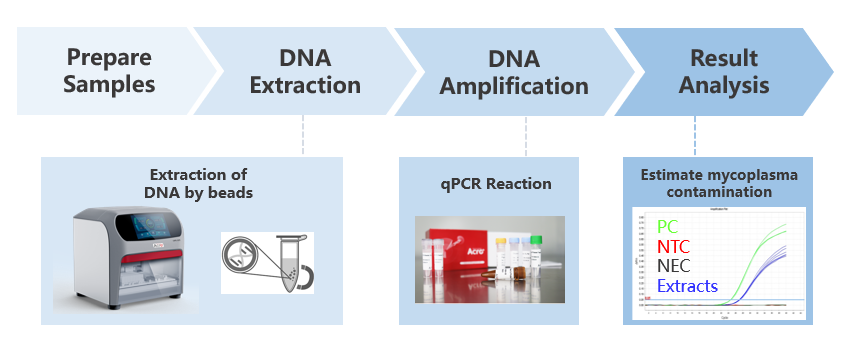
Mycoplasma Detection Workflow
Key Advantages
- Consistent Extraction: Magnetic bead-based extraction provides consistent templates for downstream qPCR.
- Broad Coverage: Covers over 250 Mollicutes species, including all listed in EP, USP, JP.
- Streamlined Workflow: Single-well assay format with built-in UNG and controls, results in 3 hours.
- High Specificity: Target mycoplasma 16S rRNA with no cross-reactivity to other genera.
- High Sensitivity: Meets regulatory standards of 10 CFU/mL.
- Strong Compatibility: Suitable for complex matrices like high cell density samples and 10% DMSO.
- Independent Eurofins Validation: Third-party Eurofins validation supports key analytical performance and application data.
From Independent Validation to FDA DMF Support
Analytical performance is only one part of a robust mycoplasma QC strategy. For regulated biopharmaceutical manufacturing, laboratories also need documented evidence supporting analytical suitability, method implementation, and regulatory communication.
ACROBiosystems' mycoplasma detection products have undergone independent third-party validation by Eurofins, including comparison of qPCR and culture-based detection performance and assessment of key analytical characteristics.
Together with FDA DMF filings, these resources provide a broader support framework spanning analytical performance, technical documentation, method implementation, supplier evaluation, and regulatory submissions.
Independent validation provides analytical performance data, while an FDA DMF provides a mechanism for maintaining and referencing confidential technical information in authorized regulatory submissions.
Pharmacopoeial Recognition of NAT for Mycoplasma Testing
Nucleic acid amplification techniques (NAT) are now recognized in major pharmacopoeial frameworks for mycoplasma testing. Ph. Eur. 2.6.7 provides requirements for mycoplasma testing using nucleic acid amplification techniques (NAT). USP General Chapter <77> Mycoplasma Nucleic Acid Amplification Tests specifically addresses the validation and application of NAT methods for mycoplasma detection.
This pharmacopoeial recognition reflects the growing role of molecular methods in mycoplasma quality control. Compared with conventional culture-based testing, NAT-based workflows can provide shorter turnaround times, sensitive detection, broad organism coverage, and standardized analytical workflows, making them well suited to biopharmaceutical development and manufacturing.
ACROBiosystems integrates magnetic bead-based nucleic acid extraction and qPCR detection into a streamlined mycoplasma testing workflow. Combined with comprehensive technical documentation, independent third-party validation, and FDA DMF support, the solution provides technical and regulatory support for mycoplasma testing across R&D, process development, GMP manufacturing, product release, and regulatory submissions.
Additional Resources
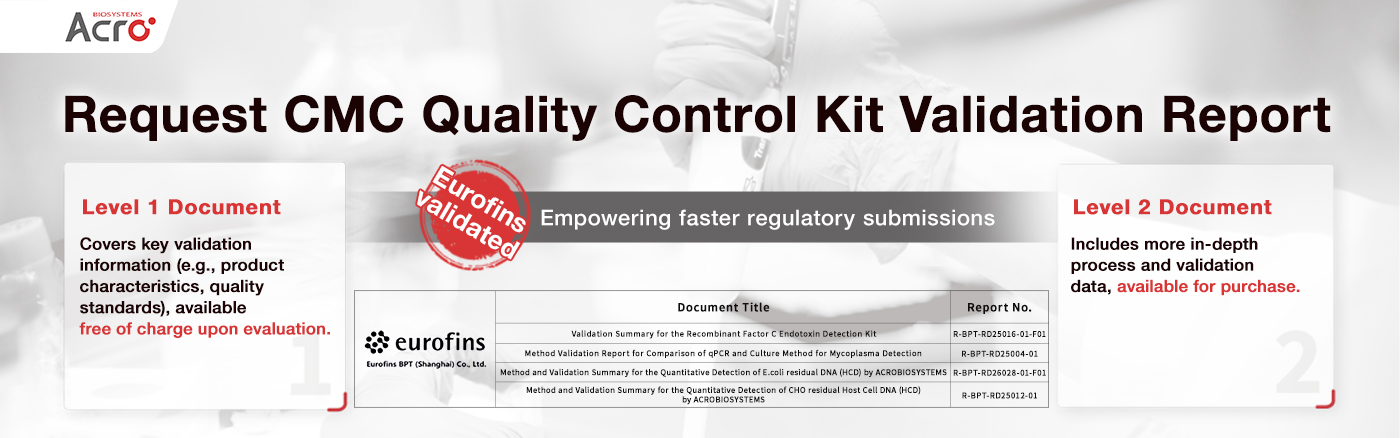
Explore the Eurofins third-party validation report demonstrating consistency between qPCR and culture-based mycoplasma detection results.

Discover high-quality, reliable safety testing products and solutions for biopharmaceutical manufacturers worldwide.