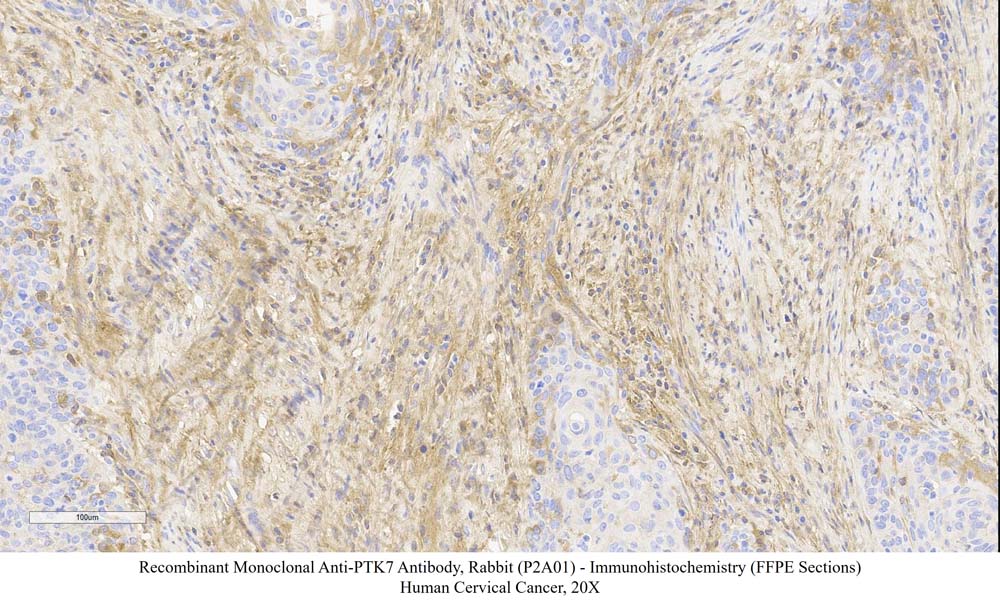

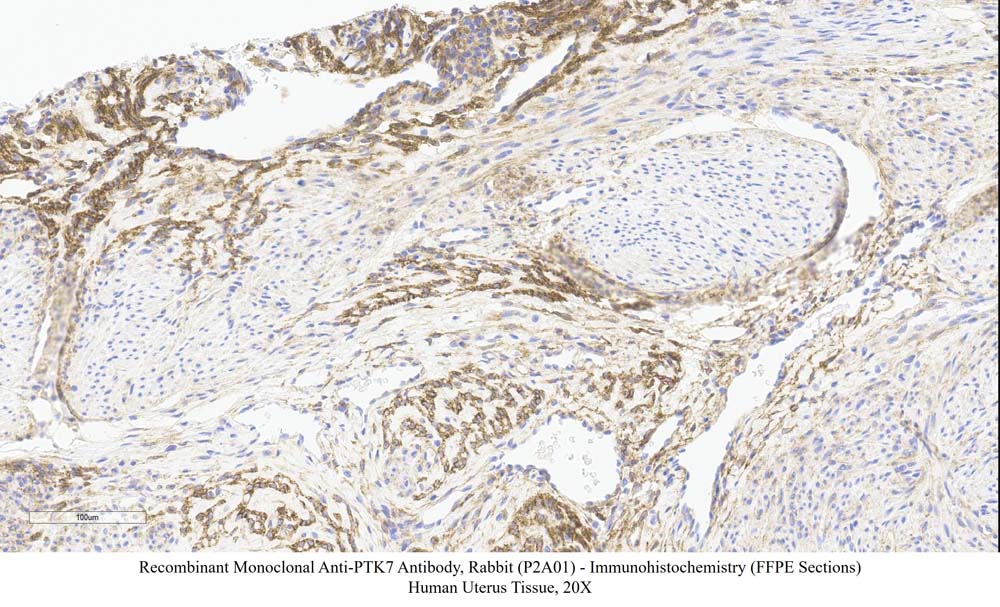
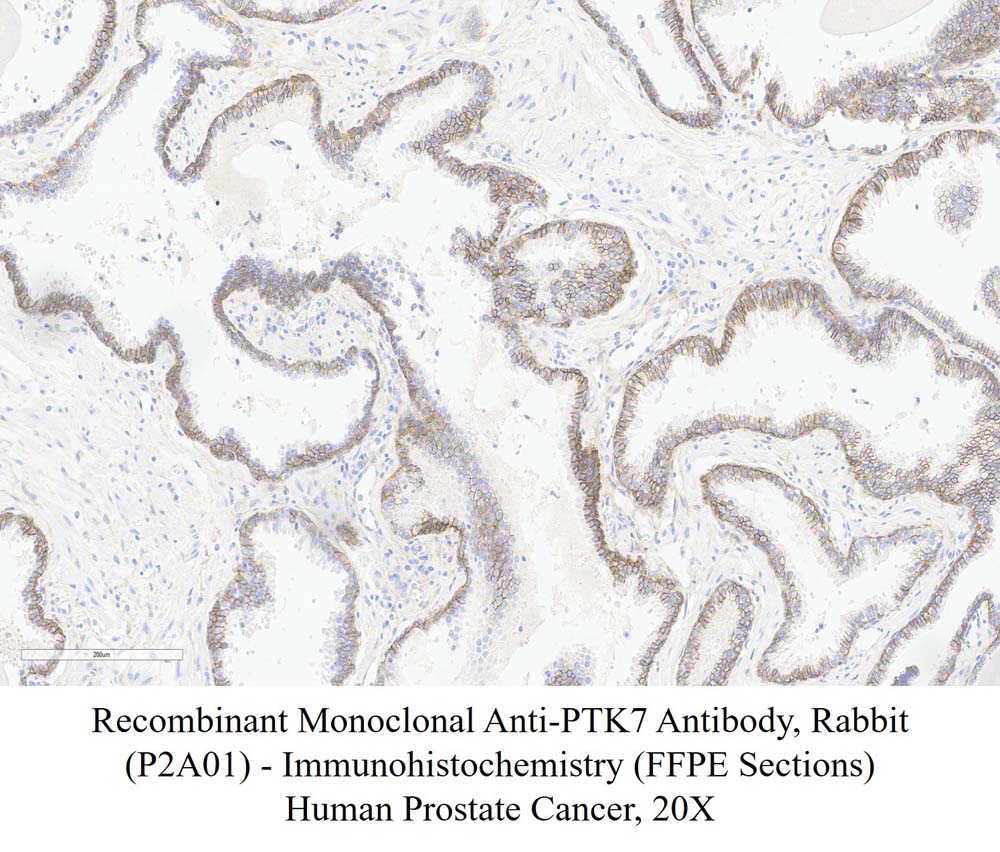
Recombinant Monoclonal Anti-PTK7 Antibody, Rabbit (P2A01)

Numéro de produit/spécification
Prix
Availability
Qté
HGS-M2715-20ul
$160.00
In Stock - Delivery in 2-3 weeks
HGS-M2715-100ul
$470.00
In Stock - Delivery in 2-3 weeks
Montant du produit:
$ 0
0
Ajouter au panier
  • Détails du produit
  • Affichage des données
  • Reviews & Citations
  • Important Statement
  • Resources
Source

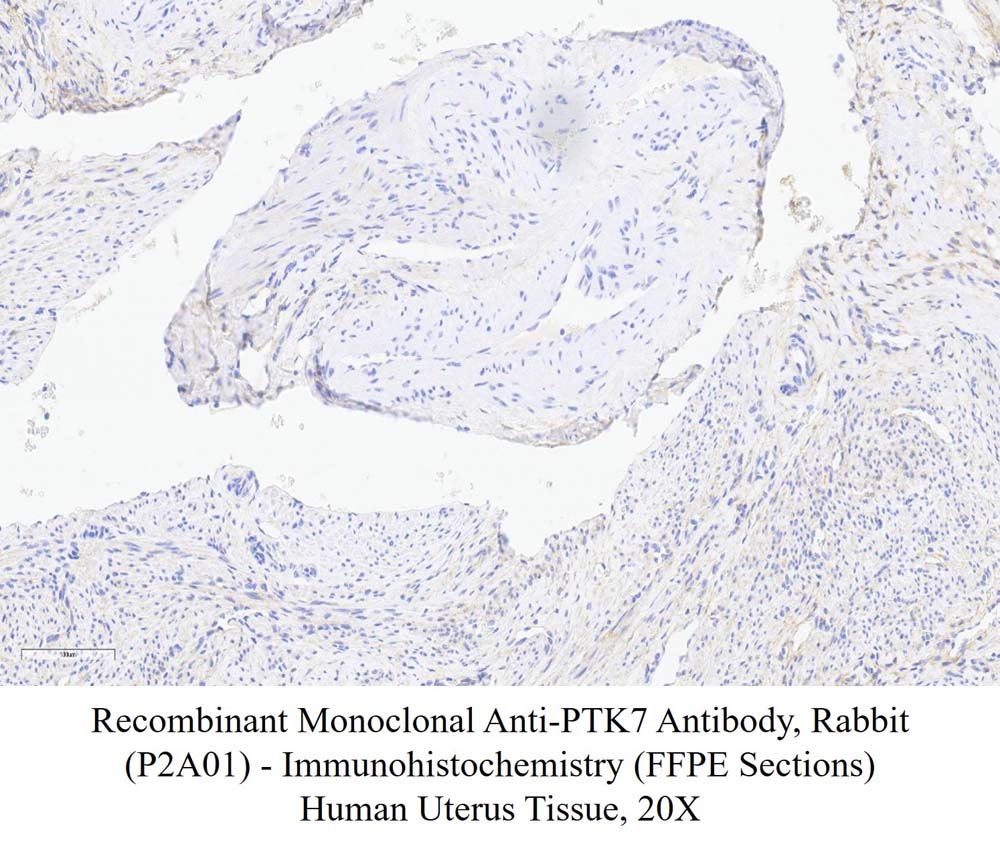
Recombinant Monoclonal Anti-PTK7 Antibody, Rabbit (P2A01) is a PTK7 primary antibody for IHC application.

Antibody Type

Recombinant Monoclonal

Clone

P2A01

Isotype

Rabbit IgG, Kappa

Host Species

Rabbit

Reactivity

Human

Specificity

React with PTK7 protein on the membrane of target cell/tissue.

Application
Application
Recommended Use
IHC-P
1: 100-1: 500

* Recommended dilutions are for reference only. Optimal working concentrations may vary depending on your consumables, reagents, and assay conditions. We recommend optimizing for your specific system. No warranty is made regarding performance at any specific dilution.

Purification

Protein A purified

Aggregation

Less than 5%, as determined by SEC-MALS.

Concentration

0.9~1.1 mg/ml

Form

Liquid

Formulation

Supplied a 0.22 μm-filtered solution in PBS containing 40% Glycerol, 0.03% Proclin 300 and 0.05% BSA, with Trehalose as protectant.

Please contact us for customized product forms or formulations.

Shipping

Liquid product is shipped at blue ice.

Storage

Please avoid repeated freeze-thaw cycles.

This product is stable after storage at:
  • 2°C to 8°C for 14 days;
  • -20°C to -70°C for 12 months.
Notices

Product Specific Notices: For research use only.
Introduction de fond

PTK7 is a member of the receptor tyrosine kinase (RTK) superfamily, plays a critical role in regulating cell polarity, migration and tissue homerostasis during vertebrate development. PTK7 can form heterdimers and function as a signal enhancer or co-receptor, deeply involved in the switching of WNT signaling pathway. PTK7 is overexpressed in a variety of tumors, such as cervical cancer, colorectal cancer, breast cancer and so on, where it is closely associated with tumorigenesis and progression.

ACRO Scientific Leadership Award

Supporting the scientists driving cell & gene therapy forward

Apply Now