
Through the years, many promising tools for genome editing have been developed including zinc-finger nucleases (ZFNs), transcription activator-like effector nucleases (TALENs), and CRISPR-associated protein 9 (Cas9). ZFN and TALENs target genome modification methods, design is costly and time-consuming, limiting their widespread use, especially for large-scale, high-throughput studies. CRISPR-Cas9 is a unique technology that enables geneticists and medical researchers to study, alter, create, and recreate highly complex pathways, DNA sequences, genes, and natural biological systems. It is currently the simplest, most versatile, and precise method of genetic manipulation and is therefore causing a buzz in the science world3. It has been widely used in the study of genome editing in broad applications such as stem cell engineering, gene therapy, tissue and animal disease models, and engineering disease-resistant transgenic plants, which has greatly improved the understanding of tumor genomics in people.
Products
⭐ ⭐ ⭐ ⭐ ⭐ Products Recommendations
ACROBiosystems focuses on the field of cell and gene therapy. As a leading supplier of recombinant proteins, ACROBiosystems has launched the CAS series nuclease including Cas9 and Cas12a. These proteins are mainly used for targeted gene editing to provide high editing efficiency.
Product Features:
The high enzyme activity is verified by in vivo/in-vitro experiments: In-vitro fragment cleavage efficiency >90%, which is facilitating genome editing with CRISPR technology. Available in high concentrations of CAS-9 nuclease:10mg/ml for optimization of editing conditions in more difficult scenarios High purity:SDS-PAGE & SEC-MALS verified purity > 90%. Incorporation of nuclear localization signals (NLS) aids delivery to the nucleus, increasing the rate of genomic DNA cleavage No residual RNase: The production process is strictly free from RNase pollution Enzyme activity and purity have been inspected in batches. High stability and consistency between batches.
The interactions between prokaryotes and the viruses that infect them have evolved, leading to a wide diversity of CRISPR-Cas systems. CRISPR-Cas systems are generally divided into two categories (Class 1 and Class 2). To date, most researchers have used the Type 2 CRISPR-Cas system, and in this class, the most studied type II is the CRISPR-Cas9 system.
CRISPR-Cas9 related applications
Applications in CAR-T therapy: 1) Generation of universal allogeneic CAR-T cells; 2) Enhancement of CAR-T cell function Application of TCR-T cell therapy: α and β endogenous TCR Gene replacement with artificial tumor-specific TCR sequences for genes Suppression of immune checkpoint signaling pathways Screening of new targets for tumor immunotherapy
How does CRISPR-Cas9work
CRISPR/Cas9 system involves two essential components: target-specific CRISPR gRNA and Cas9 nuclease. In eukaryotic systems, CRISPR/Cas9 is used for genomic editing through specific targeting of DNA by sgRNA, a combination of the CRISPR RNA (crRNA) and the trans-activating crRNA (tracrRNA), mediated through base pairing over the ~20-nt guide sequence [1]. Cas9 recognizes a very short conserved sequence (a few nucleotides in length) adjacent to the guide sequence called the “protospacer adjacent motif” (PAM). Once directed to the DNA target site, Cas9 generates a double-strand break (DSB) that can be repaired either through the indel mutation-introducing non-homologous end-joining (NHEJ) or the high-fidelity homologous directed repair (HDR), resulting in gene knockout effects or template-dependent gene replacement.
CRISPR-Cas9 regulatory mechanism: Repair of double-stranded DNA breaks by non-homologous end ligation (NHEJ) or homologous directed repair (HDR) endogenously[1]
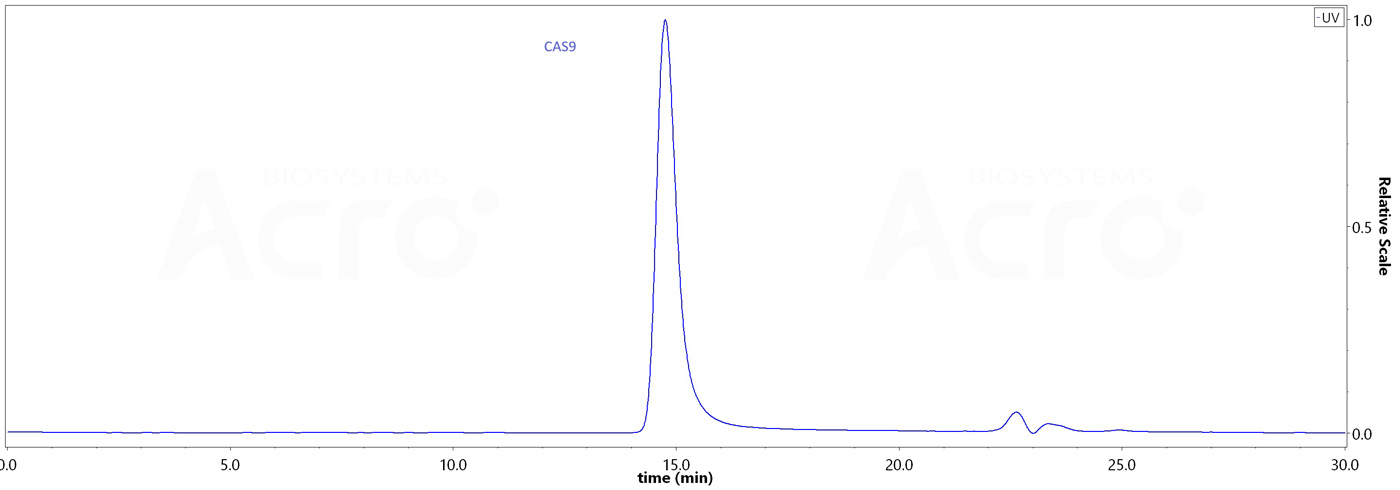
The purity of GMP GENPower™ NLS-Cas9 Nuclease (Cat. No. GMP-CA9S18) was greater than 95% as determined by SEC-HPLC.
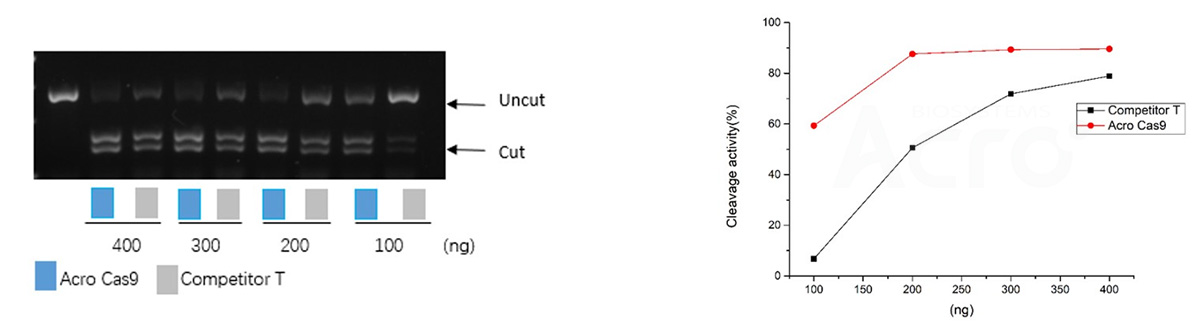
High Activity: Plasmid cleavage efficiency >90%; TCR knockout in human primary T cells >95%; highly efficient cleavage demonstrated in HEK293, iPSC, and primary T cells (B2M)
Different amounts of Cas9 were incubated with the same amount of excess gRNA and plasmid for 60 minutes at 37°C. When using 400-200 ng ACRO's Cas9, the cutting efficiency is greater than 90% (QC tested). In comparison, when using a 200 ng CAS9 from company T, the cutting efficiency is only about 50%
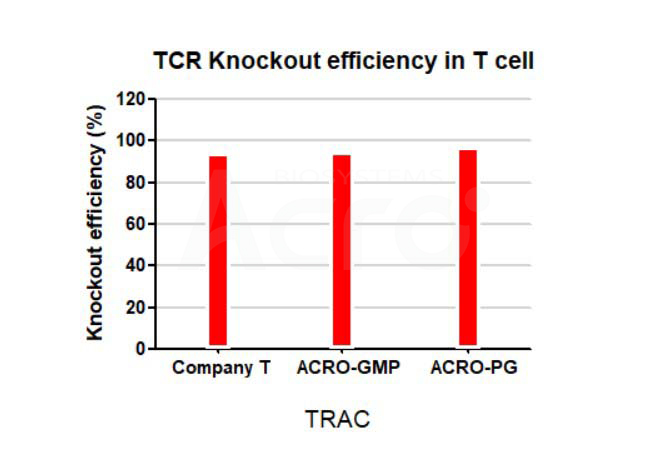
The TCR knockout efficiency with GMP GENPower™ NLS-Cas9 Nuclease in human primary T cells, GMP GENPower™ NLS-Cas9 Nuclease achieved over 95% knockout efficiency.
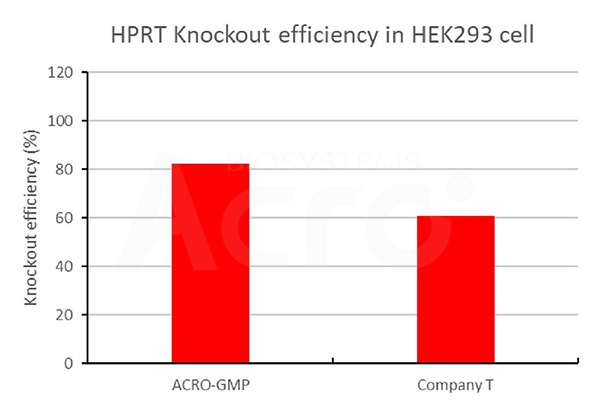
The cleavage efficiency in HEK293 cell 72 hours after electroporation of GMP GENPower™ NLS-Cas9 Nuclease RNP.
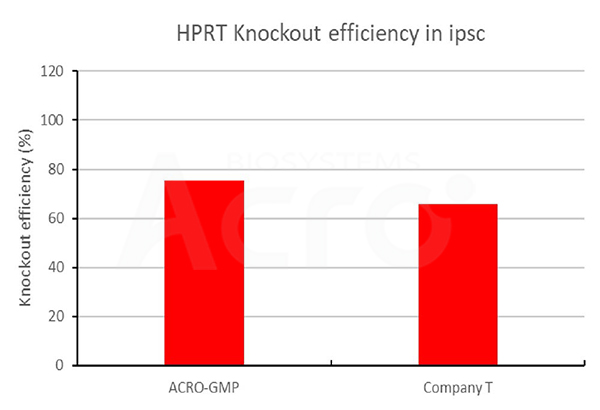
The cleavage efficiency in iPSC 72 hours after electroporation of GMP GENPower™ NLS-Cas9 Nuclease RNP.
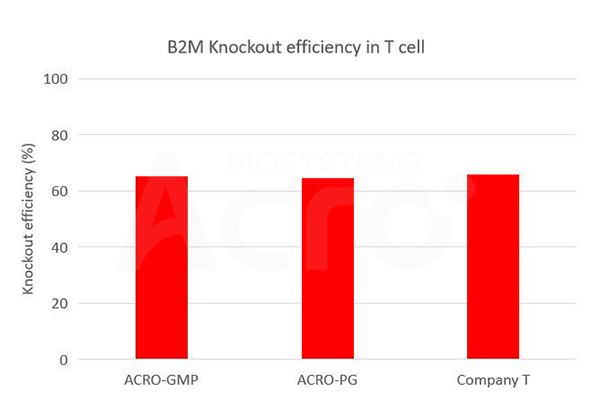
The knockout efficiency for B2M in primary T cell was measured by Flow Cytometry.
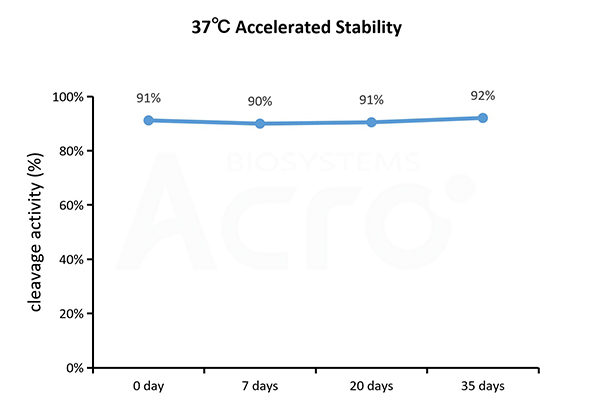
Stability: Enzyme activity remains stable for 35 days at 37°C, with excellent batch-to-batch consistency
Enzymatic activity assay demonstrates that GMP GENPower™ NLS-Cas9 Nuclease (Cat. No. GMP-CA9S18) is stable at 37°C for 35 days
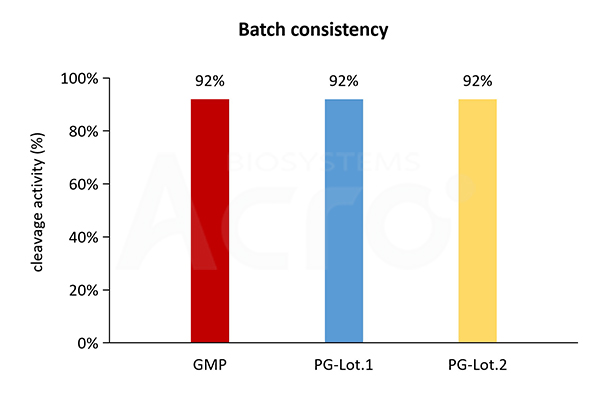
Enzymatic activity assay demonstrates batch-to-batch consistency between Acro's GMP and PG Cas9.
1. Westermann L, Neubauer B, Köttgen M. Nobel Prize 2020 in Chemistry honors CRISPR: a tool for rewriting the code of life. Pflugers Arch. 2021 Jan; 473(1):1-2.
2. Application of CRISPR/Cas9 gene editing in tumor immunotherapy
3. Zaib S, Saleem MA, Khan I. CRISPR-Cas9 Genome Engineering: Trends in Medicine and Health. Mini Rev Med Chem. 2022;22(3):410-421. doi: 10.2174/1389557521666210913112030. PMID: 34517795.
FAQ
Q
How does CRISPR-Cas9 genome editing function, and what advantages does it offer over traditional ZFNs and TALENs?
The CRISPR-Cas9 system utilizes a target-specific single guide RNA (sgRNA)—combining crRNA and tracrRNA—to direct the Cas9 endonuclease to a specific genomic locus adjacent to a Protospacer Adjacent Motif (PAM). Upon site-specific binding, Cas9 induces a double-strand break (DSB) in the target DNA. The cell repairs this break via Non-Homologous End Joining (NHEJ), which introduces indel mutations that disrupt gene function (knockout), or Homology-Directed Repair (HDR), which incorporates an exogenous template for precise gene insertion. Compared to Zinc-Finger Nucleases (ZFNs) and TALENs, which require complex and costly protein engineering for every new target sequence, CRISPR-Cas9 requires only a simple gRNA redesign, making it significantly simpler, more versatile, and cost-effective for high-throughput applications.
Q
How is CRISPR-Cas technology applied in developing allogeneic "off-the-shelf" CAR-T and TCR-T cell therapies?
In adoptive cell therapy, CRISPR-Cas gene editing is widely used to engineer allogeneic products and boost therapeutic potency:
Preventing Graft-versus-Host Disease (GvHD): Knocking out endogenous T-cell receptor genes (e.g., TRAC) prevents healthy donor T cells from attacking host tissues.
Minimizing Host Immune Rejection: Targeted disruption of B2M (beta-2-microglobulin) reduces cell-surface MHC class I expression, preventing host immune clearance.
Overcoming T-Cell Exhaustion: Disrupting immune checkpoint signaling pathways (such as PD-1) shields engineered T cells from immunosuppression within the tumor microenvironment.
TCR Replacement: Replacing endogenous alpha\beta TCR genes with tumor-specific TCR constructs improves antigen targeting in TCR-T therapies.
Q
What products are included in the ACROBiosystems GENPower™ CRISPR-Cas portfolio, and what applications do they support?
The GENPower™ CRISPR-Cas portfolio includes a comprehensive range of recombinant nucleases, including NLS-Cas9, LbCas12a, and AsCas12a, available in both PG (research grade) and GMP (clinical grade) formats. A 10 mg/mL high-concentration Cas9 formulation is also available for demanding genome editing applications.
These products support a wide range of gene editing workflows, including development of allogeneic ("off-the-shelf") CAR-T and TCR-T cell therapies, immune checkpoint gene knockout, novel oncology target discovery, genetic engineering of iPSCs and primary T cells, and in vitro DNA cleavage assays. The portfolio is complemented by a Cas9 Residual ELISA Kit for residual Cas9 detection, providing an integrated solution that supports workflows from preclinical research through CMC quality control and release testing for cell therapy manufacturing.
Q
How can residual Cas9 protein be detected in the final cell therapy product? Does ACROBiosystems offer a compatible solution?
Residual Cas9 protein in cell therapy products poses potential safety and regulatory concerns, making its quantitative detection an important component of product release testing. ACROBiosystems offers the resDetect™ Cas9 Sandwich ELISA Kit, featuring high sensitivity for the quantitative detection of residual Cas9 protein. The kit is well suited for batch release testing of CAR-T and TCR-T cell therapy products, supporting CMC quality control and regulatory compliance.
Q
How does ACROBiosystems verify enzyme activity, purity, and batch consistency for its GENPower™ Cas nucleases?
To ensure reliable experimental data across early discovery and clinical manufacturing, ACROBiosystems enforces multi-tier quality control testing:
Enzymatic Activity: Verified through in vitro fragment cleavage assays demonstrating >90% cleavage efficieny.
High Purity: Characterized via SDS-PAGE and Size-Exclusion Chromatography coupled with Multi-Angle Light Scattering (SEC-MALS) to guarantee >90% purity and a monomeric state.
Batch Consistency: Every lot is cross-tested against reference standards to ensure equivalent cleavage kinetics between research and GMP grades.
Q
Besides primary T cells, what other cell models are compatible with GENPower™ Cas9, and how efficient is its genome editing performance?
GENPower™ Cas9 is compatible with a wide range of cell models, including HEK293 cells, induced pluripotent stem cells (iPSCs), and primary human T cells. It delivers >90% in vitro plasmid DNA cleavage efficiency, achieves >95% TCR knockout efficiency in primary human T cells, and demonstrates high editing efficiency across HEK293 cells, iPSCs, and primary T cells for targets such as B2M, making it a reliable tool for diverse genome editing applications.
Q
What is CRISPR-Cas genome editing, and why is it so important for cell therapy?
CRISPR-Cas is a genome editing technology derived from a natural immune defense mechanism that bacteria use to protect themselves against viral infections. Engineered for research and therapeutic applications, it enables precise targeting and cleavage of specific DNA sequences within the genome.
In cell therapy, CRISPR-Cas is widely used to knock out undesirable genes in T cells to reduce immune rejection, or knock in therapeutic genes to create next-generation engineered cell therapies, including allogeneic ("off-the-shelf") CAR-T products. Compared with earlier genome editing technologies, CRISPR-Cas offers greater simplicity, higher precision, and improved flexibility, significantly accelerating the development of cell and gene therapies.
Q
Why is CRISPR genome editing essential for developing allogeneic ("off-the-shelf") CAR-T therapies?
Conventional autologous CAR-T therapies are manufactured from a patient's own T cells, resulting in lengthy production timelines and high costs. In contrast, allogeneic CAR-T therapies use T cells from healthy donors, enabling the production of readily available "off-the-shelf" cell therapy products. However, donor-derived T cells naturally express endogenous T-cell receptors (TCRs), which can trigger graft-versus-host disease (GvHD) after infusion. At the same time, the patient's immune system may recognize the donor cells as foreign and eliminate them.
CRISPR-Cas genome editing addresses these challenges by disrupting key genes such as TRAC and B2M, preventing GvHD while reducing host immune rejection. This enables the manufacture of multiple therapeutic doses from a single donor cell source, making scalable, standardized, and off-the-shelf CAR-T therapies a practical reality.