Universal CAR Detection Solutions: Broad Compatibility, Higher Efficiency!
 Publication Date:2026-05-25
 Page Views:24
With the rapid convergence of genetic engineering and immunotherapy, cell therapies such as CAR-T have achieved breakthrough clinical progress in hematologic malignancies like leukemia and lymphoma and are steadily expanding into solid tumors. Against this backdrop, diverse CAR-engineered immune cells-including CAR-NK, CAR-Treg, and CAR γδ-T-continue to emerge, representing a key direction for the industry. A CAR (Chimeric Antigen Receptor) is an engineered receptor that equips immune cells with specific recognition capabilities, typically composed of an extracellular antigen-binding domain (e.g., scFv or VHH), a hinge region, a transmembrane domain, and intracellular signaling domains. As design strategies evolve, CARs exhibit high diversity in both target selection and structural format.
Key Point: CAR Detection Reagent Selection and Efficiency Challenges
In CAR cell therapy development, the CAR-positive expression level is a critical quality attribute directly linked to process optimization, quality control, and functional assessment. Flow cytometry has become the standard method for CAR positivity analysis. Depending on the CAR design-varying by target and structural format (such as scFv or VHH)-appropriate detection strategies or reagents are needed, including target antigen proteins or anti-idiotypic antibodies against scFv. These targeted reagents deliver reliable specificity and performance for particular CAR systems and represent a widely adopted, mature solution. However, when multiple projects run in parallel or during early-stage screening, different CAR designs require different detection tools. This means selecting, validating, and switching between multiple reagent sets, which adds operational complexity and time, placing higher demands on detection efficiency and workflow simplification.
A Universal Approach: Flexible Options for Greater Efficiency
In this context, universal CAR detection reagents provide a more efficient path for specific application scenarios. By recognizing common structural elements within the CAR rather than relying on a particular target, these reagents are compatible with multiple CAR designs, enabling rapid detection and head-to-head comparison without developing individual detection tools for each format.
To meet the detection needs of different CAR formats (e.g., scFv- and VHH-based structures), ACROBiosystems has built a universal detection system covering G4S Linker, 218 Linker, Protein L, and anti-VHH antibodies-achieving one-stop adaptability for multiple CAR types. In settings that demand early screening, multi-target development, and streamlined workflows, universal reagents significantly reduce method development and validation efforts, enhance detection efficiency and consistency, and offer more flexible tool support for the R&D of CAR-T and next-generation CAR cell therapies compared with one-by-one tailored detection schemes.
ACROBiosystems Universal CAR Detection Product Portfolio
Comprehensive Coverage - A complementary suite of reagents compatible with different CAR formats, including scFv and nanobody-based structures. A one-stop solution that meets diverse CAR detection needs without sourcing from multiple vendors.
Broad Applicability - Target-independent and highly universal, this system eliminates the cost and effort of custom reagent development and validation, accelerating both R&D and QC workflows.
High Accuracy and Robustness - All reagents are rigorously validated to deliver high specificity, low non-specific background, and excellent lot-to-lot reproducibility. The performance aligns with CAR QC guidelines, making it suitable for research and preclinical detection settings.
Multi-Scenario Compatibility - Adaptable for in vitro transfection efficiency evaluation and in vivo CAR cell expansion and persistence tracking, covering the full spectrum from R&D through manufacturing to quality control.
G4S Linker Detection Reagent - Rabbit Anti-G4S Linker Antibody
Compatible with scFv-based CARs containing a G4S linker peptide (composed of glycine and serine; highly flexible with excellent solubility). It specifically recognizes the G4S Linker sequence independent of the CAR target, allowing detection across multiple target-specific CARs. Developed on ACRO's proprietary single B-cell rabbit platform, this antibody features high specificity, low non-specific binding, and robust flow cytometry performance. It supports both in vitro and in vivo detection scenarios, empowering precise quantification of CAR expression levels.

218 Linker (Whitlow Linker) Detection Reagent - Rabbit Anti-Whitlow/218 Linker Antibody
Designed for scFv-based CARs incorporating the 218 linker peptide (engineered for low aggregation and hydrolysis potential). It complements the G4S linker reagent and extends coverage to more scFv CAR formats. As a single B-cell rabbit antibody, it offers strong stability and excellent reproducibility, effectively avoiding detection bias caused by linker structural differences. Ideal for R&D and QC settings that require high detection stability.

Protein L Detection Reagent - Protein L
Recognizes antibody kappa light chains, making it compatible with scFv-based CARs containing kappa variable regions. Highly versatile and cost-effective, it is suitable for rapid screening and preliminary assessment of transfection efficiency in early CAR development. Note: To minimize non-specific background, perform thorough washing steps before staining to remove residual serum immunoglobulins.

VHH Antibody Detection Reagent - Anti-VHH Antibody
Tailored for CARs built on nanobody (VHH) structures (distinct from conventional scFv-based CARs). With high specificity, it recognizes both humanized and alpaca VHH domains, supporting R&D and QC of novel nanobody-based CARs. It also enables multicolor staining for complex detection panels.

More Recommendations
ACROBiosystems offers a comprehensive CAR positivity detection product line. In addition to the universal detection reagents above, we provide 80+ CAR target antigen proteins (available with PE, FITC, APC, Alexa Fluor, and other fluorescent labels) and highly sensitive anti-idiotypic antibodies. These solutions address diverse requirements across early research, CMC quality control, and clinical stages, earning strong recognition from global customers and fostering long-term collaborations.

- Star Product - Star Staining Site-Specific Fluorescently labeled CAR Target Proteins
- Star Product - Anti-Idiotypic Antibodies (FMC63, C11D5.3)
For more CGT-related information, download the Cell and Gene Therapy Development Solutions Brochure.

 Popular ArticlesRelated RecommendationsPopular Events
 Why CAR-T Works in Blood Cancers but Struggles in Solid Tumors2026-05-27Page Views:13
 Comprehensive Guide to CAR-T Targets in Solid and Hematologic Malignancies2026-05-21Page Views:157
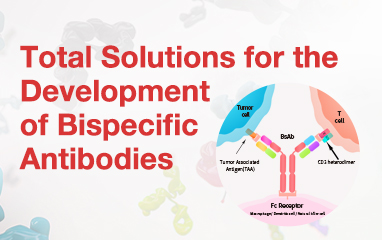 Bispecific Antibody Lanscape: Evolution, Breakthroughs, and Prospects2026-05-21Page Views:152
 CD19 as a CAR-T Target: Biology, Limitations, and Alternative Strategies2026-05-20Page Views:128
 Next-Generation Obesity Target Spotlight: Activin E for Fat Loss with Muscle Preservation2026-05-18Page Views:254




 Related Products