Reliable and Cost-Effective GMP Activin A and KGF Facilitate Large-Scale Cultivation of iPSC-Derived Islet Differentiation for Diabetes
 Date de publication :2025-05-23
 Nombre de vues :1637
Diabetes, a global health crisis, affects 537 million adults aged 20 - 79 as of 2024, with projections indicating an increase to 643 million by 2030. This disease encompasses distinct types: Type 1 diabetes, accounting for 5 - 10% of cases, results from autoimmune destruction of pancreatic β-cells, leading to insulin deficiency; Type 2 diabetes, making up 90 - 95% of cases, involves insulin resistance and relative insulin insufficiency, often linked to lifestyle factors like obesity and inactivity. Gestational diabetes and rare forms further complicate the disease spectrum. Current treatments, including lifestyle changes, oral hypoglycemic agents, and insulin injections, mainly manage symptoms rather than cure the disease. Long - term insulin use can cause complications such as hyperglycemia, hypoglycemia, and cardiovascular and renal issues, highlighting the need for more effective therapeutic approaches.
In the field of cell therapy, research on stem cell-based treatments for diabetes offers new hope. Induced pluripotent stem cells (iPSCs), with their unique properties of unlimited self-renewal and multi-lineage differentiation potential, have emerged as a focal point in diabetes research. Scientists are dedicated to differentiating iPSCs into pancreatic islet cells capable of secreting insulin, aiming to replace damaged β-cells and fundamentally address the issue of insulin deficiency. Vertex Pharmaceuticals has made remarkable strides in this domain. Its product, VX - 880 (Zimislecel), has achieved significant breakthroughs. In early clinical trials, VX - 880 demonstrated impressive efficacy. Some patients experienced a substantial reduction in insulin requirements and notable improvement in blood glucose control after treatment, with favorable safety and tolerability profiles. Building on these promising results, the therapy has advanced to Phase III clinical trials and is slated for market launch in 2026. Moreover, VX - 880 has received crucial regulatory designations, including the Regenerative Medicine Advanced Therapy (RMAT) and Fast-Track status from the U.S. Food and Drug Administration (FDA), as well as the PRIME (Priority Medicines) designation from the European Medicines Agency (EMA), underscoring its immense potential to revolutionize diabetes therapy.
Despite these promising developments, the translation of iPSC - based therapies from bench to bedside is fraught with challenges. One of the most significant hurdles is the immune response to transplanted iPSC - derived islet cells. As foreign entities, these cells are at risk of being recognized and attacked by the patient's immune system, necessitating immunosuppressive therapy. While essential for preventing rejection, long - term use of immunosuppressants carries significant risks, including heightened susceptibility to infections, kidney damage, and increased cancer risk. Striking a balance between immune suppression and minimizing adverse effects remains an intricate challenge.
Gene editing technologies offer a potential solution to mitigate immune rejection by modifying iPSCs to reduce their immunogenicity. However, this approach is not without its own set of obstacles. Technical limitations, such as off - target effects that can lead to unintended genomic alterations and potentially harmful consequences like tumorigenesis, pose significant risks. Moreover, gene editing raises complex ethical questions regarding human germline modification, potential eugenic implications, and long - term impacts on future generations, necessitating rigorous ethical evaluation and regulatory oversight.
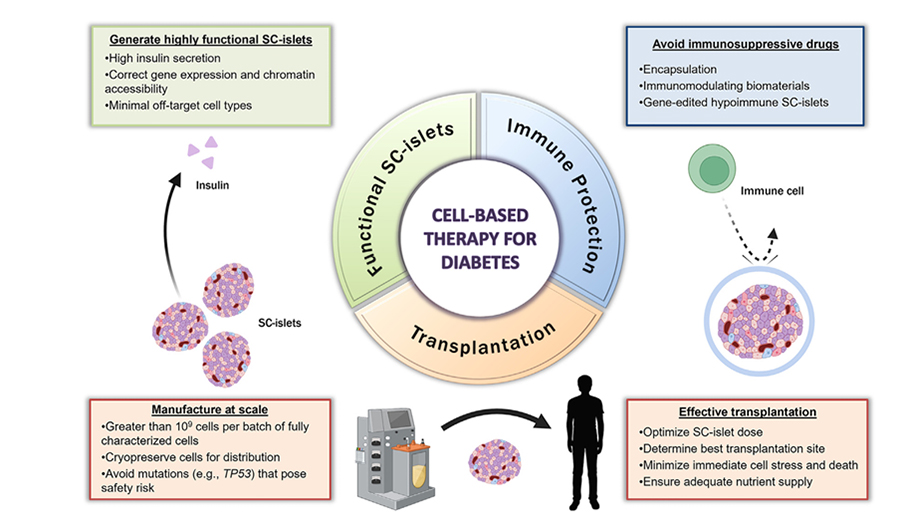
Figure 1. Key pillars of a successful SC-islet therapy for treating T1D
Large - scale production of iPSCs and generation of functional islet cells also present formidable challenges. Maintaining cell quality and consistency during the scale - up process is particularly difficult, as minor fluctuations in culture conditions, such as temperature, nutrient concentration, and pH, can disrupt cell growth and differentiation. Additionally, achieving efficient differentiation at a reasonable cost is essential for commercial viability. Good Manufacturing Practice (GMP) - compliant and cost - effective growth factors play a crucial role in optimizing the differentiation process, streamlining production, and reducing costs, thereby facilitating the translation of iPSC - derived islet cell therapies into clinical practice.
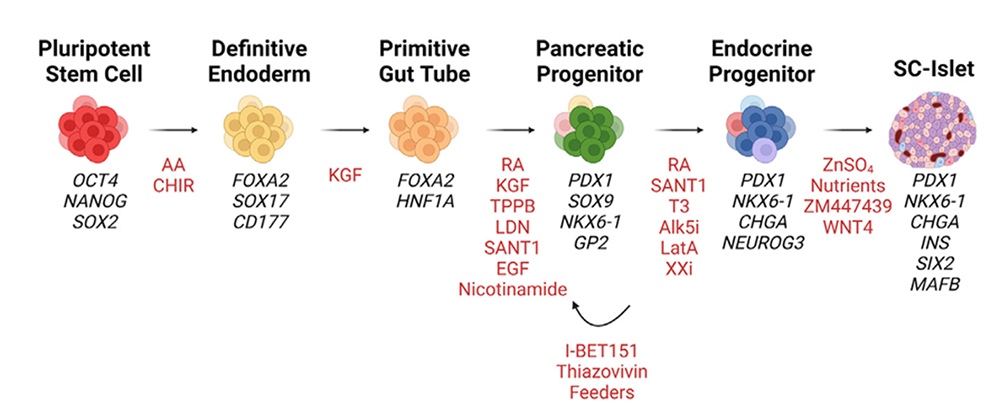
Figure 2. Manufacturing process for during the multistage differentiation of hPSCs to SC-islets.Cell Stem Cell (2023). Developments in stem cell-derived islet replacement therapy for treating type 1 diabetes.
Product Highlights:
• Activin A (Cat. No. GMP-ACAH37 & ACA-H5314):
Offered in both GMP grade and Premium Grade (PG), this reagent achieves excellent endoderm differentiation while dramatically lowering costs (using gram-level quantities can help drug production save tens of millions of dollars). In our internal verification, Activin A has achieved about 90% differentiation rate of stem cells into definitive endoderm (DE). Leveraging our expertise in stem cell research and recombinant protein production, our technology enables us to control costs and deliver the best Activin A reagent available. Our growth factors have already been used in clinical trials, especially in iPSC derived islet cells therapy.
• KGF (Cat. No. FG7-H5213):
Engineered to ensure robust and reproducible cell culture performance. It could support at least 95% differentiation rate of stem cells into pancreatic progenitor cells (PP2).
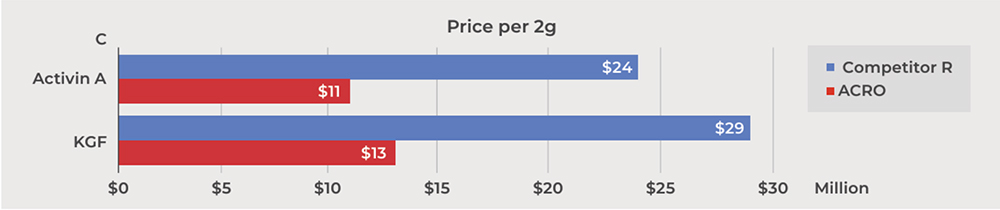
• ACRO's GMP products hold a significant cost advantage over Competitor R.
• A complete iPSC-to-mature-islet-cell differentiation model
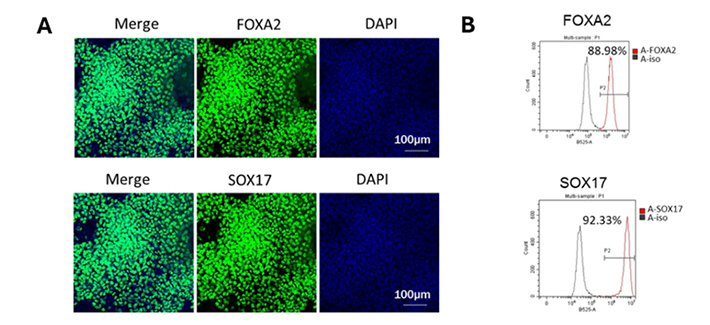
Step 1 -iPSC to DE Differentiation
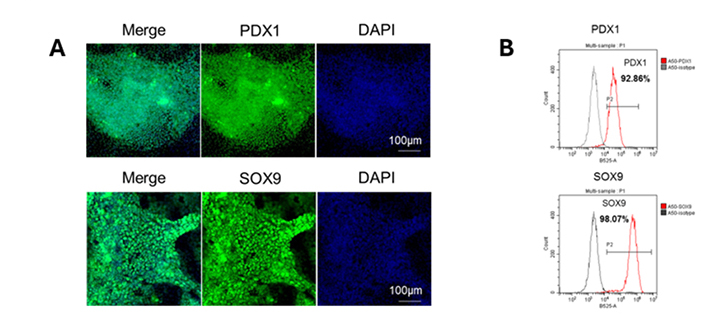
Step 2-iPSC to Pancreatic endoderm Differentiation
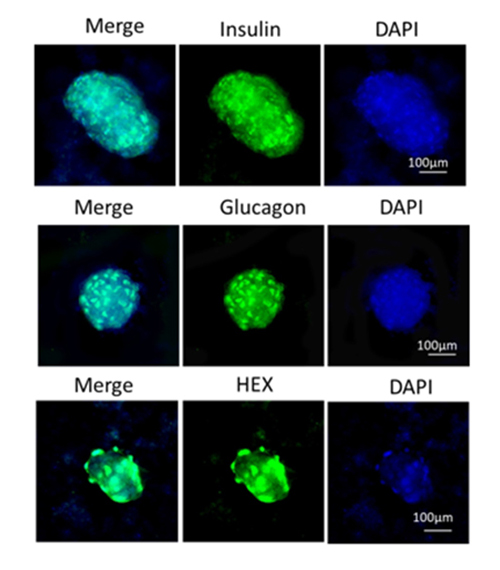
Step 3-iPSC to Mature Pancreatic Cell Differentiation
In conclusion, ACROBiosystems has developed an efficient solution for iPSC - derived islet cell differentiation, achieving a well - balanced composition of 60% insulin - producing beta cells, 20% glucagon - secreting alpha cells, and 20% HEK - derived delta cells, optimized to replicate native islet function for effective glucose regulation. As a globally recognized, regulation - compliant supplier, we adhere to all international legal and regulatory standards, ensuring seamless integration into your manufacturing processes. Moreover, we offer a complete range of customizable services to meet your specific requirements, providing comprehensive support to overcome every challenge in stem cell therapy and drive the success of your projects.
In summary, iPSCs hold great promise for revolutionizing diabetes treatment, overcoming these multifaceted challenges will be key to realizing their full potential. Continued research, technological innovation, and ethical deliberation are essential to transform this scientific breakthrough into a practical, accessible, and sustainable therapeutic solution for millions of diabetes patients worldwide.
Recommended for you
 Articles populairesRecommandations associéesActivités populaires
 Why CAR-T Works in Blood Cancers but Struggles in Solid Tumors2026-05-27Nombre de vues :12
 Universal CAR Detection Solutions: Broad Compatibility, Higher Efficiency!2026-05-25Nombre de vues :23
 Comprehensive Guide to CAR-T Targets in Solid and Hematologic Malignancies2026-05-21Nombre de vues :157
 Bispecific Antibody Lanscape: Evolution, Breakthroughs, and Prospects2026-05-21Nombre de vues :152
 CD19 as a CAR-T Target: Biology, Limitations, and Alternative Strategies2026-05-20Nombre de vues :128




 Produits associés