World Multiple Sclerosis Day | ACRO Stands with You in the Silent Battle of the Central Nervous System
 Date de publication :2025-05-28
 Nombre de vues :1696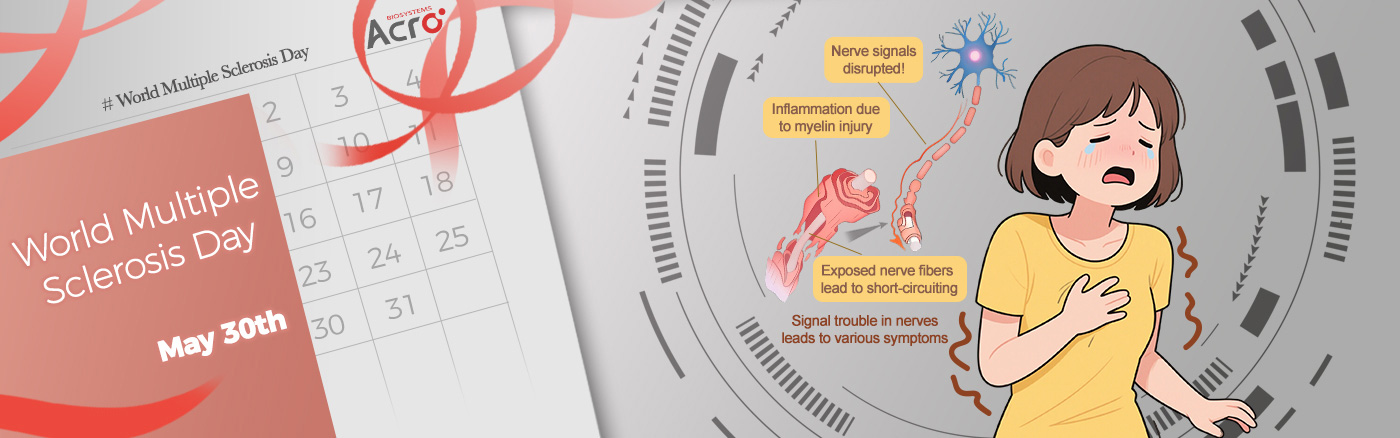
May 30, 2025 marks the 17th annual World Multiple Sclerosis Day, a moment when the global medical community turns its attention to individuals living with Multiple Sclerosis (MS)—a complex and often misunderstood neurological condition. Currently, an estimated 2.8 million people worldwide are affected by MS. The disease is two to three times more common in women than in men and typically strikes individuals between the ages of 20 and 50. Common symptoms include blurred vision, muscle weakness, and impaired balance. Without timely intervention, some patients may lose the ability to walk independently within just a few years.

MS damages the protective myelin sheath of nerve fibers, affecting vision, sensation, coordination, movement, and bladder or bowel function1
As shown in the image above, Multiple Sclerosis (MS) is an autoimmune disease in which the immune system mistakenly attacks the body’s own nerves. This damage is often likened to an electrical wire with its insulating coating stripped away, exposing the core and causing short circuits in nerve signal transmission. Conventional treatments for MS—such as immunomodulatory drugs, corticosteroids, immunosuppressants, and rehabilitation therapy—aim to slow disease progression, relieve symptoms, and prevent relapses. In recent years, the emergence of targeted therapies and other novel approaches has offered new hope for improving the quality of life for people living with MS.
ACROBiosystems has developed a comprehensive product portfolio for MS research including highly active recombinant proteins, stable cell lines, and inhibitor screening kits. Our solutions span the entire drug development continuum – from target discovery and validation, candidate drug screening and development to CMC manufacturing and quality control – accelerating the efficient translation of MS innovative therapies from foundational research to clinical implementation.
Free download: ACRO's autoimmune disease drug development solutions!
Diverse Disease Courses: Unveiling the Four Main Types of MS
MS is a chronic inflammatory demyelinating disease of the central nervous system (CNS), primarily affecting the brain, spinal cord, and optic nerves. It is triggered by abnormal immune activation, where autoimmune inflammation damages the myelin—the protective sheath surrounding nerve fibers—disrupting nerve signal transmission and leading to multi-system functional impairments. Despite sharing the same name, MS does not follow a single disease course. In fact, each type of MS represents a distinct “battlefield,” with unique patterns of progression, treatment responses, and impacts on daily life.
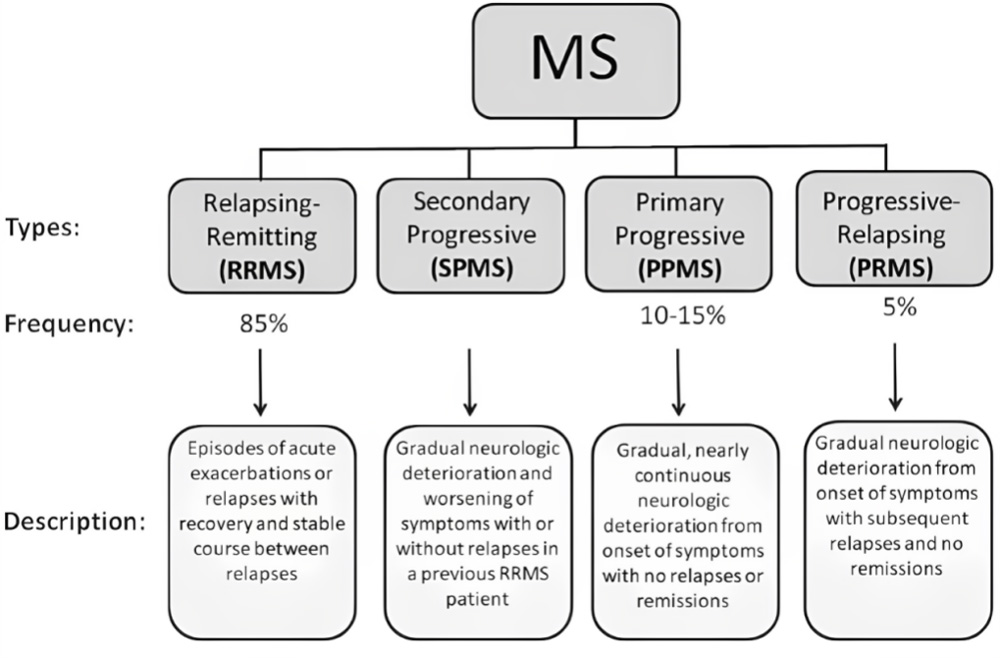
The types of MS2
MS can be classified into four major types based on the course of disease progression:
Relapsing-Remitting MS (RRMS)
This is the most common form, accounting for approximately 85% of all MS cases. Patients experience clearly defined relapses (flare-ups of symptoms such as blurred vision or difficulty walking) followed by periods of remission. Early treatment is crucial to control relapses and slow disease progression.
Secondary Progressive MS (SPMS)
Many individuals with RRMS eventually transition to SPMS, where symptoms steadily worsen over time without distinct relapses. Walking becomes more difficult, and physical function gradually declines.
Primary Progressive MS (PPMS)
Accounting for about 10–15% of cases, PPMS is characterized by gradual worsening from the onset, without distinct relapses or remissions. The onset is often subtle, and although progression is steady, the impact on daily function can be profound.
Progressive-Relapsing MS (PRMS)
This is the least common form of MS. Patients experience a steady decline in function from the start, punctuated by occasional acute relapses. PRMS is now often considered a subtype of PPMS, and treatment strategies are increasingly personalized.
Each MS type presents differently, requiring tailored diagnostic and monitoring approaches. Understanding your specific MS type is a vital first step toward effective disease management and treatment planning.
Multiple Factors Intertwined: Unveiling the Five Major Risk Factors of MS
Research into the pathogenesis of MS has evolved from the 19th-century discovery of nerve myelin damage to the 20th-century confirmation of its autoimmune nature, and more recently to the recognition of multiple contributing factors such as viral infections, genetic susceptibility, gut microbiota, and environmental influences. The development of animal models and the elucidation of immune cell mechanisms have gradually uncovered the complex immune dysregulation underlying MS and have driven the advancement of targeted therapies.
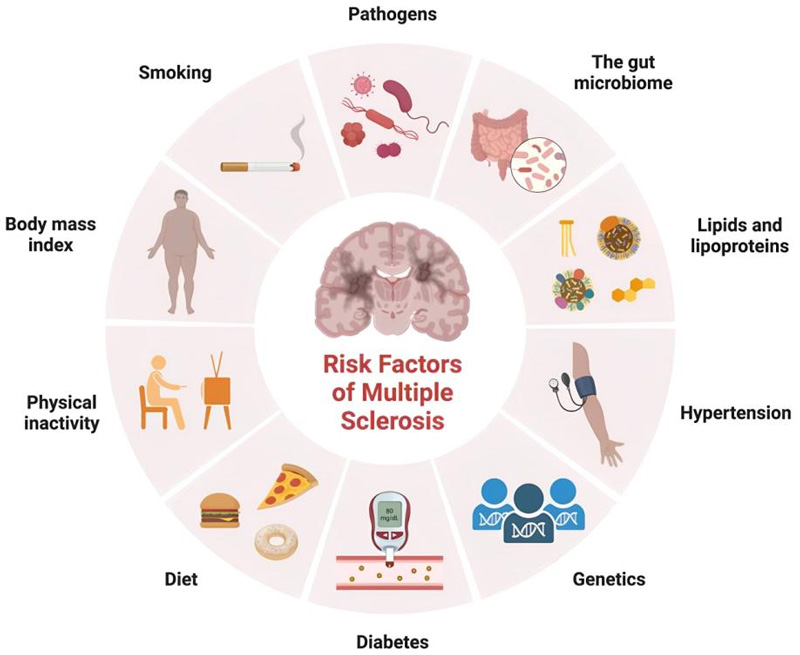
Risk Factors for MS3
MS is not caused by a single factor but results from the interplay of multiple internal and external influences. The main risk factors can be summarized as follows:
Infections and Immune Imbalance
Viral infections such as Epstein-Barr virus (EBV), Human Herpesvirus 6 (HHV-6), and Varicella-Zoster virus (VZV) may trigger abnormal immune attacks on the myelin, causing nerve damage. Meanwhile, gut microbiota imbalances—including bacteria like Helicobacter pylori and Chlamydia pneumoniae—are also closely linked to MS development.
Unhealthy Lifestyle
Smoking, physical inactivity, and diets high in fat and sugar significantly increase MS risk. Notably, smoking not only raises the likelihood of developing MS but may also accelerate disease progression.
Metabolic and Cardiovascular Abnormalities
Conditions such as obesity, diabetes, and hypertension—components of metabolic syndrome—as well as chronic inflammation causing cardiovascular damage, contribute to MS onset.
Genetic Susceptibility
Although MS is not a classic hereditary disease, individuals with a family history face higher risk. Specific genetic variants, like HLA-DRB1*15:01, are strongly associated with increased susceptibility.
Environmental Factors
Vitamin D deficiency, insufficient sunlight exposure, and living in high-latitude regions can adversely affect immune system function, thereby raising MS risk.
In clinical practice, it is important to recognize that MS results from multiple factors. A comprehensive understanding of these risks helps enable early screening, timely intervention, disease progression delay, and effective treatment.
Comprehensive Assessment and Therapeutic Advances: Diagnosis, Management, and Drug Development in MS
The diagnosis of multiple sclerosis (MS) primarily relies on a comprehensive evaluation of clinical manifestations, magnetic resonance imaging (MRI), and cerebrospinal fluid (CSF) analysis. MRI is the most commonly used imaging tool, capable of revealing demyelinating lesions in the white matter of the central nervous system. Detection of oligoclonal bands in CSF can serve as indirect evidence of immune dysfunction. The internationally adopted McDonald criteria integrate the dissemination of lesions in both time and space to enable early diagnosis of MS while excluding other conditions. In terms of treatment, the main goals are to manage acute relapses, slow disease progression, and alleviate symptoms. Traditional treatment approaches include corticosteroids (e.g., methylprednisolone) for managing acute relapses, as well as disease-modifying therapies (DMTs) such as interferon-β and glatiramer acetate to reduce relapse frequency and formation of new lesions. However, these medications are often limited by suboptimal efficacy and significant side effects.
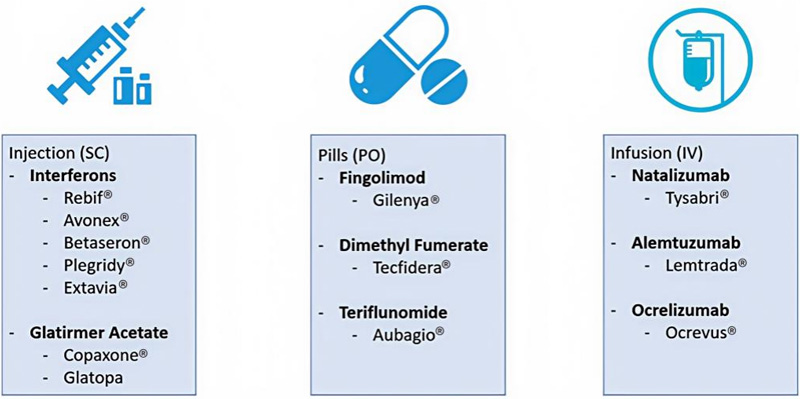
Common Medications for MS5
The pathogenesis of multiple sclerosis (MS) involves key processes such as aberrant B cell activation, T cell-mediated inflammatory responses, disruption of immune tolerance, and neuronal damage. Current strategies for the development of MS biologics are increasingly diversified, aiming to target these underlying mechanisms.
Targeting B cells:
 CD19: Expressed in early and activated B cell stages, CD19 plays a role in antigen presentation and antibody production. Eliminating abnormally activated B cells can reduce autoimmune attacks on the central nervous system and suppress inflammation.
CD20: A classical surface antigen of B cells involved in their proliferation and survival. Anti-CD20 monoclonal antibodies (e.g., Ocrelizumab, Ofatumumab) effectively deplete pathogenic B cells, reducing autoimmune damage.
BAFFR and BCMA: Regulate B cell survival and differentiation; their overactivation can lead to abnormal B cell expansion and exacerbate autoimmune inflammation.
APRIL: Along with BAFF, regulates B cell survival and function, influencing antibody production and contributing to immune tolerance imbalance.
Targeting T cells and costimulatory molecules:
IL-17A: Secreted by Th17 cells, promotes infiltration of inflammatory cells into the CNS and enhances inflammatory responses. It is a key pro-inflammatory cytokine during MS flare-ups.
IL-2 R and IL-11 Rα: Involved in regulating T cell proliferation and differentiation; abnormal activation can intensify autoimmune responses and cause neural tissue damage.
OX40 Ligand and 4-1BB: T cell costimulatory molecules that enhance T cell activation and survival. Excessive activation may lead to immune dysregulation and amplified inflammation.
TL1A: Modulates both T cells and innate immune cells, influencing the balance of inflammatory responses and contributing to immune tolerance disruption.
Modulating immune balance:
IFN-alpha/beta receptor: Regulates antiviral responses and immune homeostasis, helping suppress excessive inflammation and slow MS progression.
CD40 Ligand: Facilitates interactions between T cells, B cells, and dendritic cells, modulating immune activation and inflammation; aberrant expression accelerates autoimmune processes.
Targeted immune cell depletion:
CD52: Broadly expressed on mature immune cells. Targeting CD52 enables depletion of overactive immune cells, reducing CNS autoimmune attacks and alleviating MS symptoms.
Modulating immune balance:
TGF-beta 1 and IL-10: Anti-inflammatory cytokines that help regulate immune responses, suppress inflammatory cell activity, and promote neural repair and regeneration.
IGF-I R, FGF R2 and GLP1R: Involved in neuronal survival, repair, and remyelination, contributing to the restoration of neurological function.
CXCL3: A chemokine that regulates the migration and localization of inflammatory cells, affecting the extent of inflammation in lesion sites.
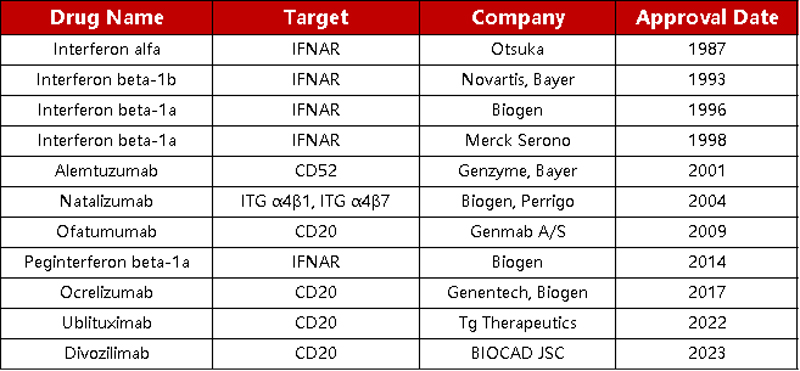
According to data from Pharmcube, as of May 2025, there are 119 biologics in the global MS drug pipeline, including 30 approved products (12 of which are original innovations), 27 in clinical stages, and 62 in preclinical development.
Approved Originator Drugs for MS (Data Source: Pharmcube)
ACROBiosystems Pioneers MS Therapeutics Through Novel Solutions
ACROBiosystems has developed a comprehensive product portfolio including highly active recombinant proteins, functional cell lines, and inhibitor screening kits. Our solutions span the entire drug development continuum – from target discovery and validation, candidate drug screening and development to CMC manufacturing and quality control – accelerating the efficient translation of MS innovative therapies from foundational research to clinical implementation.
Hot MS Target Recommendations

>> ComboX, A Combination of Universal Solutions

>> Click to Explore Tools for Metabolic Disease Drug Development
Reference
1. https://www.mayoclinic.org/diseases-conditions/multiple-sclerosis/symptoms-causes/syc-20350269
2. Marvanova, Marketa. (2013). Multiple Sclerosis and Its Symptoms. Pharmacy Tech Topics. 8.
3. Landry, R.L.; Embers, M.E. The Probable Infectious Origin of Multiple Sclerosis. NeuroSci 2023, 4, 211-234. https://doi.org/10.3390/neurosci4030019
4. https://shelteringarmsinstitute.com/rehablogs/symptoms-of-multiple-sclerosis-you-cant-see/
5. https://healthstreet.program.ufl.edu/2018/11/20/in-case-you-missed-it-ocoh-multiple-sclerosis-advances-in-care-and-treatment/
 Articles populairesRecommandations associéesActivités populaires
 Why CAR-T Works in Blood Cancers but Struggles in Solid Tumors2026-05-27Nombre de vues :11
 Universal CAR Detection Solutions: Broad Compatibility, Higher Efficiency!2026-05-25Nombre de vues :20
 Comprehensive Guide to CAR-T Targets in Solid and Hematologic Malignancies2026-05-21Nombre de vues :155
 Bispecific Antibody Lanscape: Evolution, Breakthroughs, and Prospects2026-05-21Nombre de vues :149
 CD19 as a CAR-T Target: Biology, Limitations, and Alternative Strategies2026-05-20Nombre de vues :126





 Produits associés