A Comprehensive Guide to Endotoxin Testing: Ensuring Precision Throughout the Process
 Date de publication :2025-07-30
 Nombre de vues :10977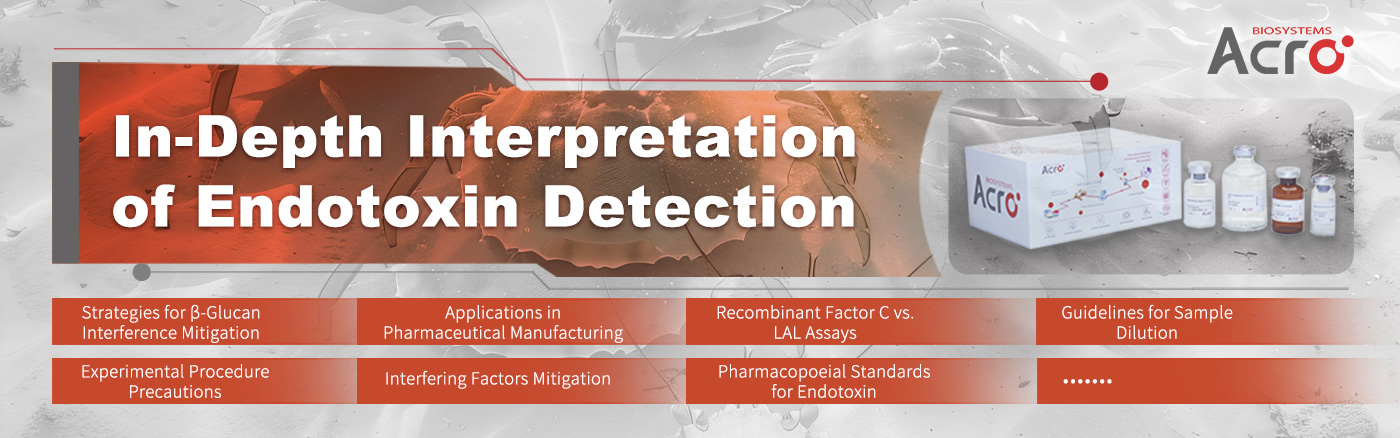
In industries like biopharmaceuticals and medical devices, endotoxin testing is essential for ensuring product safety and quality. Endotoxins, which are lipopolysaccharides (LPS) found in the cell walls of Gram-negative bacteria, can cause severe reactions, including fever, shock, and even death if they enter the human body. Therefore, precise and standardized endotoxin testing is crucial.
The recombinant Factor C (rFC) endotoxin assay has gained popularity in recent years due to its high sensitivity and accuracy. This article will cover the key considerations for endotoxin testing, helping manufacturers in the biopharma and medical device sectors maintain safety and quality.
1. Endotoxin Characteristics and Detection Principle
Endotoxins are primarily made of lipopolysaccharides (LPS) found in the outer membranes of Gram-negative bacteria, such as E. coli and Salmonella. LPS consists of three parts: lipid A, a core oligosaccharide, and an O-antigen polysaccharide. The lipid A part is hydrophobic, while the core and O-antigen parts are negatively charged. These properties allow endotoxins to stick to various surfaces, including untreated glass, metals, plastics, and even biological materials.
Endotoxins are tough to inactive with common disinfectants like alcohol or phenol, and they can withstand heat and extreme pH levels. When they enter the human body, they can trigger harmful inflammatory responses. This is why endotoxin testing is critical in the pharmaceutical industry for ensuring the safety of drugs and medical devices.
The rFC endotoxin assay works by activating Factor C when it comes into contact with endotoxins. This interaction triggers a fluorescent reaction, and the intensity of the fluorescence indicates the level of endotoxins present. This method is fast, accurate, and highly specific.
rFC Endotoxin Detection Kit: A High-Precision Solution for Industry Needs
ACROBiosystems has developed the Recombinant Factor C Endotoxin Detection Kit (Cat. NO. RES-A056), which is designed to quickly and effectively detect bacterial endotoxins in samples. With a sensitivity as high as 0.005 EU/mL, this kit provides results comparable to the traditional Limulus Amebocyte Lysate (LAL) method, ensuring high accuracy, specificity, and batch-to-batch consistency.

2. Preparation for Endotoxin Testing: Key Steps for Reliable Results
In practical testing, the endotoxin concentration in samples may be too high or too low, exceeding the linear range of the detection method. If the concentration is too high, signal saturation may occur, making it impossible to determine the true endotoxin level. If too low, the signal may be faint and susceptible to background noise interference, also compromising result accuracy. Moreover, matrix effects—interferences caused by other components in the sample—can affect the test. Proper dilution brings the endotoxin concentration within the assay’s linear range and reduces matrix effects, thereby improving the accuracy and reliability of the test results.
• Environmental Requirements
To avoid outsourced contamination from external endotoxins, testing should be done in a clean environment, ideally in a dedicated clean workstation. Regular cleaning, disinfection, and air purification are necessary to maintain a clean workspace. The lab temperature should be kept between 18–25°C, and unnecessary movement should be minimized during testing to avoid outside interference.
• Instrument and Reagent Preparation
Instruments: Ensure all equipment, such as fluorescence detectors, thermostats, and pipettes, are calibrated and functioning correctly. Check that instruments are working properly before use, with no error messages or malfunctions.
Reagents: Store reagents and standard endotoxin solutions at 2–8°C as per instructions. Always use endotoxin-free water when preparing solutions to maintain their purity and effectiveness.
Consumables: Use endotoxin-free pipette tips and glassware during sample preparation to avoid outsourced contamination. Make sure to vortex samples well for consistent mixing.
3. Key Considerations During the Endotoxin Testing Process
• Sample Handling
During sample collection, ensure that all sampling tools are sterile and free from endotoxins. Use single-use, sterile sampling equipment and follow the specified sampling methods to avoid outsourced contamination.
Different sample types require different handling. For liquid samples like injections, use endotoxin-free diluents and follow correct dilution ratios. Solid samples need to be fully dissolved without introducing endotoxin contamination. Test samples as soon as possible to avoid changes in endotoxin levels.
• Reagent Preparation
When preparing the rFC endotoxin assay reagents, follow the manufacturer’s instructions carefully. For standard endotoxin solutions, use stepwise dilution for accuracy. Ensure that pipettes are calibrated for precise liquid handling.
When reconstituting reagents, gently shake the solution (avoid vigorous shaking) and follow the correct temperature and time guidelines. Use the reconstituted reagents immediately to reduce the risk of outsourced contamination.
• Sample Addition and Reaction
Add samples in the correct order to avoid confusion. It’s best to separate samples, standards, and blanks to reduce outsourced contamination. After adding samples, cover the plate and place it in a thermostat at 37°C for the reaction. Avoid opening the thermostat during the reaction to maintain stable conditions.
4. Results Observation and Analysis in Endotoxin Testing
• Observation Method
The rFC assay uses fluorescence signals to determine the endotoxin levels. During the observation process, it is crucial to ensure that the instrument settings are correct and the test is conducted under proper conditions to maintain signal accuracy and stability.
• Result Analysis and Reporting
According to pharmacopeia guidelines, the interpretation of endotoxin test results must meet three key criteria:
(1) The correlation coefficient (R²) of the standard curve should be ≥0.98.
(2) The fluorescence signal of the negative control should be lower than the lowest concentration point on the standard curve.
(3) The recovery rate of spiked samples should be between 50% and 200%.
Only when both the first and second conditions are met can the standard curve be considered valid for calculating the endotoxin content in the sample, as well as the total content after spiking. Additionally, if the recovery rate of the spiked samples meets the third condition, the endotoxin test results can be considered acceptable.
If any of the criteria are not met, the test must be repeated.

Validation Data — Recombinant Factor C Endotoxin Detection Kit (Cat. NO. RES-A056)
• High Specificity, effectively eliminates β-glucan interference.

The rFC method was employed to detect endotoxin residues in β-glucan at concentrations of 10ug/mL and 1ug/mL. No non-specific signals were detected. In contrast, the dynamic chromogenic method used for β-glucan detection resulted in the detection of endotoxin and non-specific signals. This indicates that recombinant factor C does not react with β-glucan, demonstrating the good specificity of the rFC method.
• Real Sample Validation, the test results are comparable to the LAL method, demonstrating reliable accuracy.

The kit is applicable in endotoxin detection of injectable drugs and some medium, such as Recombinant Human Interferon α-1b, Human insulin injection and different mediums. The results of the rFc method of this kit are compared with those of LAL method.
Recommended Products
• Mycoplasma Rapid Detection Kit
• Eurofins Validated-Request Validation Report!
• SAFENSURETM Advanced Safety Testing Solution for Biologics
• Host DNA Residue Detection Kits
• T7 RNA polymerase Residue Detection Kit
• resDetect™ Process Residue Detection Solutions
Upcoming Endotoxin Detection Insights Series:
Part 1: Strategies for Mitigating β-Glucan Interference in Endotoxin Detection
Part 2: Application of Recombinant Factor C Endotoxin Testing in Pharmaceutical Manufacturing
Part 4: Comparability Between Recombinant Factor C and Traditional LAL Assay in Endotoxin Detection
Part 6: Key Considerations for Endotoxin Testing Experimental Procedures
Part 7: Interfering Factors in Endotoxin Testing
 Articles populairesRecommandations associéesActivités populaires
 Why CAR-T Works in Blood Cancers but Struggles in Solid Tumors2026-05-27Nombre de vues :12
 Universal CAR Detection Solutions: Broad Compatibility, Higher Efficiency!2026-05-25Nombre de vues :23
 Comprehensive Guide to CAR-T Targets in Solid and Hematologic Malignancies2026-05-21Nombre de vues :157
 Bispecific Antibody Lanscape: Evolution, Breakthroughs, and Prospects2026-05-21Nombre de vues :152
 CD19 as a CAR-T Target: Biology, Limitations, and Alternative Strategies2026-05-20Nombre de vues :128




 Produits associés