Save Product

Product Details
Source
Monoclonal Anti-G4S linker Antibody, Rabbit IgG (016) is a rabbit monoclonal antibody recombinantly expressed from human 293 cells (HEK293), which provides higher batch consistency and long term security of supply.
Antibody Type
Recombinant Monoclonal
Clone
016
Isotype
Rabbit IgG, Kappa
Host Species
Rabbit
Conjugate
FITC
Excitation source: 488 nm spectral line, argon-ion laser
Excitation Wavelength: 488 nm
Emission Wavelength: 535 nm
Specificity
It can specifically recognize proteins or ScFv containing (G3S)n or (G4S)n linkers, where n = 2, 3, 4... That is, it can recognize linkers with a minimum length of 2 repeats for both (G3S)n and (G4S)n.
Application
Flow Cytometry (Evaluation of cell surface expressed CARs of varying specificity containing a G4S linker within the scFv of the extracellular domain).
Recommended Dilution
1:50
Form
Lyophilized
Formulation
Lyophilized from a 0.22 μm-filtered solution in PBS (pH 7.4) containing 0.03% ProClin 300, with trehalose as protectant.
Please contact us for customized product forms or formulations.
Reconstitution
Please refer to the Certificate of Analysis (CoA) for specific instructions.
Shipping
Lyophilized product is shipped at ambient temperature.
Storage
Please protect from light and avoid repeated freeze-thaw cycles.
This product is stable after storage at:
- -20°C to -70°C for 24 months in lyophilized state;
- -70°C for 12 months after reconstitution.
- 2-8 °C for 12 months after reconstitution.
Notices
Product Specific Notices: For research use only.
ACRO Quality Management System
Customers Also Viewed
Performance Data
Bioactivity-FACS

Flow cytometric analysis of Anti-MSLN CAR-293 cells staining with FITC-Labeled Monoclonal Anti-G4S linker Antibody, Rabbit IgG (016) (Cat. No. G4S-FAFYP1) at 1:50 dilution (2 μL of the antibody stock solution corresponds to labeling of 1e6 cells in a final volume of 100 µL), compared with negative control. FITC signal was used to evaluate the binding activity (QC tested).
Protocol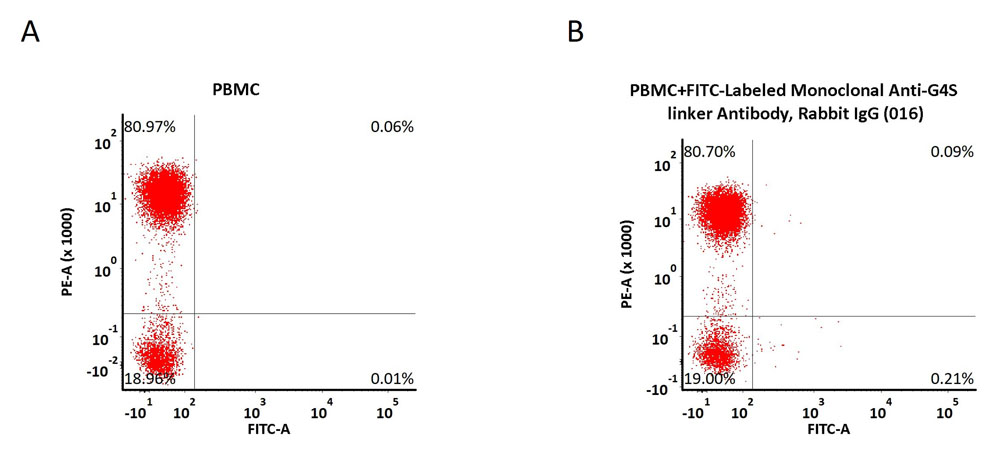
Non-specificity of FITC-Labeled Monoclonal Anti-G4S linker Antibody, Rabbit IgG (016) (Cat. No. G4S-FAFYP1) binding to CD3+ cells present in human PBMC. 5e5 of human PBMCs were simultaneously stained with PE anti-CD3 antibody and FITC-Labeled Monoclonal Anti-G4S linker Antibody, Rabbit IgG (016) (2 μL of the antibody stock solution corresponds to labeling of 5e5 cells in a final volume of 100 µL) and washed and then analyzed with FACS. Both PE and FITC positive signals was used to evaluate the non-specific binding activity to human CD3+ cells (QC tested).
Protocol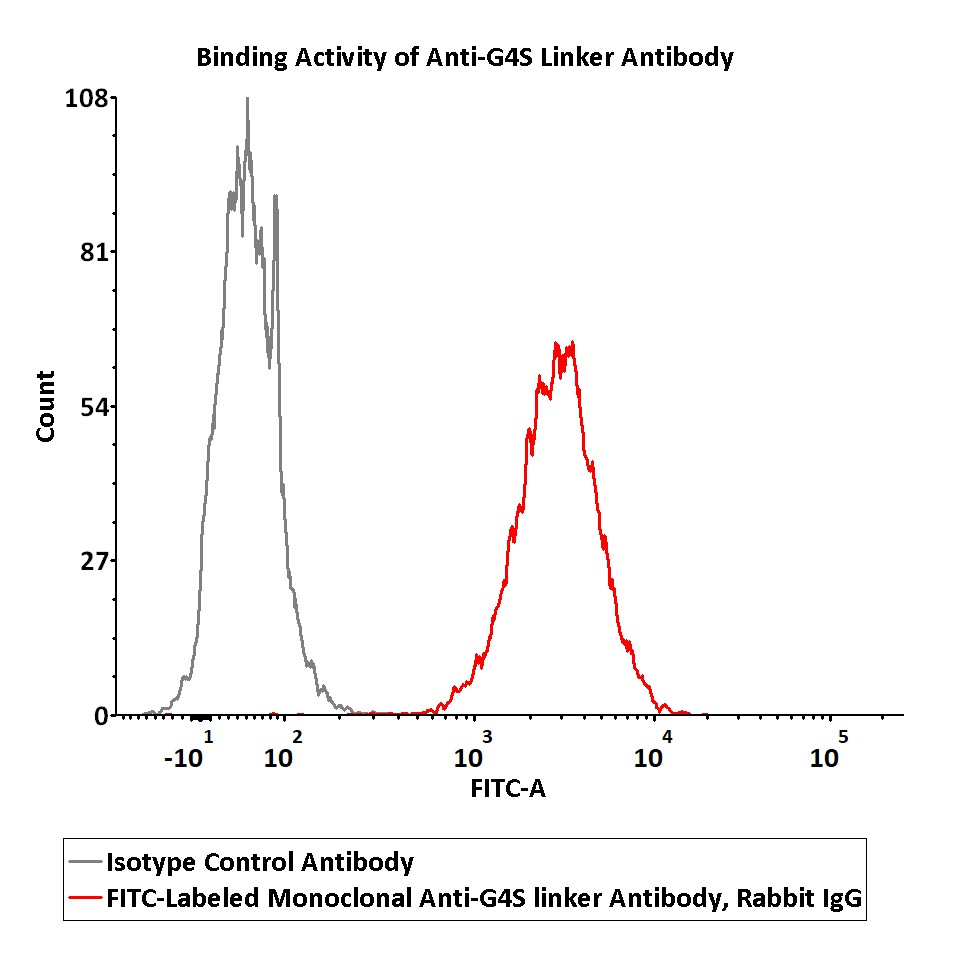
Flow cytometric analysis of Anti-CD22 CAR-293 cells staining with FITC-Labeled Monoclonal Anti-G4S linker Antibody, Rabbit IgG1 (016) (Cat. No. G4S-FAFYP1) at 1:50 dilution (2 μL of the antibody stock solution corresponds to labeling of 1e6 cells in a final volume of 100 µL), compared with isotype control antibody. FITC signal was used to evaluate the binding activity (Routinely tested).
Protocol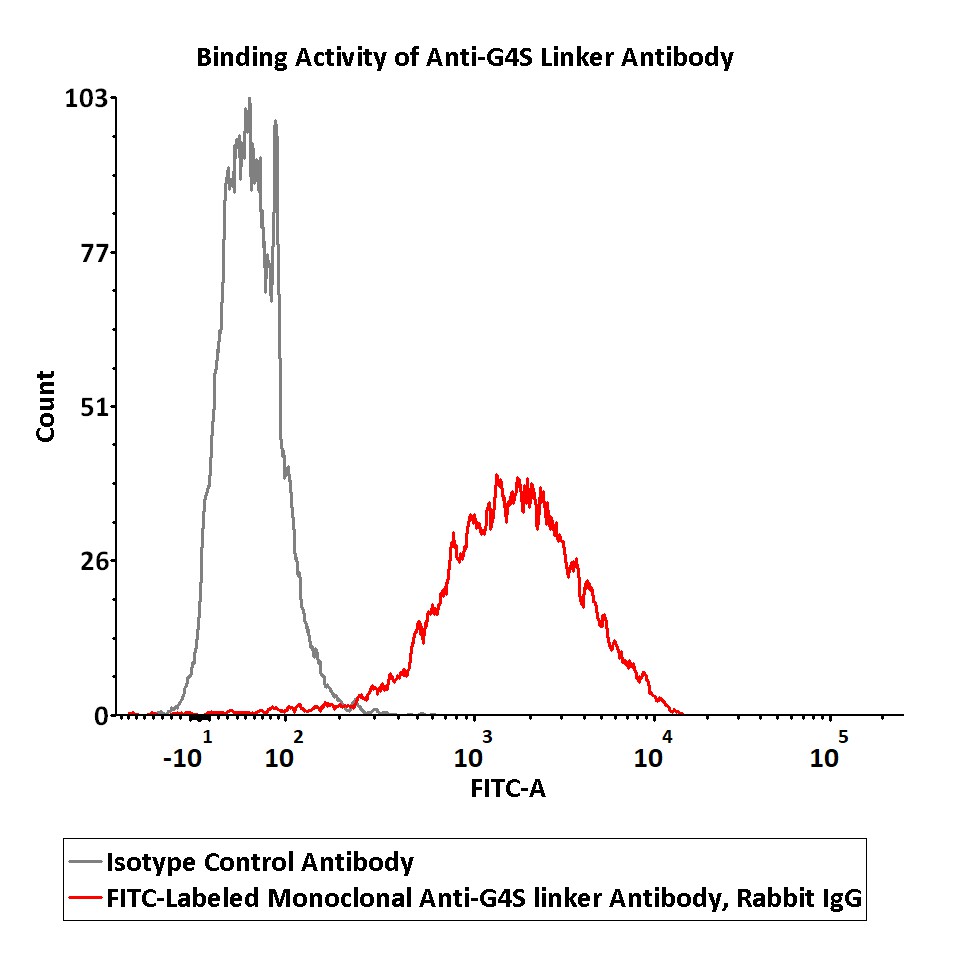
Flow cytometric analysis of Anti-CD19 CAR-293 cells staining with FITC-Labeled Monoclonal Anti-G4S linker Antibody, Rabbit IgG1 (016) (Cat. No. G4S-FAFYP1) at 1:50 dilution (2 μL of the antibody stock solution corresponds to labeling of 1e6 cells in a final volume of 100 µL), compared with isotype control antibody. FITC signal was used to evaluate the binding activity (Routinely tested).
Protocol
Compared Data
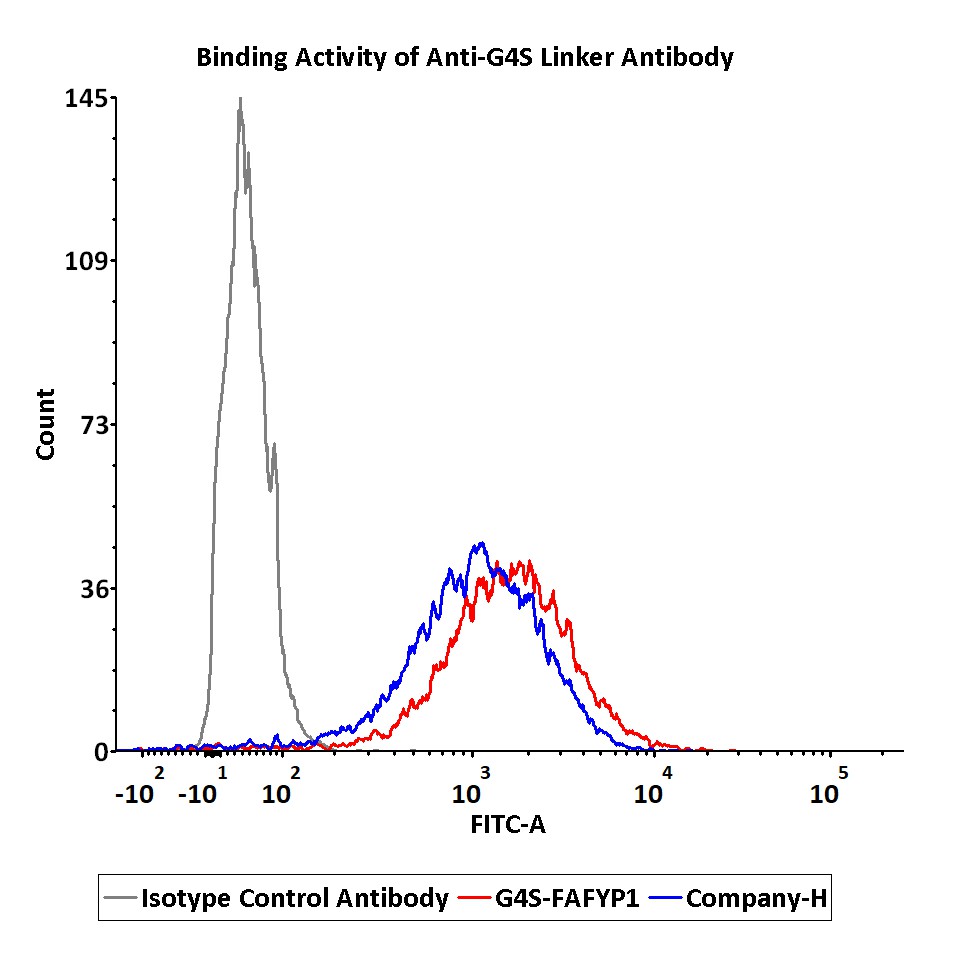
Flow cytometric analysis of Anti-MSLN CAR-293 cells staining with FITC-Labeled Monoclonal Anti-G4S linker Antibodies. FITC signal was used to evaluate the binding activity of anti-G4S linker antibody. The biological activity level of G4S-FAFYP1 is superior to Company H (Routinely tested).
Protocol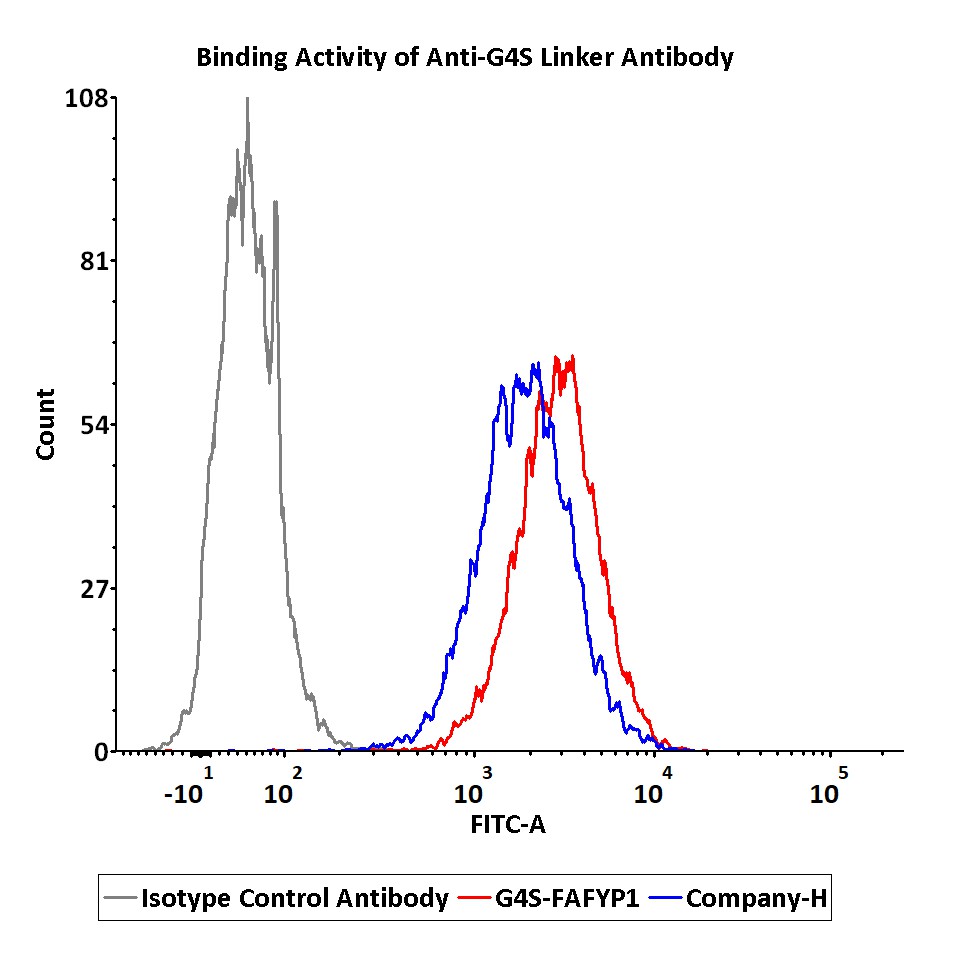
Flow cytometric analysis of Anti-CD22 CAR-293 cells staining with FITC-Labeled Monoclonal Anti-G4S linker Antibodies. FITC signal was used to evaluate the binding activity of anti-G4S linker antibody. The biological activity level of G4S-FAFYP1 is superior to Company H (Routinely tested).
Protocol
Customer Reviews Writing Reviews
 A***e2025-10-10
 LikesThe product worked very well and shipping was fast.
 Contact Us


 Drug Candidate Licensing