


Immunization
Alternative:



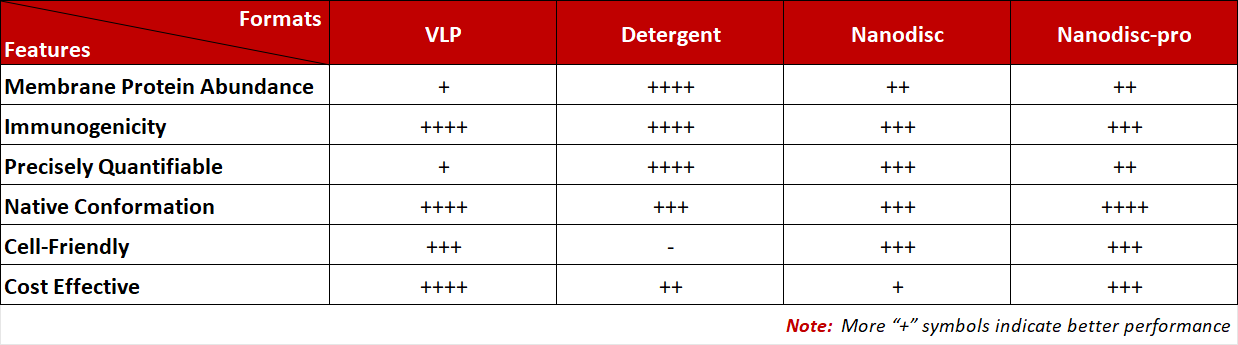
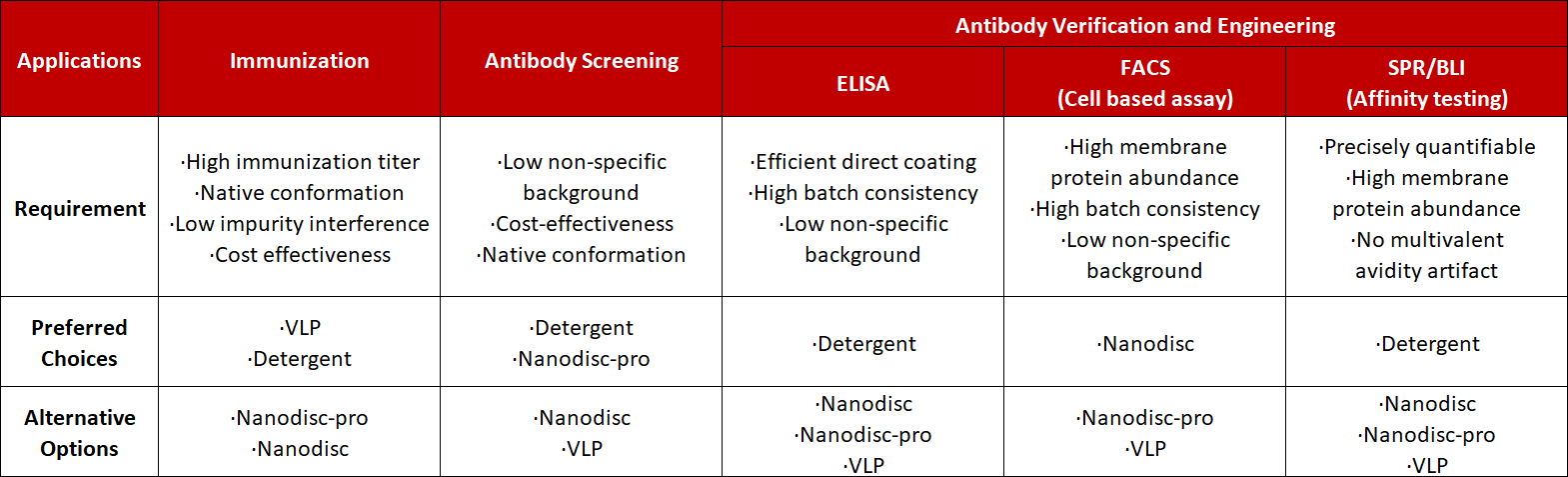

Virus-like particles (VLPs) are produced by co-expressing target membrane proteins with viral structural proteins in mammalian cells, enabling native embedding of membrane proteins into the lipid bilayer during VLP budding. This approach preserves authentic conformation, post-translational modifications, and orientation, while creating a completely detergent-free environment with repetitive multivalent display and strong immunogenicity making them ideal for immunization, binding assays in antibody discovery and screening (ELISA), and cell-based assays such as FACS, etc.

Through mild detergent micelle extraction, dedicated solubilization, and stringent affinity purification, we maximally retain the native transmembrane conformation of full-length transmembrane proteins throughout downstream purification. This workflow yields purified, detergent-solubilized proteins free of unrelated membrane impurities and exogenous scaffold proteins, with exceptional purity, accurate quantitation, and well-preserved biological activity---ideal for immunization, binding assays in antibody discovery and screening (ELISA) and affinity testing (SPR and BLI), etc.

Nanodisc reconstitution is a self-assembly process that starts from purified, detergent-solubilized membrane proteins and reconstitutes them into synthetic phospholipid bilayers stabilized by MSP1D1 membrane scaffold protein. This creates a stable, detergent-free environment that preserves native conformation and biological activity, with excellent homogeneity and full compatibility with cell-based assays such as FACS and binding assays in antibody discovery and screening (ELISA), etc.

Nanodisc-pro membrane protein extraction is a gentle, non-disruptive process that directly isolates full-length transmembrane proteins together with their surrounding native phospholipids from cellular membranes, without breaking or disturbing the original membrane structure. This preserves the membrane protein's natural conformational landscape and native lipid environment, yielding stable nanodisc that retain cellular phospholipids and eliminate the need for detergent solubilization, with fully preserved biological activity---making them ideal for cell-based assays such as FACS and binding assays in antibody discovery and screening (ELISA), etc.
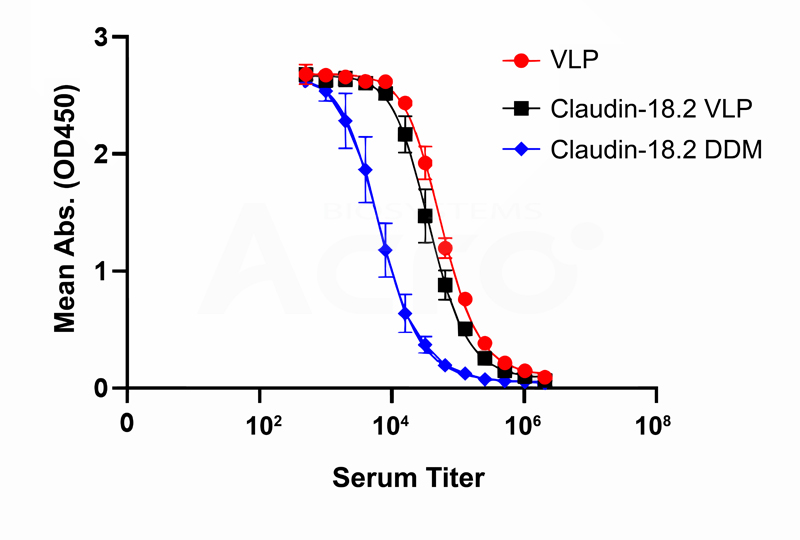
Immunogen: Claudin-18.2 VLP (Cat. No. CL2-H52P7)
Group 1 (Red line): Coated with VLP backbone (Cat. No. VLP-N5213) to characterize the antibody titer against VLP backbone in serum.
Group 2 (Black line): Coated with Claudin-18.2 VLP (Cat. No. CL2-H52P7) to characterize the antibody titers against both Claudin-18.2 and VLP backbone in serum.
Group 3 (Blue line): Coated with Claudin-18.2 Detergent (DDM) (Cat. No. CL2-H5587) to characterize the antibody titer against Claudin-18.2 in serum.
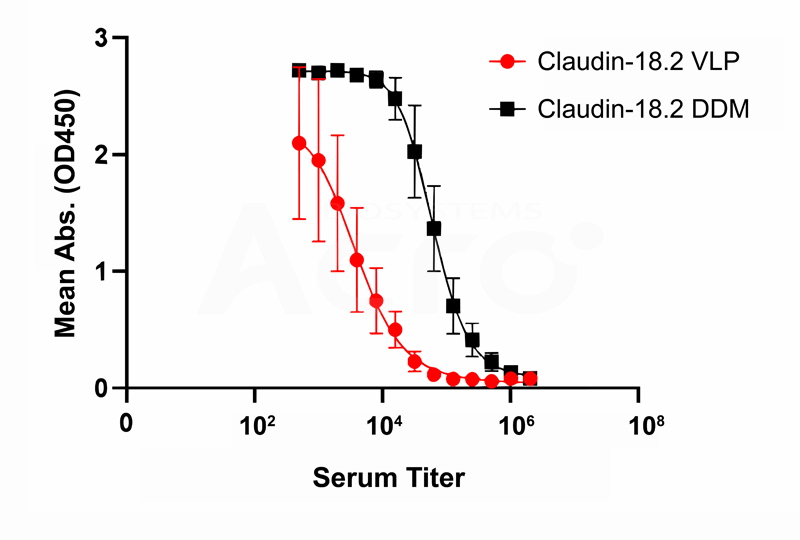
Immunogen: Claudin-18.2 Detergent (DDM) (Cat. No. CL2-H5587)
Group 1 (Red line): Coated with Claudin-18.2 VLP (Cat. No. CL2-H52P7) to characterize the antibody titers against both Claudin-18.2 and VLP backbone in serum.
Group 2 (Black line): Coated with Claudin-18.2 Detergent (DDM) (Cat. No. CL2-H5587) to characterize the antibody titer against Claudin-18.2 in serum.
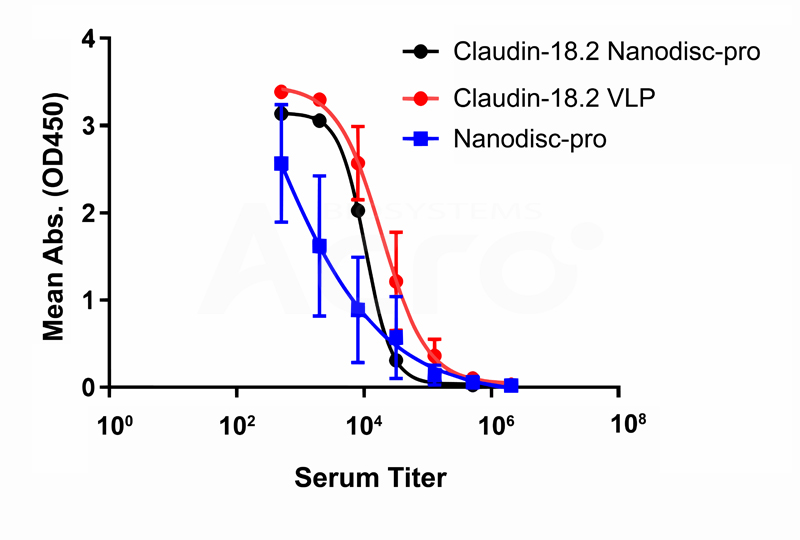
Immunogen: Claudin-18.2 Nanodisc-pro (Cat. No. CL2-H5589)
Group 1 (Black line): Coated with Claudin-18.2 Nanodisc-pro (Cat. No. CL2-H5589) to characterize the antibody titer against both Claudin-18.2 and Nanodisc-pro backbone in serum.
Group 2 (Red line): Coated with Claudin-18.2 VLP (Cat. No. CL2-H52P7) to characterize the antibody titers against both Claudin-18.2 and VLP backbone in serum.
Group 3 (Blue line): Coated with Nanodisc-pro backbone (Cat. No. APO-H5143) to characterize the antibody titer against Nanodisc-pro backbone in serum.
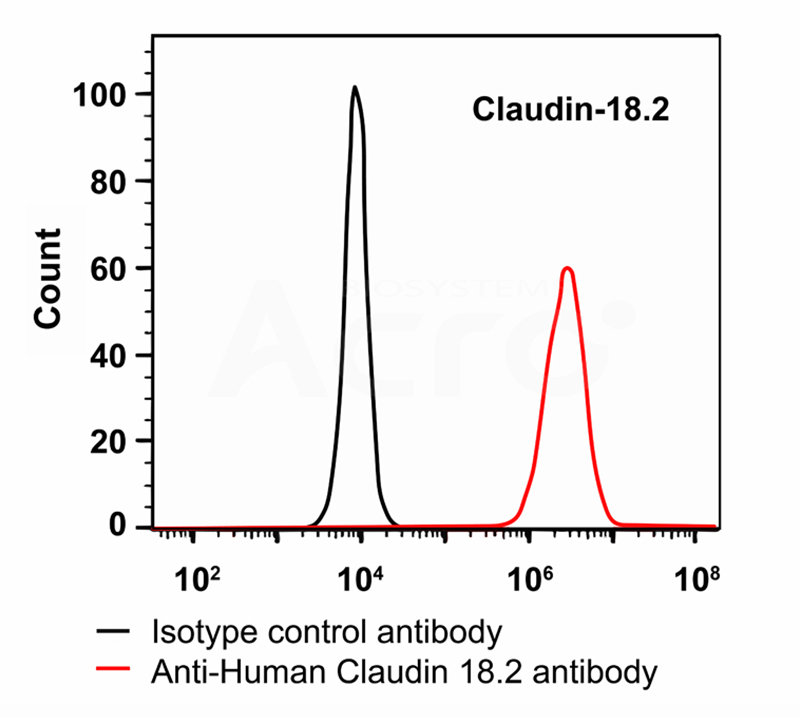
Specific binding to Claudin-18.2 cells (target). Compared to the isotype control (black line), the anti-human Claudin 18.2 antibody (red line) exhibits a significant rightward shift in fluorescence signal on Claudin-18.2-expressing cells, demonstrating strong binding activity.
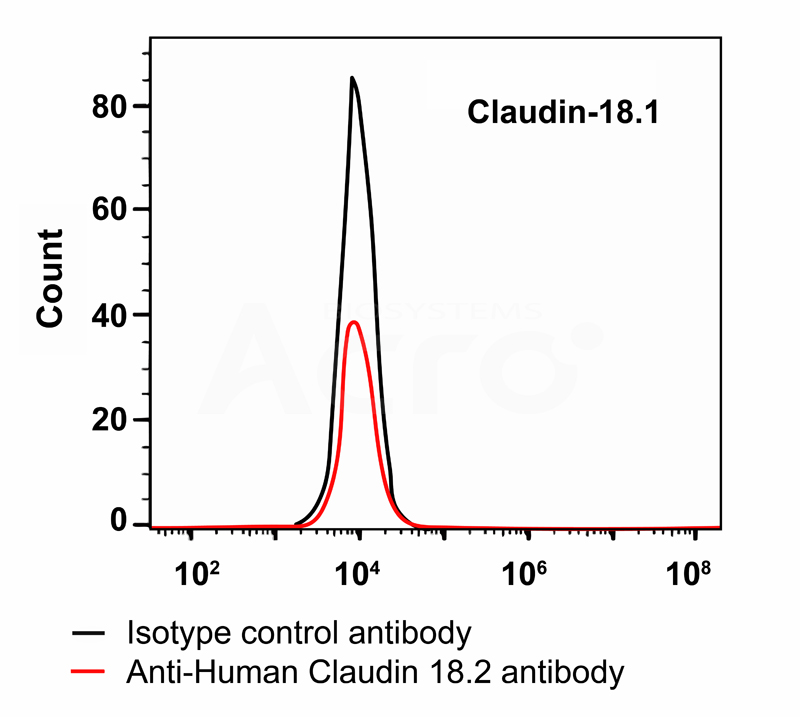
Cross-reactivity evaluation against Claudin-18.1 cells (negative control). The signal peak of the antibody (red line) completely overlaps with the isotype control (black line) on Claudin-18.1-expressing cells, indicating high antibody specificity with no apparent cross-reactivity with homologous proteins.
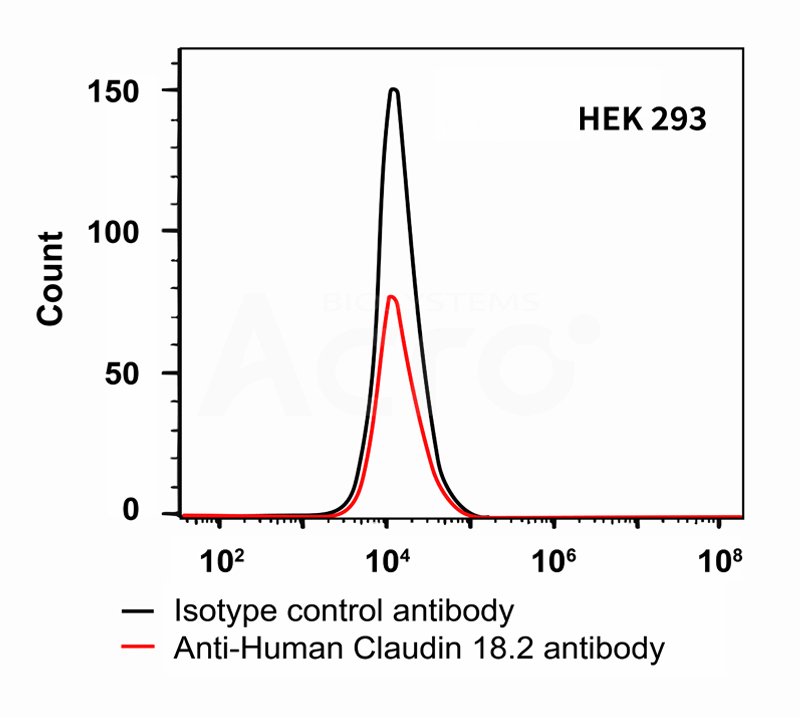
Binding evaluation on HEK 293 cells. The signal peak of the antibody (red line) perfectly overlaps with the isotype control (black line) on HEK 293 cells, demonstrating no significant non-specific binding to background cells.
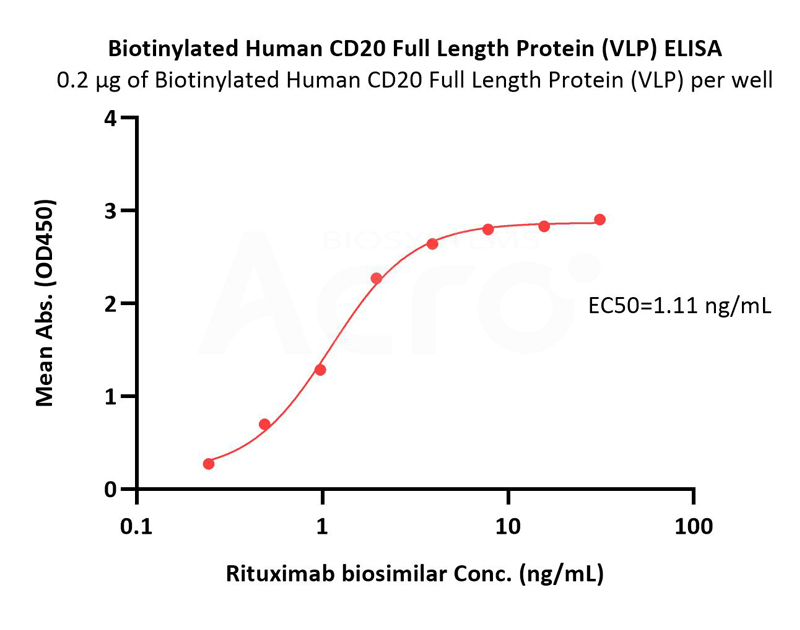
As verified by ELISA, biotinylated full-length CD20-VLP (Cat. No. CD0-H82P3) specifically binds to Rituximab biosimilar with an EC50 of 1.11 ng/mL.
Request Protocol
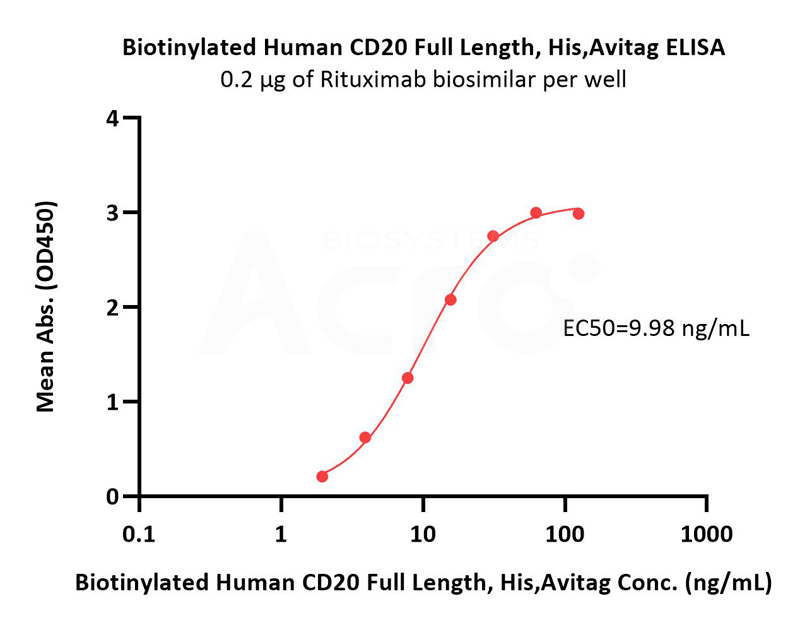
As verified by ELISA, biotinylated full-length CD20-Detergent (Cat. No. CD0-H82E5) specifically binds to Rituximab biosimilar with an EC50 of 9.98 ng/mL.
Request Protocol
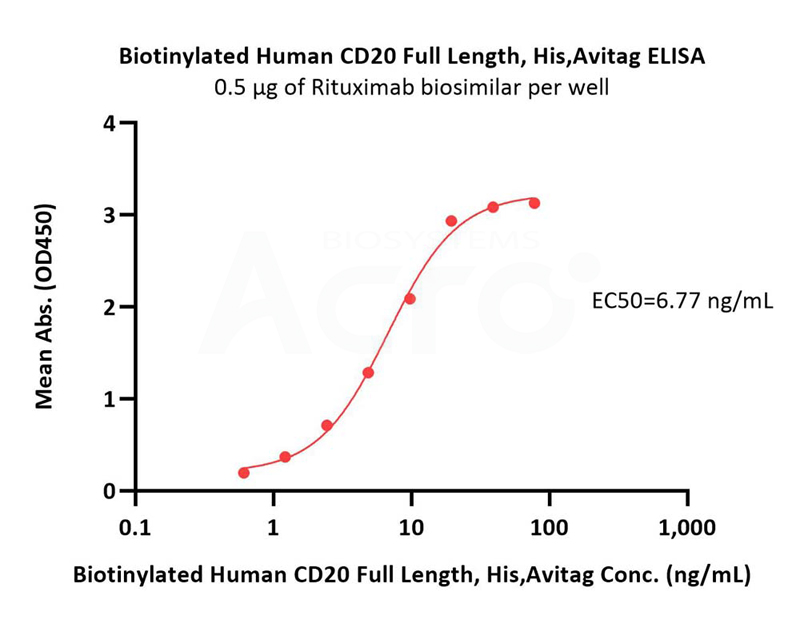
As verified by ELISA, biotinylated full-length CD20-Nanodisc (Cat. No. CD0-H82E3) specifically binds to Rituximab biosimilar with an EC50 of 6.77 ng/mL.
Request Protocol
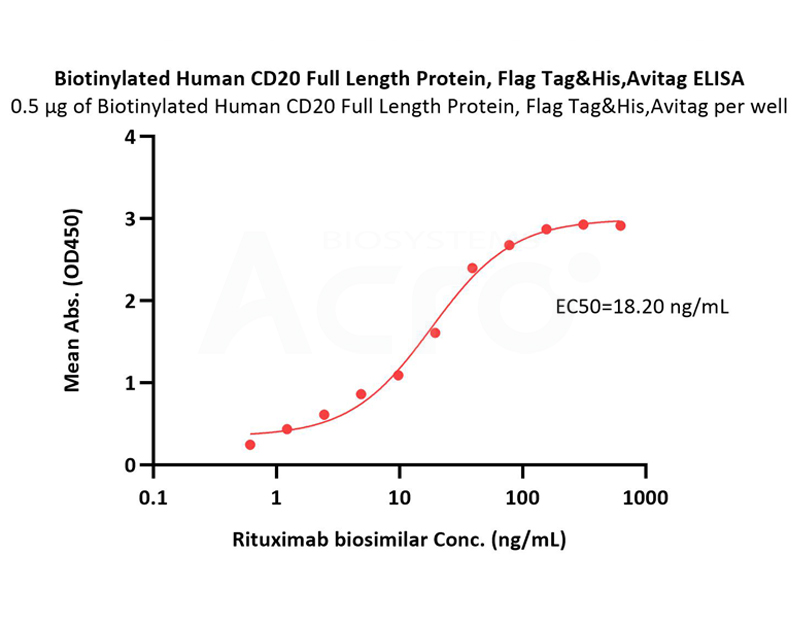
As verified by ELISA, biotinylated full-length CD20-Nanodisc-pro (Cat. No. CD0-H82D3) specifically binds to Rituximab biosimilar with an EC50 of 18.20 ng/mL.
Request Protocol
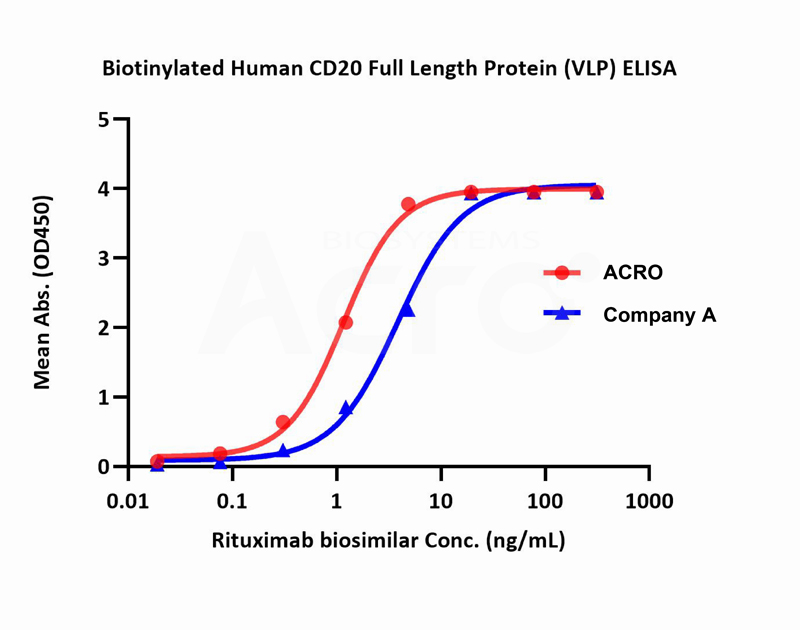
ELISA results indicated that biotinylated full-length CD20-VLP (Cat. No. CD0-H82P3) can bind to Rituximab biosimilar with an EC50 of 1.11 ng/mL, while Company A's biotinylated full-length CD20-VLP exhibits an EC50 of 3.76 ng/mL.
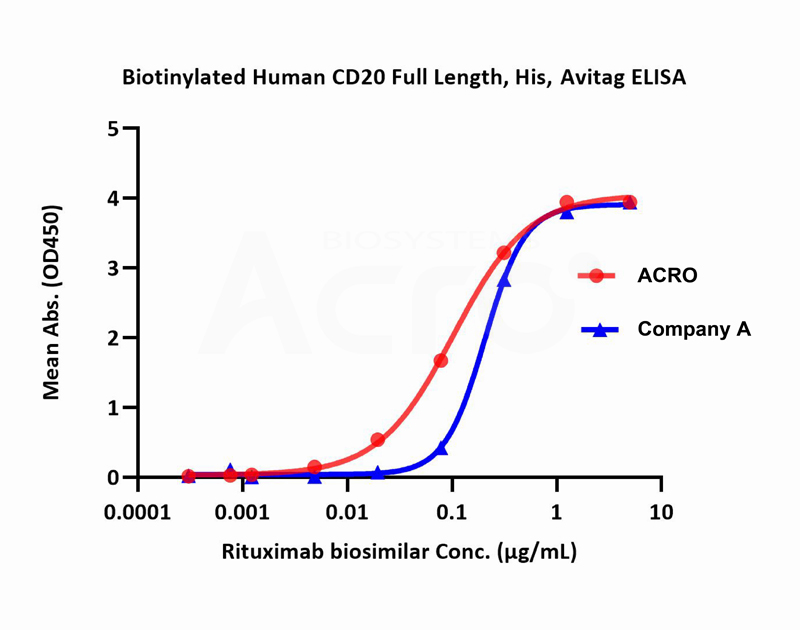
ELISA results indicated that biotinylated full-length CD20-Nanodisc (Cat. No. CD0-H82E3) can bind to Rituximab biosimilar with an EC50 of 10.31 ng/mL, whereas Company A's biotinylated full-length CD20-Nanodisc exhibits an EC50 of 20.53 ng/mL.
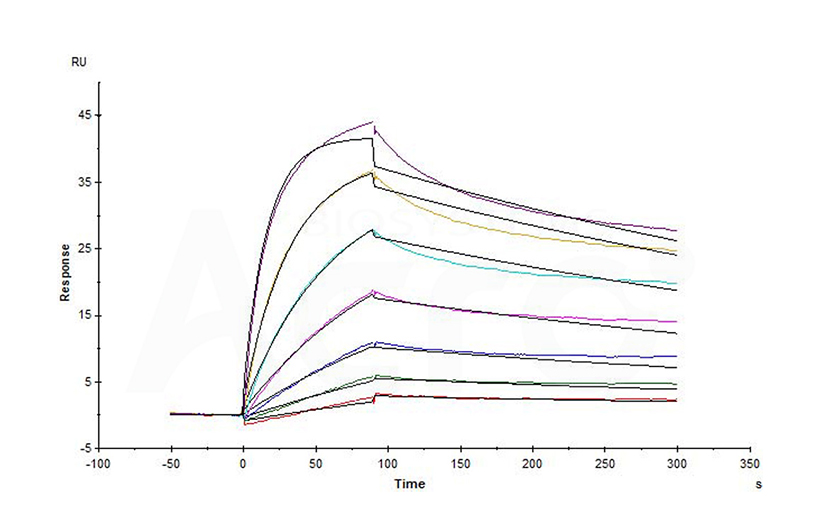
As verified by SPR, biotinylated full-length CD20 Detergent (Cat. No. CD0-H82E5) can bind to Rituximab biosimilar with an affinity constant of 1.73 nM.
Request Protocol
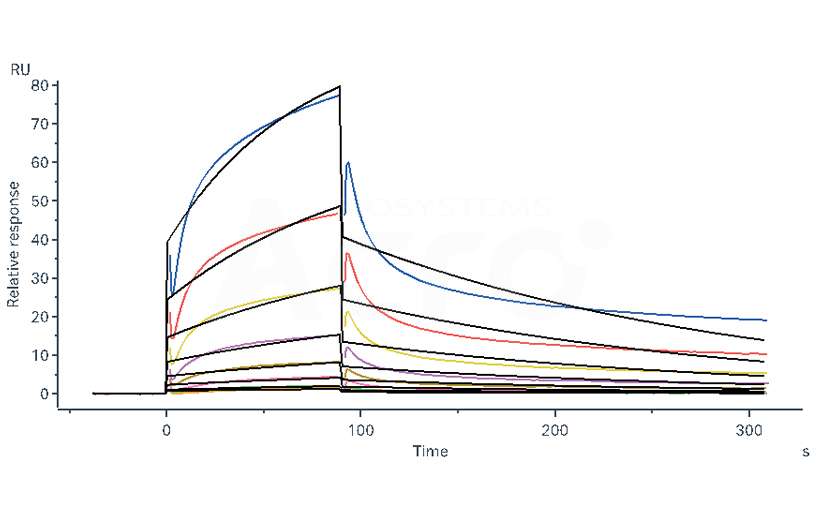
As verified by SPR, biotinylated full-length CD20 Nanodisc (Cat. No. CD0-H82E3) can bind to Rituximab biosimilar with an affinity constant of 49.2 nM.
Request Protocol
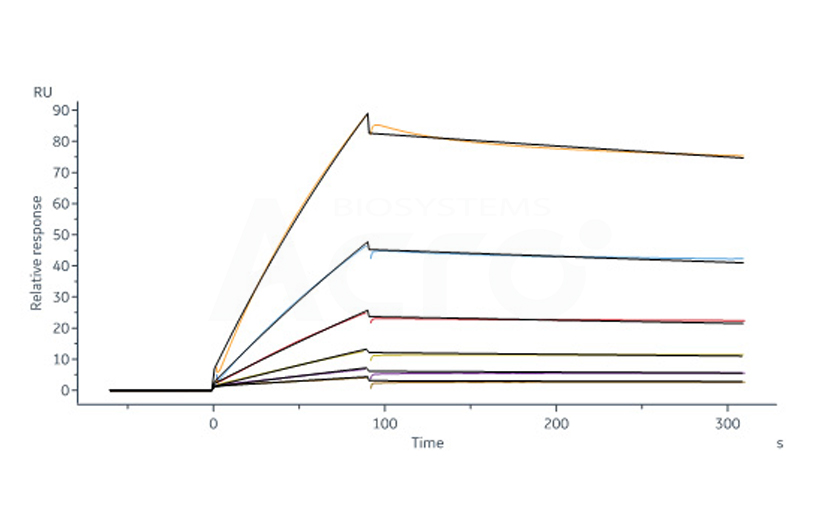
As verified by SPR, biotinylated full-length CD20 Nanodisc-pro (Cat. No. CD0-H82D3) can bind to Rituximab biosimilar with an affinity constant of 20.4 nM.
Request Protocol
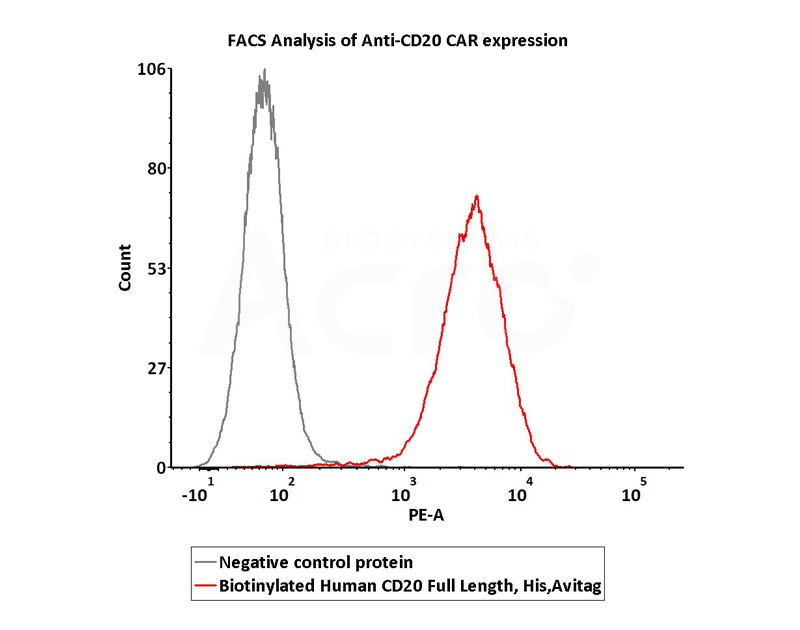
As verified by FACS, biotinylated full-length CD20-Nanodisc (Cat. No. CD0-H82E3) and a negative control protein (Cat. No. APO-H81Q5) were incubated with transfected Anti-CD20 CAR-293 cells, respectively. The results indicate that CD20-Nanodisc can bind to Anti-CD20 CAR-293 cells.
Request Protocol
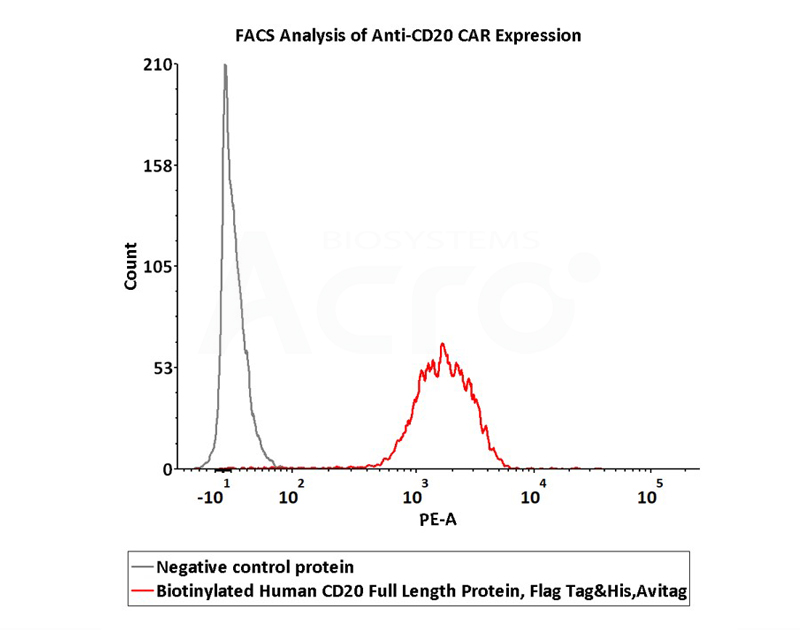
As verified by FACS, biotinylated full-length CD20-Nanodisc-pro (Cat. No. CD0-H82D3) and a negative control protein (Cat. No. APO-H8113) were incubated with transfected Anti-CD20 CAR-293 cells, respectively. The results indicate that CD20-Nanodisc-pro can bind to Anti-CD20 CAR-293 cells.
Request Protocol
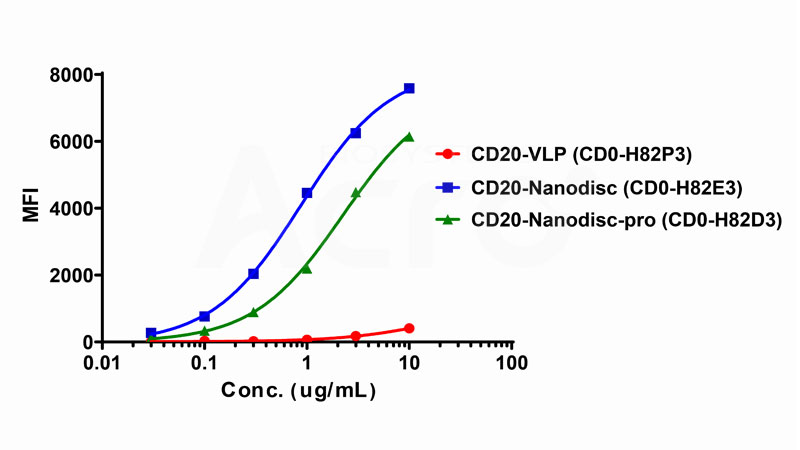
Comparison of FACS signal intensities among ACRO's VLP, Nanodisc, and Nanodisc-pro.
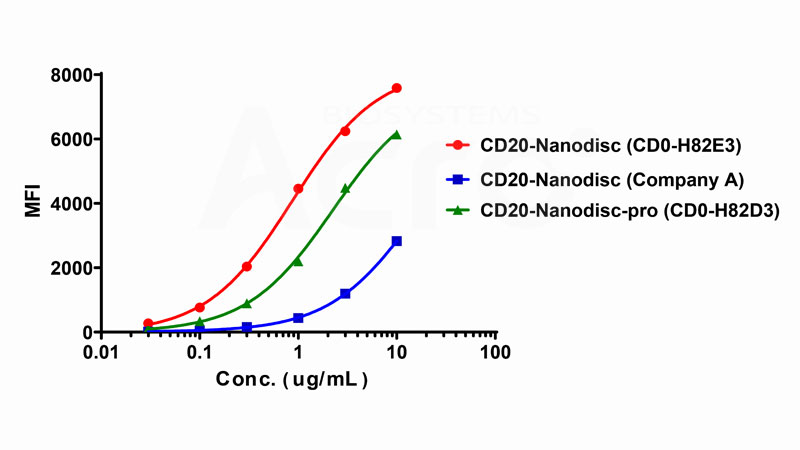
Comparison of FACS signal intensities among ACRO's Nanodisc and Nanodisc-pro with Company A's Nanodisc.
Immunogen: Claudin-18.2 VLP (Cat. No. CL2-H52P7)
Group 1 (Red line): Coated with VLP backbone (Cat. No. VLP-N5213) to characterize the antibody titer against VLP backbone in serum.
Group 2 (Black line): Coated with Claudin-18.2 VLP (Cat. No. CL2-H52P7) to characterize the antibody titers against both Claudin-18.2 and VLP backbone in serum.
Group 3 (Blue line): Coated with Claudin-18.2 Detergent (DDM) (Cat. No. CL2-H5587) to characterize the antibody titer against Claudin-18.2 in serum.
Immunogen: Claudin-18.2 Detergent (DDM) (Cat. No. CL2-H5587)
Group 1 (Red line): Coated with Claudin-18.2 VLP (Cat. No. CL2-H52P7) to characterize the antibody titers against both Claudin-18.2 and VLP backbone in serum.
Group 2 (Black line): Coated with Claudin-18.2 Detergent (DDM) (Cat. No. CL2-H5587) to characterize the antibody titer against Claudin-18.2 in serum.
Immunogen: Claudin-18.2 Nanodisc-pro (Cat. No. CL2-H5589)
Group 1 (Black line): Coated with Claudin-18.2 Nanodisc-pro (Cat. No. CL2-H5589) to characterize the antibody titer against both Claudin-18.2 and Nanodisc-pro backbone in serum.
Group 2 (Red line): Coated with Claudin-18.2 VLP (Cat. No. CL2-H52P7) to characterize the antibody titers against both Claudin-18.2 and VLP backbone in serum.
Group 3 (Blue line): Coated with Nanodisc-pro backbone (Cat. No. APO-H5143) to characterize the antibody titer against Nanodisc-pro backbone in serum.
Specific binding to Claudin-18.2 cells (target). Compared to the isotype control (black line), the anti-human Claudin 18.2 antibody (red line) exhibits a significant rightward shift in fluorescence signal on Claudin-18.2-expressing cells, demonstrating strong binding activity.
Cross-reactivity evaluation against Claudin-18.1 cells (negative control). The signal peak of the antibody (red line) completely overlaps with the isotype control (black line) on Claudin-18.1-expressing cells, indicating high antibody specificity with no apparent cross-reactivity with homologous proteins.
Binding evaluation on HEK 293 cells. The signal peak of the antibody (red line) perfectly overlaps with the isotype control (black line) on HEK 293 cells, demonstrating no significant non-specific binding to background cells.
| Cat. No. | Molecule | Product Description | Order Now |
|---|---|---|---|
 Order Order | |||
| Order | |||
| Order | |||
| Order | |||
| Order | |||
| Order | |||
| Order | |||
| Order | |||
| Order | |||
| Order | |||
| Order | |||
| Order | |||
| Order | |||
| Order | |||
| Order | |||
| Order | |||
| Order | |||
| Order | |||
| Order | |||
| Order | |||
| Order | |||
| Order | |||
| Order | |||
| Order | |||
| Order | |||
| Order | |||
| Order | |||
| Order | |||
| Order | |||
| Order | |||
| Order | |||
| Order | |||
| Order | |||
| Order | |||
| Order | |||
| Order | |||
| Order | |||
| Order | |||
| Order | |||
| Order | |||
| Order | |||
| Order | |||
| Order | |||
| Order | |||
| Order | |||
| Order | |||
| Order | |||
| Order | |||
| Order | |||
| Order | |||
| Order | |||
| Order | |||
| Order | |||
| Order | |||
| Order | |||
| Order | |||
| Order | |||
| Order | |||
| Order | |||
| Order | |||
| Order | |||
| Order | |||
| Order | |||
| Order | |||
| Order | |||
| Order | |||
| Order | |||
| Order | |||
| Order | |||
| Order | |||
| Order | |||
| Order | |||
| Order | |||
| Order | |||
| Order | |||
| Order | |||
| Order | |||
| Order | |||
| Order | |||
| Order | |||
| Order | |||
| Order | |||
| Order | |||
| Order | |||
| Order | |||
| Order | |||
| Order | |||
| Order | |||
| Order | |||
| Order | |||
| Order | |||
| Order | |||
| Order | |||
| Order | |||
| Order | |||
| Order | |||
| Order |