Save Product

Product Details
Application
- Immunization
- Cell based assay (FACS or functional assay)
- Screening (ELISA)
Synonyms
ACKR2
Source
Human ACKR2 Full Length Protein (VLP) (AC2-H52P3) is expressed from human 293 cells (HEK293). It contains AA Ala 2 - Ala 384 (Accession # O00590).
Predicted N-terminus: Asp
Molecular Characterization
*The isotype control of empty/mock VLP (Cat. No. VLP-N5213) is sold separately and not included in protein, you can follow the link for product information.
Structure
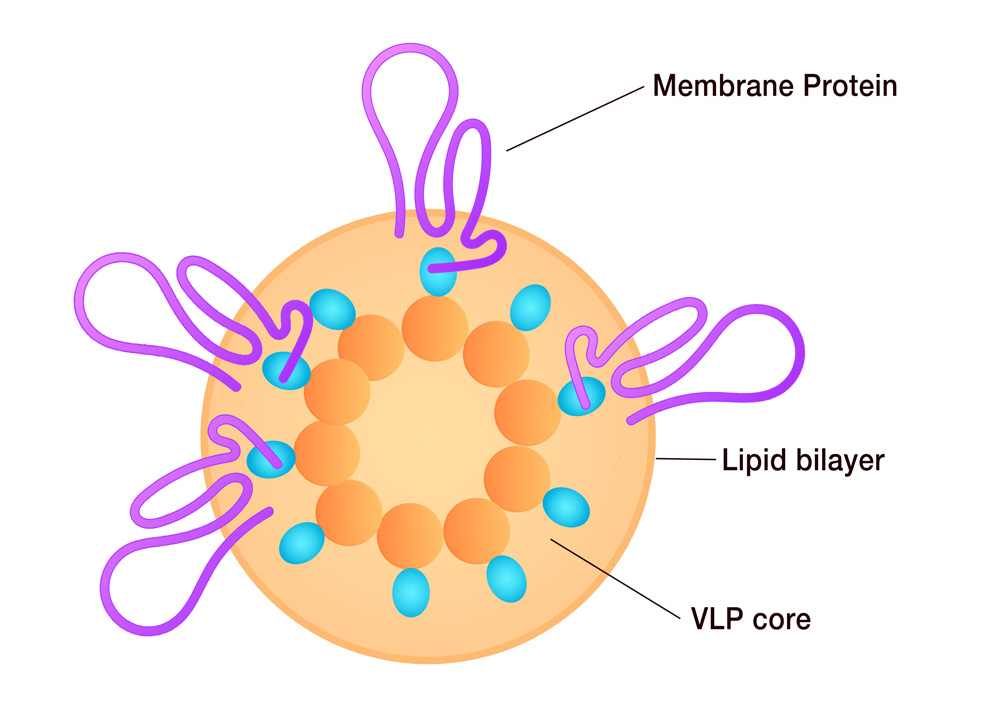
Virus-like particles (VLPs) are protein particles that mimic the shape of viruses but lack a viral genome, and incorporating transmembrane proteins on the external surface.
Synthesis Process

Envelope virus-like particles (eVLPs) are produced by co-expressing target membrane proteins with viral structural proteins in mammalian cells, enabling native embedding of membrane proteins into the lipid bilayer during VLP budding. This approach preserves authentic conformation, post-translational modifications, and orientation, while creating a completely detergent-free environment with repetitive multivalent display and strong immunogenicity making them ideal for immunization, binding assays in antibody discovery and screening (ELISA), and cell-based assays such as FACS, etc.
Endotoxin
Less than 1.0 EU per μg by the LAL method / rFC method.
Formulation
The VLPs are highly immunogenic, so the immunization strategy should be optimized (antigen dose, regimen and adjuvant).
Supplied as 0.2 μm filtered solution in PBS, Arginine, pH7.4 with trehalose as protectant.
Contact us for customized product form or formulation.
Shipping
This product is supplied and shipped with dry ice, please inquire the shipping cost.
Storage
Please avoid repeated freeze-thaw cycles.
This product is stable after storage at:
- The product MUST be stored at -70°C or lower upon receipt;
- -70°C for 12 months under sterile conditions.
ACRO Quality Management System
Customers Also Viewed
Performance Data
Bioactivity-ELISA
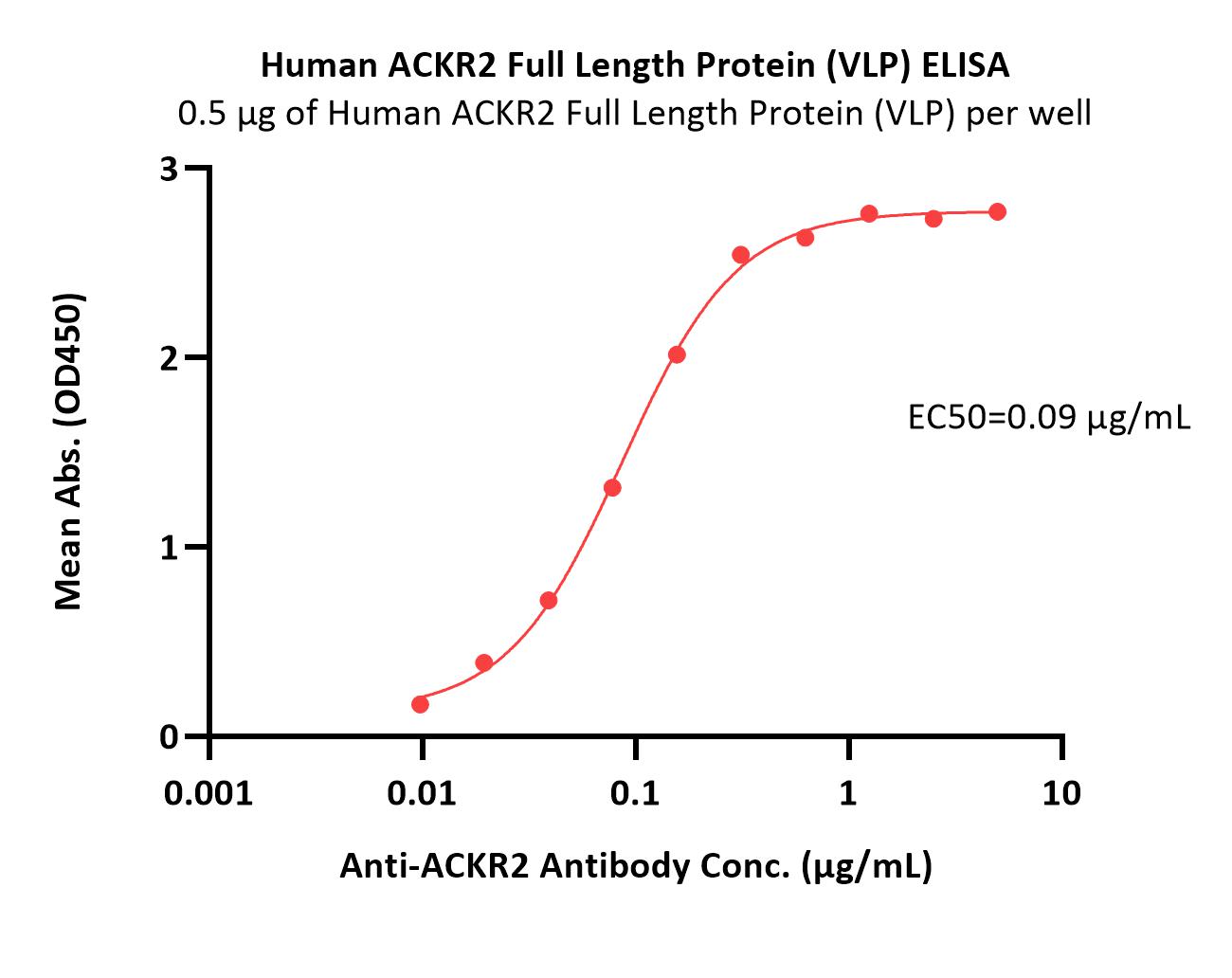
Immobilized Human ACKR2 Full Length Protein (VLP) (Cat. No. AC2-H52P3) at 5 μg/mL (100 μL/well) can bind Anti-ACKR2 Antibody with a linear range of 0.01-0.313 μg/mL (QC tested).
Protocol
Identity-DLS
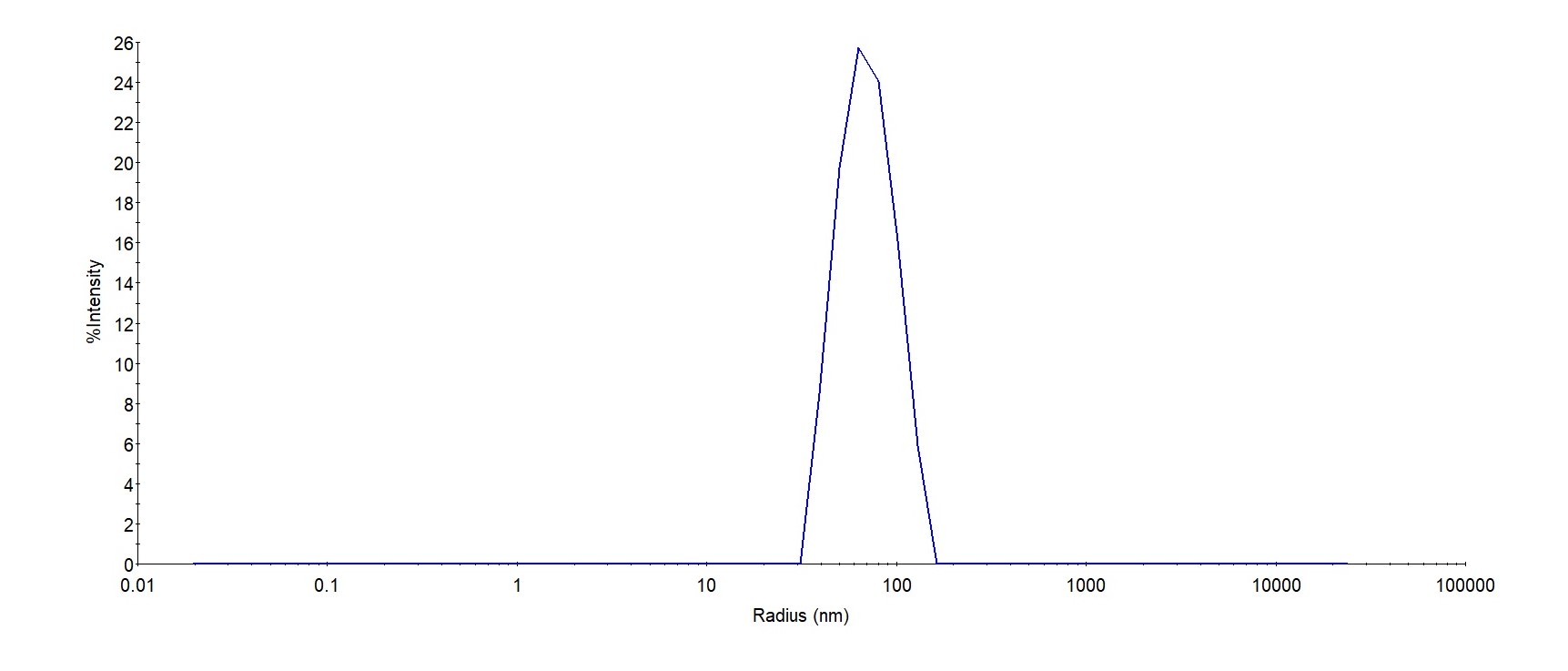
The mean peak Radius of VLP is 60-80 nm with more than 95% intensity as determined by dynamic light scattering (DLS).
Customer Reviews Writing Reviews

 Contact Us


 Drug Candidate Licensing