Reliable Antibody Internalization Assessment: Approaches and Considerations for Antibody Discovery and ADC Research
 Publication Date:2026-07-31
 Page Views:15
Overview
Antibody internalization is a fundamental step in the development of antibody therapeutics and antibody–drug conjugates (ADCs), providing valuable insights into intracellular antibody behavior following target binding. A range of experimental approaches has been developed to evaluate antibody internalization, each offering unique advantages and suited to different research applications.
Beyond assay selection, factors such as experimental design, detection strategy, and data interpretation can all influence the quality and reliability of the results.
This article reviews commonly used approaches for antibody internalization assessment and discusses key considerations for generating reliable and biologically meaningful data, helping researchers better support antibody discovery and ADC research.
Why Antibody Internalization Matters
Antibody internalization is the process by which antibodies bound to cell-surface antigens are taken up into cells through receptor-mediated endocytosis. For antibody therapeutics and antibody–drug conjugates (ADCs), efficient internalization is an important step in delivering antibodies or payloads into target cells.
Different antibodies targeting the same antigen can exhibit distinct internalization behaviors. As a result, internalization studies have become an important part of antibody characterization, helping researchers compare antibody candidates and better understand their interactions with target cells.
Understanding the strengths and limitations of different approaches is key to selecting the most appropriate method for an internalization study.
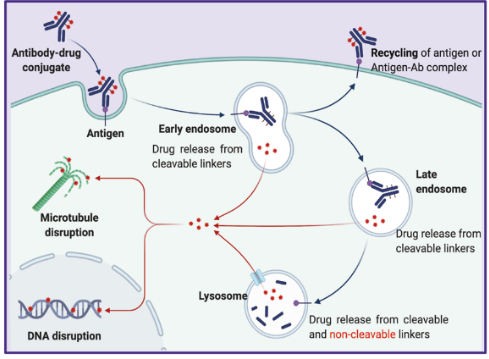
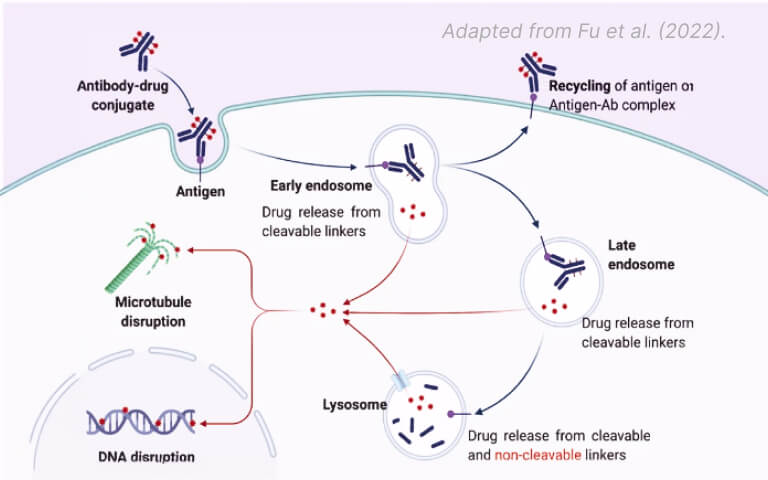
Figure 1. Classic mechanism of action of ADC drugs.
Assessing Antibody Internalization: Selecting the Right Experimental Approach
Different internalization assays provide different types of information. Rather than asking which method is "best," researchers should select an experimental approach based on the purpose of the study. In practice, multiple methods are often used together to evaluate antibody uptake from different perspectives.
Rapid Screening of Antibody Candidates
During early antibody discovery, researchers often need to compare the internalization performance of multiple antibody candidates. Fluorescence-based assays using pH-sensitive probes are widely used because they generate signals only after antibodies enter acidic intracellular compartments, enabling rapid comparison of antibody uptake in live cells.
Secondary Fab-based detection approaches further simplify assay development by eliminating the need to label individual antibodies while reducing the risk of antibody cross-linking that may influence internalization behavior. These approaches are well suited for high-throughput screening and comparative evaluation of antibody candidates.
Quantitative Analysis of Antibody Uptake
After promising candidates have been identified, quantitative analysis provides a more detailed understanding of antibody internalization. Flow cytometry-based assays, together with approaches such as acid stripping or fluorescence quenching, help distinguish internalized antibodies from those remaining on the cell surface.
In addition to endpoint measurements, these methods enable analysis of internalization kinetics and support quantitative comparison between antibody candidates.
Evaluating Intracellular Localization
Internalization is only one part of the cellular uptake process. Imaging-based approaches, including confocal microscopy, high-content screening (HCS), and imaging flow cytometry (IFC), allow researchers to visualize intracellular localization and trafficking following antibody uptake.
These approaches complement quantitative assays by providing additional biological context and helping researchers better understand the intracellular behavior of internalized antibodies.
Key Considerations for Reliable Antibody Internalization Studies
Selecting an appropriate assay is only the first step in an internalization study. Generating reliable and biologically meaningful data depends on thoughtful experimental design, appropriate controls, and careful interpretation of the results. These considerations become particularly important when comparing antibody candidates or evaluating internalization across different experimental systems.
Consider the Biological Context
Antibody internalization is influenced by multiple biological factors, including antigen expression level, receptor turnover, cell type, and experimental conditions. Results generated in engineered cell lines may not always reflect antibody behavior in more physiologically relevant models. When designing internalization studies, selecting appropriate cell models and including suitable controls are essential for generating meaningful data.
Choose Detection Strategies Carefully
Different detection strategies can influence experimental outcomes. Fluorescent labeling methods should preserve antibody binding activity while minimizing changes to antibody properties. Likewise, indirect detection approaches should avoid introducing artificial receptor cross-linking or altering normal internalization behavior. Choosing an appropriate detection strategy helps improve assay consistency and data reliability.
Look Beyond Signal Intensity
A stronger fluorescence signal does not necessarily indicate better antibody performance. Internalization assays measure antibody uptake, but they do not directly explain subsequent intracellular processing or biological activity. Interpreting internalization data together with other characterization results provides a more comprehensive understanding of antibody behavior and supports more informed candidate evaluation.
Reliable internalization assessment depends on integrating appropriate experimental models, detection strategies, and data interpretation rather than relying on any single assay.
Supporting Reliable Antibody Internalization Research
As antibody therapeutics and ADCs continue to evolve, internalization assessment is becoming an increasingly integrated part of antibody characterization rather than a standalone experiment. Instead of relying on a single assay, researchers are increasingly combining complementary approaches to answer different research questions, from rapid candidate comparison to quantitative characterization and intracellular localization.
Developing a reliable internalization workflow therefore requires more than selecting an assay. It involves choosing appropriate detection strategies, establishing robust experimental workflows, and generating reproducible data that can support confident research decisions throughout antibody discovery and ADC development.
To support these research needs, ACROBiosystems provides a portfolio of antibody internalization research tools designed for different experimental scenarios.
pHintra™ Human IgG Internalization Detection Reagent
Enables antibody internalization detection without pre-labeling human IgG antibodies using a fluorescently labeled reagent that binds to human IgG antibodies.
pHintra™ Antibody Labeling Kit
Enables covalent labeling of antibodies with pH-sensitive fluorescent dyes through primary amine coupling, supporting antibodies from different species and subtypes. The generated dye-labeled antibodies can be directly applied for antibody internalization detection and imaging applications.
Together, these solutions help researchers establish reliable and efficient antibody internalization workflows, supporting antibody characterization and ADC research from early discovery through candidate evaluation.
Explore pHintra™ Internalization Detection Solutions
Frequently Asked Questions (FAQ)
Q1: Why is antibody internalization becoming an increasingly important parameter in antibody and ADC development?
A: Antibody internalization provides insights beyond antigen binding by revealing antibody behavior after target engagement. In ADC development, understanding cellular uptake and intracellular trafficking helps researchers evaluate antibody candidates and optimize therapeutic designs. As antibody-based modalities continue to advance, internalization assessment has become an important component of early-stage candidate characterization.
Q2: Does higher antibody internalization always indicate a better ADC candidate?
A: Not necessarily. Although efficient internalization can benefit many ADCs, it is only one factor influencing overall activity. Intracellular trafficking, lysosomal processing, linker stability, and payload properties also contribute to ADC performance. Therefore, internalization data should be interpreted together with other characterization results rather than used as the sole criterion for candidate selection.
Q3: Can human IgG antibody internalization be evaluated without pre-labeling antibodies?
A: Pre-labeling antibodies with fluorescent dyes is commonly used for internalization studies but may add workflow complexity and introduce additional antibody modifications. pHintra™ Human IgG Internalization Detection Reagent enables internalization analysis of human IgG antibodies without pre-labeling, providing a convenient approach for cell-based detection using platforms such as flow cytometry and imaging.
Q4: How can researchers evaluate internalization for antibodies with different species or subtypes?
A: Antibody discovery programs often involve diverse antibody formats, requiring flexible labeling strategies for internalization studies. pHintra™ Antibody Labeling Kit enables covalent conjugation of pH-sensitive fluorescent dyes to antibodies through primary amine labeling chemistry and supports antibodies from different species and subtypes for internalization detection and imaging applications.
Q5: What factors should be considered when selecting an antibody internalization detection strategy?
A: The appropriate detection strategy depends on antibody format, research stage, throughput requirements, and analytical platforms. pH-sensitive fluorescence-based approaches provide a practical option for live-cell internalization analysis. pHintra™ Internalization Detection Solutions offer flexible workflows to support different antibody internalization research needs, from screening to detailed characterization.
 Popular ArticlesRelated RecommendationsPopular Events
 Development and Optimization of a pH-Sensitive Fluorescence-Based Assay for Quantitative Antibody Internalization Analysis2026-07-31Page Views:13
.jpg) Development and validation of bioanalytical assays for the quantification of ADC2026-06-17Page Views:354
Development and validation of bioanalytical assays for the quantification of ADC2026-06-17Page Views:354 Dual-Payload ADCs: Translational Challenges and Clinical Pharmacology2026-06-16Page Views:423
 Next-Generation Dual-Payload ADCs: Target Selection, Payload Synergy, and Clinical Pipeline Analysis2026-06-12Page Views:3004
382-240.jpg) B7-H3 (CD276): Clinical Progress and Emerging Therapeutic Strategies in Solid Tumors2026-05-26Page Views:1156
B7-H3 (CD276): Clinical Progress and Emerging Therapeutic Strategies in Solid Tumors2026-05-26Page Views:1156




 Related Products