Advances and Challenges of BCMA×CD3 Bispecific Antibodies in Multiple Myeloma
 Publication Date:2026-07-21
 Page Views:250
BCMA as a Therapeutic Target in Multiple Myeloma
Multiple myeloma (MM) is a hematological malignancy originating from plasma cells. While the advent of proteasome inhibitors, immunomodulatory drugs, monoclonal antibodies, and cellular therapies has improved disease control and survival outcomes, significant disease heterogeneity often leads to relapse and treatment resistance, limiting long-term benefit. Consequently, identifying novel targets selectively expressed on malignant plasma cells—with a favorable therapeutic window—remains a priority in precision medicine for MM.
B-cell maturation antigen (BCMA; TNFRSF17) has emerged as a prominent target. A member of the tumor necrosis factor receptor superfamily, BCMA is predominantly expressed on plasmablasts, long-lived plasma cells, and their malignant counterparts, with limited expression in most normal tissues1. As a receptor for APRIL (a proliferation-inducing ligand) and BAFF (B-cell activating factor), BCMA signaling supports plasma cell survival and function via NF-κB pathway activation2.
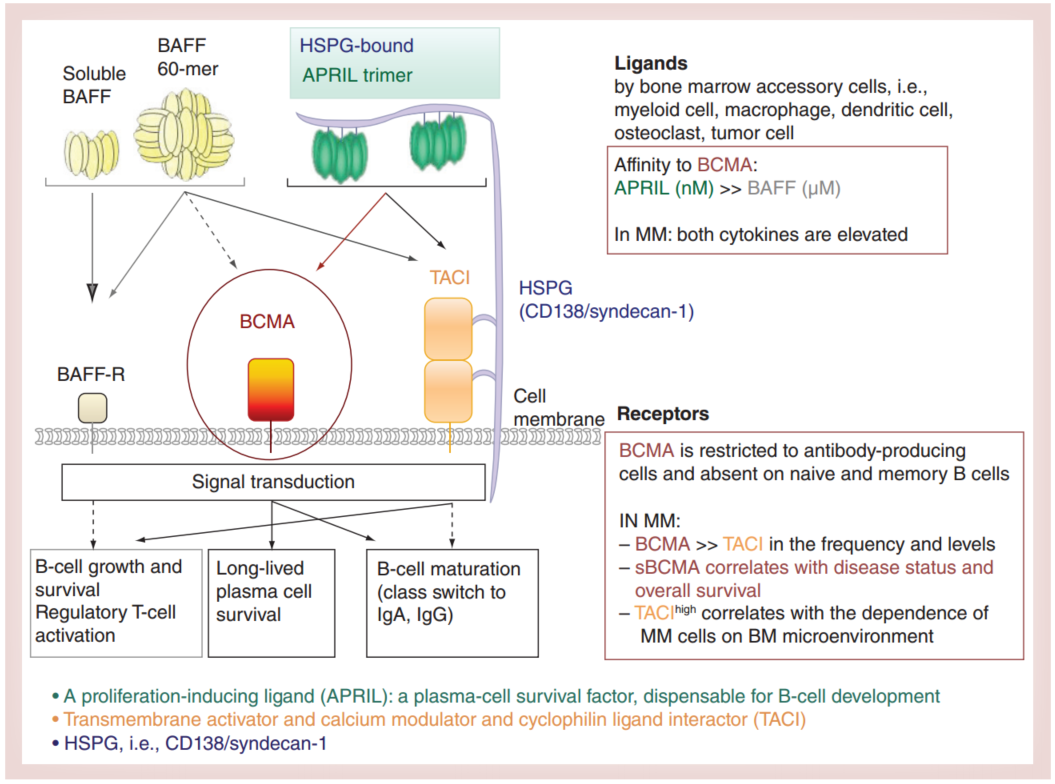
Source: https://doi.org/10.2217/imt.15.77
Figure 1: B-cell maturation antigen-induced signaling in the pathophysiology of MM. B-cell maturation antigen belongs to the TNFR superfamily and is closely related to BAFF receptor and calcium modulator and cyclophilin ligand interactor (TACI).
Compared with conventional monoclonal antibody therapy, BCMA×CD3 bispecific antibodies (bsAbs) offer a distinct advantage: they directly bridge tumor cells and T cells, endowing autologous T cells with target recognition capabilities and thereby achieving MHC-independent anti-tumor immune activation.
Mechanism of Action and Clinical Progress of BCMA×CD3 bsAbs
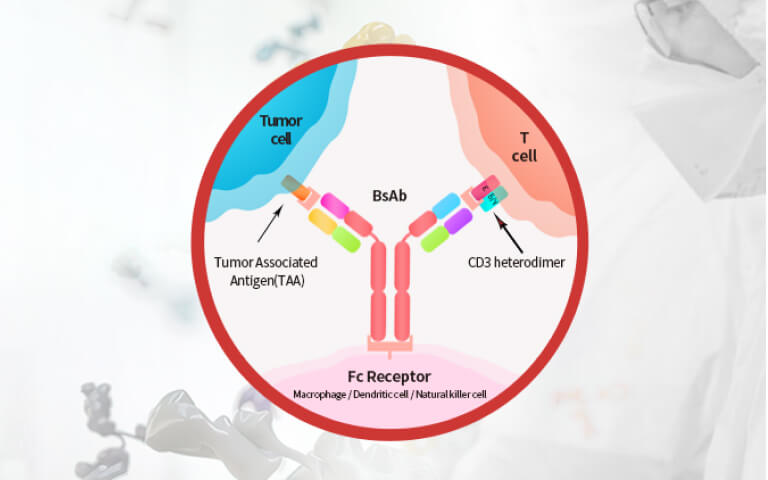
BCMA×CD3 bsAbs fall under the category of T-cell engagers (TCEs). Their design centers on two antigen-binding domains that recognize BCMA on MM cells and the CD3 complex on T cells, respectively. Upon simultaneous binding, these bsAbs facilitate the formation of an immune synapse-like structure between T cells and tumor cells, inducing T-cell activation and the release of perforin and granzymes, ultimately leading to target cell lysis. Unlike traditional immune activation mechanisms reliant on antigen presentation and TCR recognition, the CD3-mediated T-cell recruitment mechanism bypasses MHC restriction, enabling direct cytotoxic effects. This characteristic has positioned BCMA×CD3 bsAbs as a pivotal research direction for relapsed/refractory MM (RRMM)3.
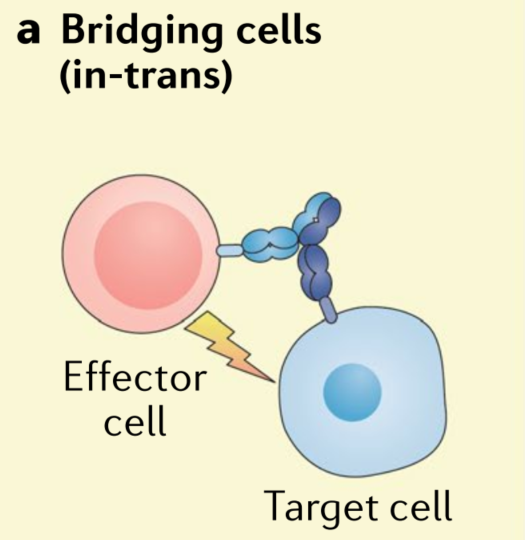
Source: https://doi.org/10.1038/s41573-019-0028-1
Figure 2: Mechanism of action of TCEs
Currently, Teclistamab (Tecvayli) and Elranatamab (Elrexfio) are the two approved BCMA×CD3 bsAbs that have demonstrated clinical validation. Based on the MajesTEC-1 and MagnetisMM-3 studies, they were approved for use in heavily pretreated RRMM, achieving objective response rates (ORR) of 60%–65%, thus laying the foundation for clinical application4,5. Recently, efforts have shifted toward earlier lines of therapy. The Phase 3 MajesTEC-9 study demonstrated that teclistamab monotherapy significantly improved PFS (HR=0.29) and OS (HR=0.60) compared to PVd/Kd in 1–3 line RRMM patients previously exposed to both drug classes6. Concurrently, the Phase 3 MagnetisMM-5 trial confirmed that elranatamab monotherapy met the pre-specified PFS superiority endpoint versus DPd (OS data were immature), further supporting the advancement of BCMA×CD3 bsAbs to earlier treatment stages7.
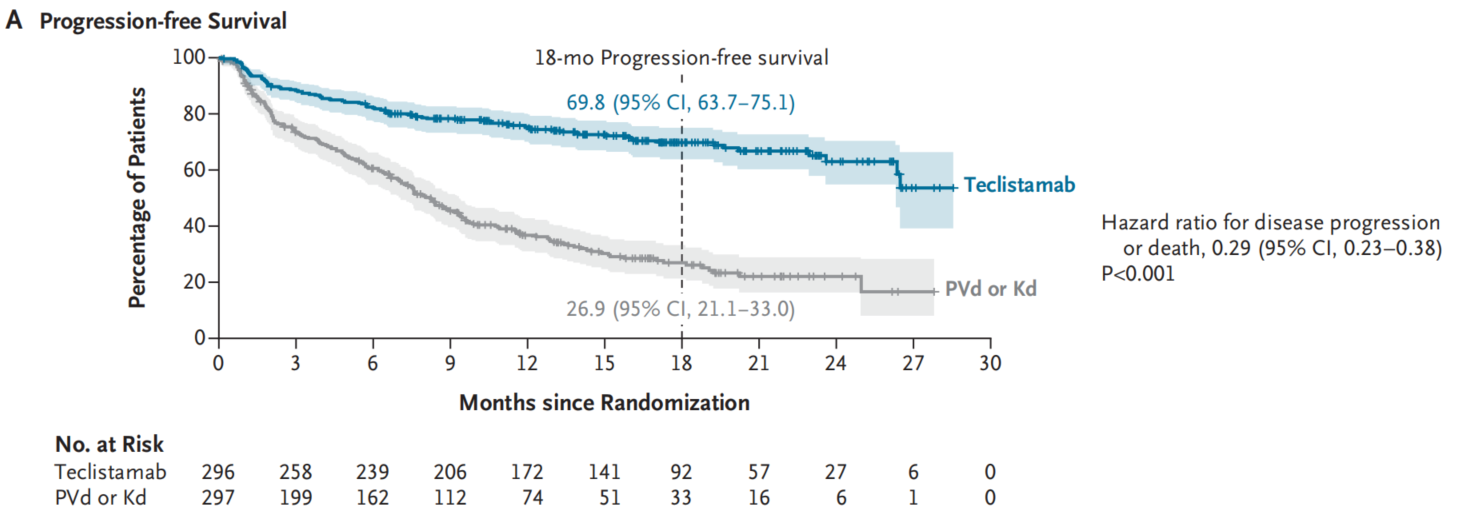
Source: https://doi.org/10.1056/NEJMoa2603870
Figure 3: PFS with teclistamab vs. PVd/Kd in phase 3 MajesTEC-9 (RRMM)
Key Challenges in BCMA×CD3 bsAb Development
Despite notable clinical breakthroughs, the therapeutic efficacy of BCMA×CD3 bsAbs remains constrained by various biological factors.
Among these, alterations in BCMA expression constitute a significant mechanism of treatment resistance. Although most MM cells express BCMA, some patients may exhibit reduced or even absent BCMA expression following targeted therapy. Studies have reported TNFRSF17 gene abnormalities, including biallelic deletions, in a subset of patients experiencing relapse after BCMA-directed therapy, potentially leading to decreased BCMA protein levels and reduced therapeutic sensitivity8.
Beyond genetic alterations, the dynamic regulation of the BCMA protein itself also impacts therapeutic efficacy. BCMA undergoes γ-secretase-mediated cleavage, releasing soluble BCMA (sBCMA) into the circulation9. This process not only reduces the density of membrane-bound BCMA but also allows circulating sBCMA to bind therapeutic molecules, thereby hindering effective engagement between the bispecific antibody and membrane-bound BCMA.
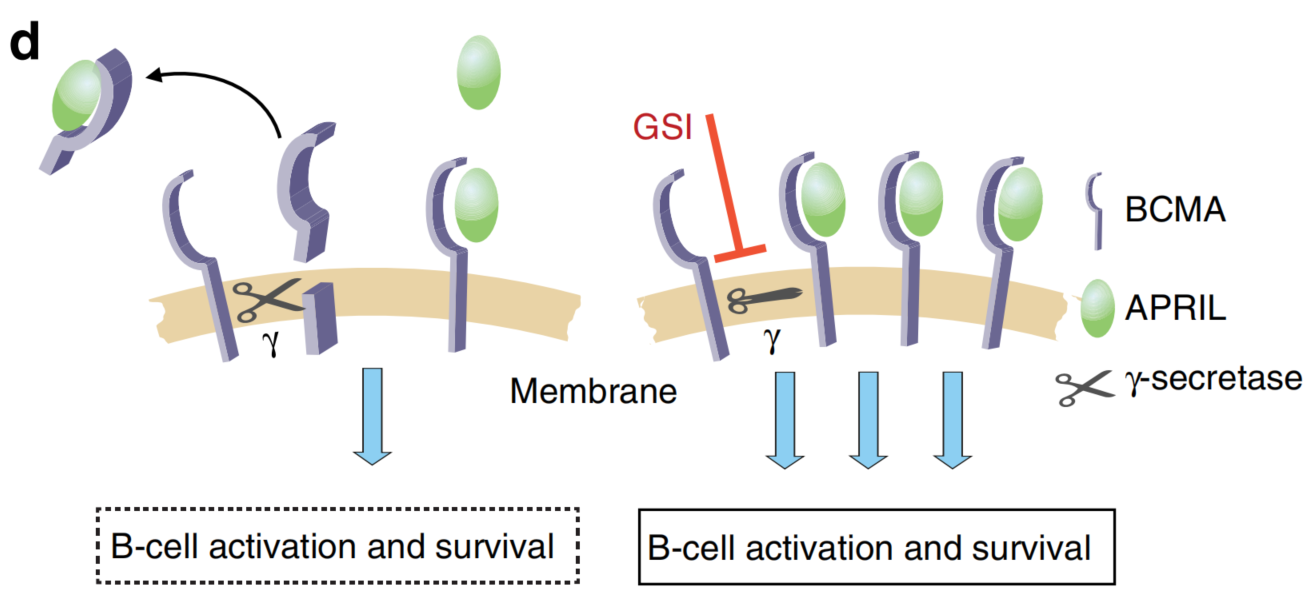
Source: https://doi.org/10.1038/ncomms8333
Figure 4: Illustration of the consequences of sBCMA shedding by γ-secretase: left: an active γ-secretase cleaves mBCMA. This reduces the number of membrane-bound BCMA molecules and releases sBCMA, which binds its ligand APRIL functioning as a decoy. Right: γ-secretase inhibitors (GSIs) result in elevated mBCMA on the surface and increased APRIL-mediated activation and survival.
Furthermore, since BCMA×CD3 bsAbs rely on T cells for efficacy, the functional status of T cells is a critical determinant of therapeutic success. Persistent immune stimulation elevates the risk of cytokine release syndrome (CRS), while prolonged antigen exposure, high tumor burden, and an immunosuppressive microenvironment may impair the sustained cytotoxic capacity of T cells. Therefore, striking a balance between enhancing T-cell activation and managing immune-related toxicities represents a major challenge in the design of next-generation TCEs.
Optimization Strategies for Next-Generation BCMA×CD3 bsAbs
In response to these challenges, current optimization strategies for BCMA×CD3 bsAbs primarily focus on antibody engineering and target selection.
First, the binding region and epitope selection for BCMA can significantly influence the functional performance of the bispecific molecule. Different epitopes may affect antigen-binding stability, antigen density requirements, and adaptability to structural variations in BCMA. Consequently, systematic binding analyses against various structural forms of BCMA are instrumental in elucidating the pharmacological characteristics of candidate molecules.
Second, modulating CD3-binding properties is a cornerstone of TCE design. Stronger CD3 binding does not necessarily equate to better efficacy; excessive T-cell activation may heighten the risk of cytokine release, whereas overly weak binding may compromise immune effector functions. Thus, optimizing CD3-binding kinetics to balance effective T-cell recruitment with safety remains a focal point in bsAb engineering.
Additionally, multi-target strategies are emerging as a vital avenue in MM immunotherapy. For instance, concurrently targeting BCMA alongside other MM-associated antigens such as GPRC5D or FcRH5 could theoretically broaden therapeutic coverage and mitigate resistance stemming from single-antigen loss10.
Conclusion
BCMA×CD3 bsAbs have established themselves as a significant pillar in MM immunotherapy. Clinical evidence underscores their potential to harness autologous T cells for anti-tumor effects; however, limitations such as antigen expression variability, BCMA shedding, and T-cell functional status continue to impede optimal therapeutic outcomes. Future advancements, driven by deeper insights into BCMA biology, refined bsAb designs, and sophisticated immunomodulatory mechanisms, coupled with optimized antigen-binding properties, modulated T-cell activation patterns, and more precise evaluation systems, are poised to propel the continued evolution of next-generation BCMA×CD3 bsAbs.
To support BCMA×CD3 bsAb research and development, ACROBiosystems provides BCMA and CD3-related recombinant proteins, as well as the BCMA&CD3E Bridging ELISA Kit, enabling standardized evaluation of candidate molecule binding, screening, and quality assessment.
FAQ
Q1: Why are BCMA×CD3 bispecific antibodies becoming an important therapeutic strategy in multiple myeloma?
A: BCMA×CD3 bispecific antibodies have emerged as a promising approach in multiple myeloma because they can redirect patients' own T cells to selectively eliminate BCMA-expressing plasma cells through an MHC-independent mechanism. Following the clinical success of Teclistamab and Elranatamab in relapsed/refractory multiple myeloma, research is now expanding toward earlier treatment lines and next-generation designs. Current development efforts focus on improving durability, reducing immune-related toxicity, overcoming antigen escape, and exploring combination or multi-target strategies to further enhance therapeutic potential.
Q2: How should researchers evaluate BCMA as a target for multiple myeloma therapeutic development?
A: BCMA target evaluation requires understanding not only expression levels but also the molecular characteristics of different BCMA forms. Membrane-bound BCMA, extracellular BCMA domains, and soluble BCMA (sBCMA) may exhibit different biological properties and can influence antibody binding, target engagement, and therapeutic response. Recombinant BCMA proteins with defined structural characteristics can support studies such as binding characterization, epitope analysis, and assay development. These evaluations help researchers better understand BCMA biology and optimize BCMA-targeted therapeutic candidates during early-stage development.
Q3: How can researchers evaluate dual-target engagement of BCMA×CD3 bispecific antibodies during drug development?
A: For BCMA×CD3 bispecific antibodies, evaluating simultaneous engagement of both targets is critical because therapeutic activity depends on effective bridging between tumor cells and T cells. Traditional single-target binding assays may not fully reflect the functional characteristics of bispecific molecules. Dual-target binding assays, such as bridging ELISA, can help characterize whether a candidate antibody maintains BCMA and CD3 binding capabilities simultaneously. These approaches provide valuable information for candidate screening, molecule optimization, and comparative evaluation of different bispecific antibody formats.
Q4: How does soluble BCMA affect BCMA-targeted therapy development?
A: Soluble BCMA generated through γ-secretase-mediated shedding can influence BCMA-targeted therapeutic strategies by reducing membrane BCMA availability and potentially acting as a decoy for therapeutic molecules. Therefore, understanding interactions between therapeutic antibodies and different BCMA forms is important during candidate evaluation. Recombinant soluble BCMA proteins can be used to investigate binding characteristics, assess potential interference effects, and support mechanism-of-action studies. These analyses help researchers better understand factors that may contribute to reduced sensitivity or resistance during BCMA-directed therapy development.
Q5: What analytical tools are commonly used for BCMA×CD3 bispecific antibody characterization?
A: Comprehensive characterization of BCMA×CD3 bispecific antibodies requires multiple analytical approaches to evaluate binding properties, target engagement, and functional activity. Biophysical methods such as SPR and BLI are commonly used to analyze antigen-antibody interactions, while ELISA-based assays can support binding evaluation and assay development. In addition, bridging ELISA provides a standardized approach to assess dual-target engagement by measuring simultaneous interaction with BCMA and CD3. High-quality recombinant BCMA and CD3 proteins are essential components for establishing reliable and reproducible evaluation workflows throughout bispecific antibody development.
References
1. Tai Y T, Anderson K C. Targeting B-cell maturation antigen in multiple myeloma[J]. Immunotherapy, 2015, 7(11): 1187-1199. https://doi.org/10.2217/imt.15.77
2. O'Connor B P, Raman V S, Erickson L D, et al. BCMA is essential for the survival of long-lived bone marrow plasma cells[J]. The Journal of experimental medicine, 2004, 199(1): 91-98. https://doi.org/10.1084/jem.20031330
3. Labrijn A F, Janmaat M L, Reichert J M, et al. Bispecific antibodies: a mechanistic review of the pipeline[J]. Nature reviews Drug discovery, 2019, 18(8): 585-608. https://doi.org/10.1038/s41573-019-0028-1
4. Moreau P, Garfall A L, van de Donk N W C J, et al. Teclistamab in relapsed or refractory multiple myeloma[J]. New England Journal of Medicine, 2022, 387(6): 495-505. https://doi.org/10.1056/NEJMoa2203478
5. Lesokhin A M, Tomasson M H, Arnulf B, et al. Elranatamab in relapsed or refractory multiple myeloma: phase 2 MagnetisMM-3 trial results[J]. Nature medicine, 2023, 29(9): 2259-2267. https://doi.org/10.1038/s41591-023-02528-9
6. Touzeau C, Mina R, Quach H, et al. Teclistamab in multiple myeloma with one to three previous lines of therapy[J]. New England Journal of Medicine, 2026. https://doi.org/10.1056/NEJMoa2603870
7. Pfizer. Pfizer's ELREXFIO significantly improves progression-free survival. https://www.pfizer.com/news/press-release/press-release-detail/pfizers-elrexfio-significantly-improves-progression-free
8. Lee H, Ahn S, Maity R, et al. Mechanisms of antigen escape from BCMA-or GPRC5D-targeted immunotherapies in multiple myeloma[J]. Nature medicine, 2023, 29(9): 2295-2306. https://doi.org/10.1038/s41591-023-02491-5
9. Laurent S A, Hoffmann F S, Kuhn P H, et al. γ-Secretase directly sheds the survival receptor BCMA from plasma cells[J]. Nature communications, 2015, 6(1): 7333. https://doi.org/10.1038/ncomms8333
10. Devasia A J, Chari A, Lancman G. Bispecific antibodies in the treatment of multiple myeloma[J]. Blood Cancer Journal, 2024, 14(1): 158. https://doi.org/10.1038/s41408-024-01139-y
 Popular ArticlesRelated RecommendationsPopular Events
 Beyond Bispecifics: How Multispecific Antibodies Are Breaking the Efficacy Ceiling2026-08-10Page Views:39
 Autoimmune Disease 3.0: Biomarkers Driving the Future of Precision Drug Development2026-08-06Page Views:44
 Application-Oriented Functional Cell Lines | Case Study Series2026-08-03Page Views:75
 AI-Assisted Bispecific Antibody Development: From Target Pairing Prediction to Experimental Validation2026-07-31Page Views:87
 The Brain's Fountain of Youth: How Modern Neuroscience Is Decoding Healthy Brain Aging2026-07-31Page Views:48





 Related Products