When AI Designs Better Proteins: A New Engineering Paradigm for Cell Therapy and Regenerative Medicine
 Publication Date:2026-06-16
 Page Views:342
How AI-Driven Protein Engineering Is Solving Key Challenges in Stem Cell Culture and Cell Therapy Manufacturing
Artificial intelligence is rapidly transforming life sciences. In 2024, the Nobel Prize in Chemistry recognized breakthroughs in AI-powered protein research, highlighting a major shift in biotechnology: protein design is moving from trial-and-error experimentation to data-driven engineering.
Today, AI models can predict protein structures, analyze sequence-function relationships, and even design proteins with improved properties. But the real question is whether these technologies can solve practical challenges in biopharmaceutical development.
At ACROBiosystems, the answer is increasingly clear. Leveraging decades of protein expression expertise and extensive experimental datasets, the company has built a closed-loop AI protein engineering platform that combines computational prediction with laboratory validation. Powered by proprietary models such as DeepExp (0.95 accuracy for mammalian protein expression prediction) and ProDeSol (0.94 accuracy for protein solubility prediction), the platform enables the rapid development of recombinant proteins with enhanced stability, activity, and manufacturability.
Three AI-optimized proteins—FGF basic (FGF2), IL-21, and Activin A—demonstrate how this approach is addressing long-standing bottlenecks in stem cell research, cell therapy, and regenerative medicine.
Why AI Matters for Protein Engineering
Recombinant proteins are essential components of modern cell and gene therapy (CGT) workflows. Growth factors and cytokines regulate cell proliferation, differentiation, survival, and function.
However, many naturally occurring proteins present challenges in manufacturing and cell culture, including:
- Poor thermal stability
- Rapid degradation
- Short half-life
- High dosage requirements
- Frequent media supplementation
Traditionally, improving these proteins required extensive mutation screening and lengthy development cycles. AI changes this process by predicting which sequence modifications are most likely to improve performance before laboratory testing begins.
The result is faster development, lower costs, and more predictable outcomes.
AI-Optimized FGF basic: Supporting Stem Cell Culture with Less Maintenance
FGF basic (FGF2) is a critical growth factor used to maintain pluripotent stem cells, including induced pluripotent stem cells (iPSCs). However, wild-type FGF2 is highly sensitive to heat and rapidly loses activity under standard culture conditions.
Because of this instability, researchers often need to replenish culture media daily, increasing labor and operational costs.
To address this issue, we developed HS-FGF2, an AI-engineered thermostable variant.
Studies showed that after 72 hours at 37°C, HS-FGF2 retained significantly higher activity and protein concentration than wild-type FGF2. In iPSC culture experiments using reduced feeding schedules, HS-FGF2 continued to support robust cell growth and maintained key pluripotency markers such as OCT4 and SOX2.
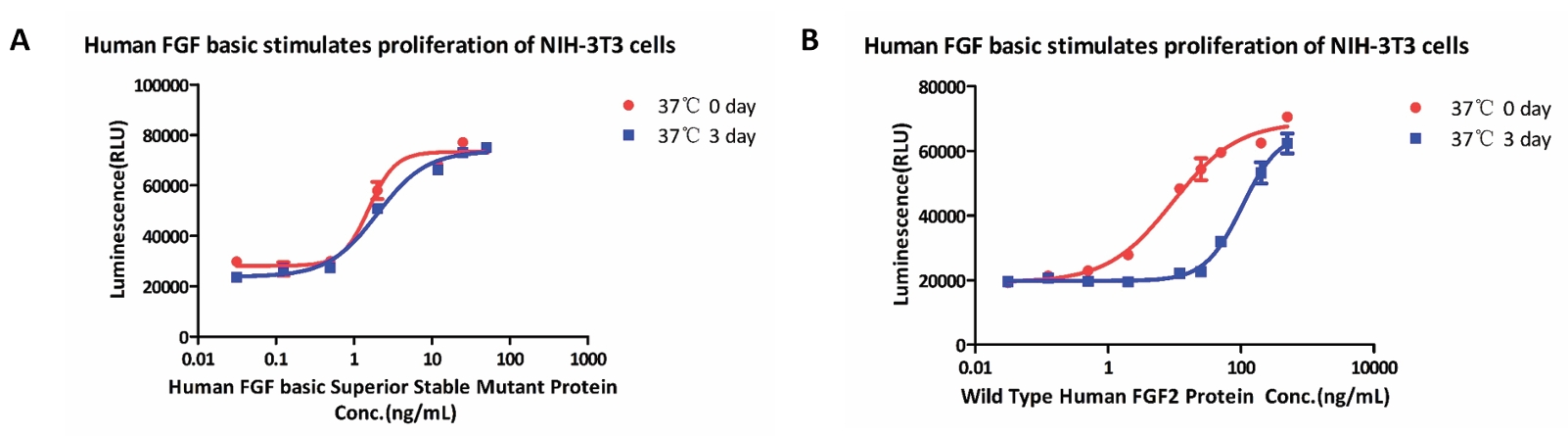
Fig1. Recombinant Human FGF basic Superior Stable Mutant Protein Induces Proliferation of NIH-3T3 Mouse Fibroblast Cells. (A) Human FGF basic Superior Stable Mutant Protein, premium grade (Cat. No. BFF-H5113) or (B) wild-type (WT) Human FGF basic Protein, premium grade (Cat. No. BFF-H4117), were either untreated or incubated in culture media at 37°C for 3 days. Following 3 days of treatment at 37°C, Recombinant Human FGF basic Superior Stable Mutant Protein retained activity comparable to the untreated heat-stable variant, demonstrating its enhanced thermal stability. In contrast, the WT Recombinant Human FGF basic Protein exhibited significant activity loss, indicating inferior thermal stability.
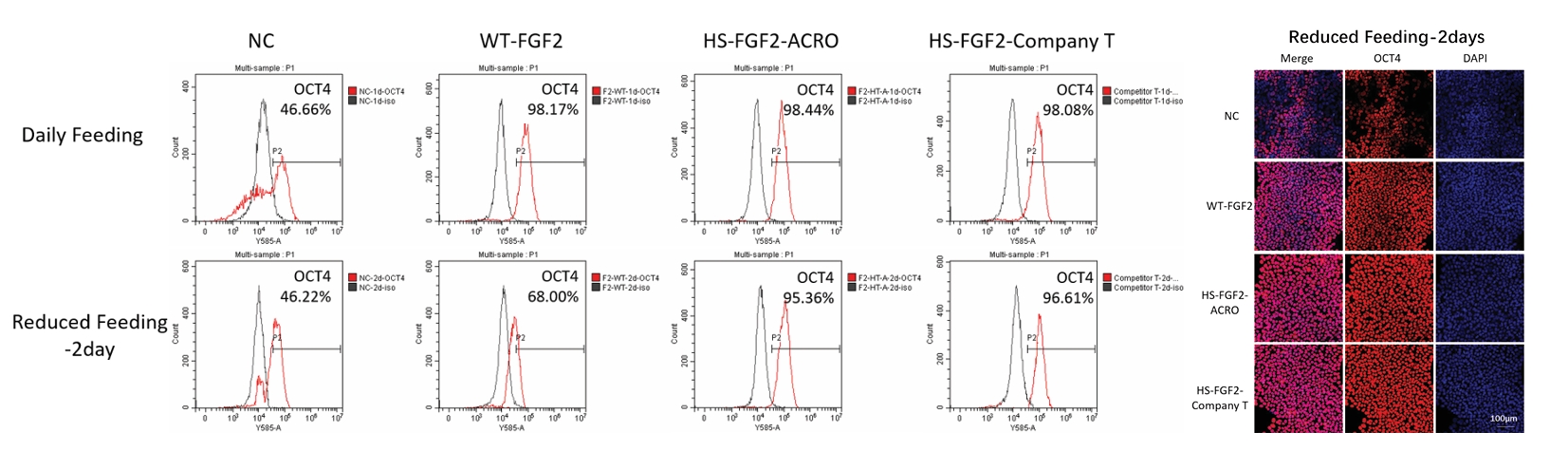
Fig2. The results indicated that the Recombinant Human Basic FGF Superior Stable Mutant Protein significantly promoted stem cell proliferation, maintaining high cell numbers even under both daily feeding and the reduced 2-day feeding regimen, with performance comparable to that of Company T. In contrast, the WT Recombinant Human Basic FGF Protein showed a marked decrease in cell numbers under the reduced 2-day feeding condition.
This improved stability allows researchers to reduce media supplementation frequency while maintaining stem cell quality, making stem cell culture more efficient and cost-effective.
AI-Enhanced IL-21: Improving Cytokine Stability for Cell Therapy Manufacturing
IL-21 is an important cytokine in cell therapy applications. It enhances NK cell activity, promotes T-cell proliferation, reduces T-cell exhaustion, and helps preserve stem-cell-like characteristics that are critical for CAR-T and TCR-T therapies.
Despite these advantages, native IL-21 has poor stability and degrades rapidly during cell culture. This often requires frequent supplementation and increases manufacturing costs.
Using its AI platform, we developed a high-stability IL-21 variant designed to overcome this limitation.
Under T-cell culture conditions at 37°C, the engineered IL-21 retained approximately 77% of its original concentration after one day, while conventional IL-21 products lost more than 90%. Even after three days, the optimized protein maintained around 70% of its initial concentration.
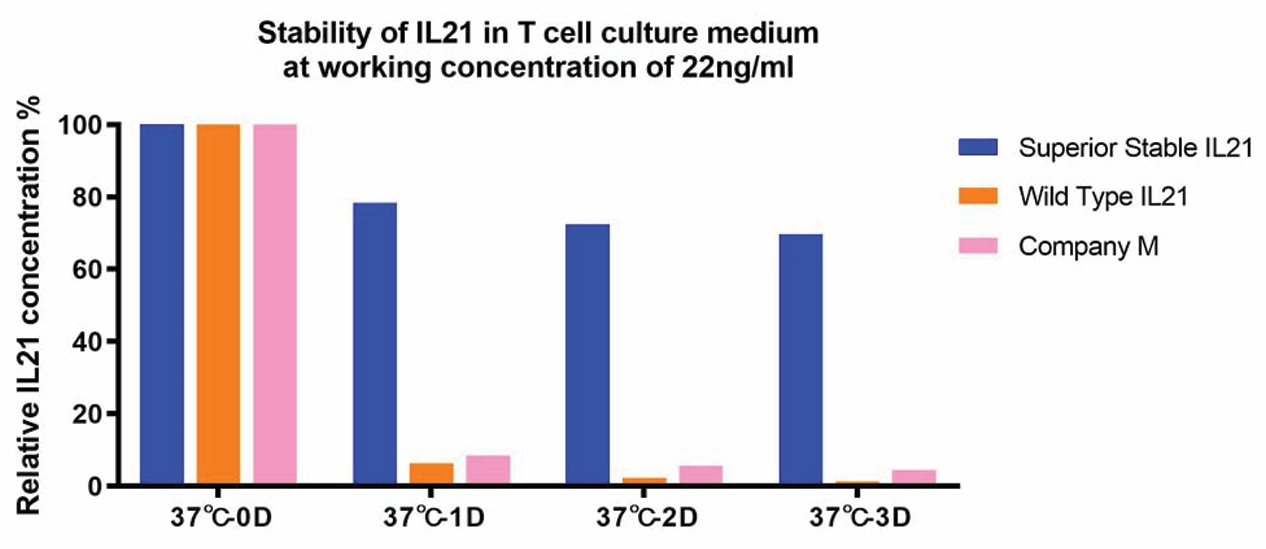
Fig 3. Recombinant Human IL-21 stability studies in the T culture medium. Human IL-21 Superior Stable Mutant Protein, premium grade (Cat. No. IL1-H5113) or wild-type (WT) Human IL-21 Protein, premium grade (Cat. No. IL1-H5114), or Company M Human IL-21 Protein were added in the T cell medium at an initial concentration of 22 ng/mL, respectively. IL-21 concentration tested with resDetect™ Human Interleukin-21 (IL-21) ELISA Kit (Cat. No. CRS-A010). Following 3 days of treatment at 37°C, Recombinant Human IL-21 Superior Stable Mutant Protein retained the concentration 70%, demonstrating its enhanced thermal stability. In contrast, the WT Recombinant Human IL-21 Protein exhibited significant concentration loss, indicating inferior thermal stability.
For cell therapy developers, this enhanced stability can reduce cytokine consumption, improve process consistency, and support more scalable manufacturing workflows.
AI-Optimized Activin A: Achieving More with Less
Activin A plays a crucial role in regenerative medicine, particularly in directing pluripotent stem cells toward definitive endoderm, an essential step in generating pancreatic cells for diabetes research and therapy.
A common challenge with conventional Activin A is the need for relatively high concentrations—often around 100 ng/mL—to achieve efficient differentiation.
To improve performance, we used AI-guided protein engineering to develop a high-activity Activin A variant.
Biological activity testing showed that the engineered protein exhibited more than twice the specific activity of the wild-type version. In iPSC differentiation studies, only 50–70 ng/mL of the AI-enhanced Activin A was needed to achieve approximately 97% definitive endoderm induction efficiency, comparable to 100 ng/mL of wild-type Activin A.
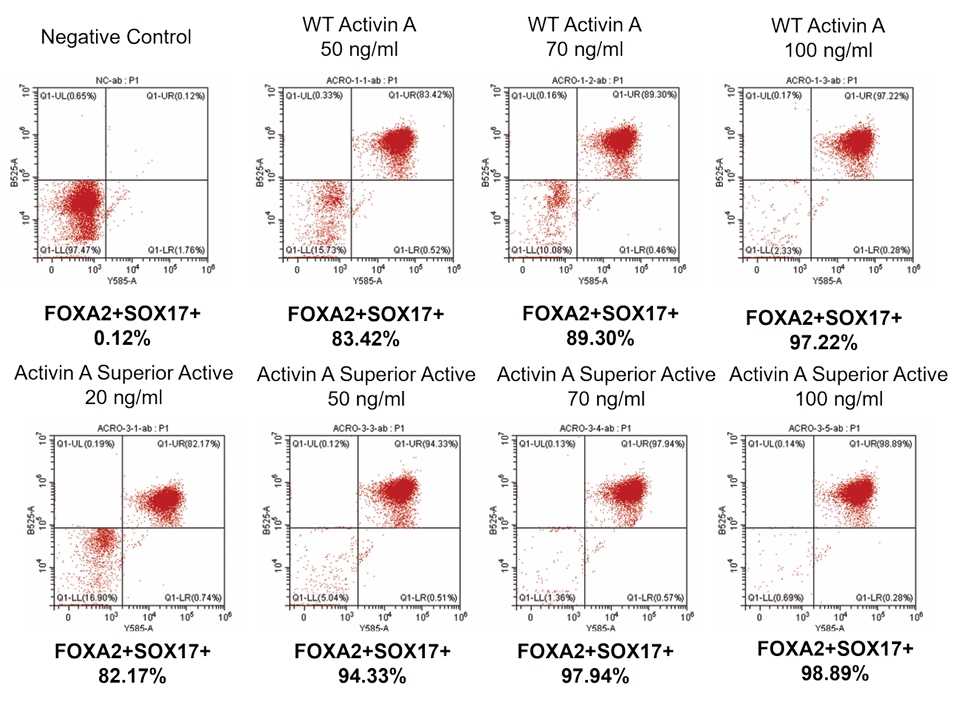
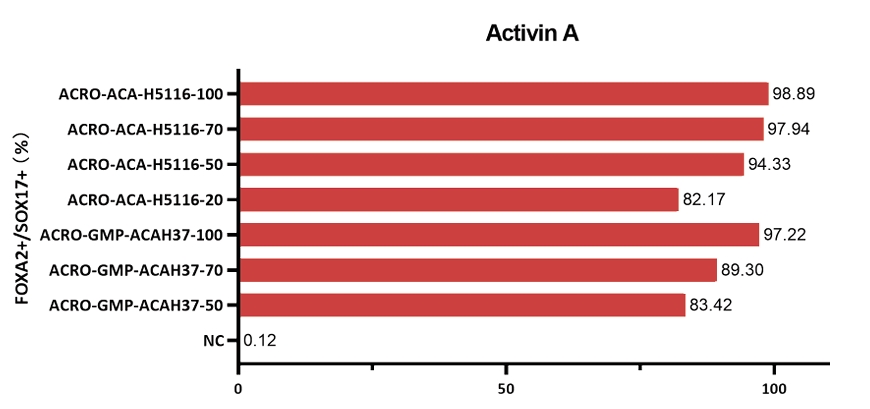
Fig4. Human Activin A Superior Active Mutant Protein, premium grade (Cat. No. ACA-H5116) could effectively induce iPSC-directed definitive endoderm differentiation with double positive expression of FOXA2+ SOX17+. It could be used at a reduced concentration of 50-70 ng/mL, achieving a similar definitive endoderm induction efficiency as at 100 ng/mL of Wild-Type GMP Activin A Protein (Cat. No. GMP-ACAH37).
By reducing dosage requirements while maintaining performance, the optimized protein helps lower reagent costs and improve process economics for regenerative medicine applications.
From Trial-and-Error to Predictive Protein Design
The development of HS-FGF2, IL-21, and Activin A highlights a broader trend in biotechnology: the transition from empirical protein engineering to predictive design.
At the center of this transformation is ACROBiosystems' closed-loop AI platform. DeepExp predicts protein expression and secretion in mammalian cells, while ProDeSol evaluates protein solubility. Experimental validation then feeds new data back into the system, continuously improving model performance.
This integration of computational and experimental workflows enables researchers to evaluate protein variants more efficiently and make data-driven design decisions.
Instead of relying on chance discoveries, protein optimization becomes a systematic and scalable engineering process.
The Future of AI in Biopharmaceutical Development
AI is no longer just a research tool—it is becoming a practical technology for improving biologics development and manufacturing.
More stable growth factors, longer-lasting cytokines, and higher-activity differentiation factors can directly improve cell therapy production, stem cell culture, and regenerative medicine workflows. These advances have the potential to reduce costs, increase manufacturing consistency, and accelerate the development of next-generation therapies.
As AI-powered protein engineering continues to evolve, the future of biologics may be defined not by what nature provides, but by what intelligent design can achieve.
FAQ
Q1: How does AI improve recombinant protein development?
A: AI analyzes large biological datasets to predict how sequence changes affect protein expression, stability, solubility, and activity. This helps researchers identify promising protein variants faster and more efficiently.
Q2: Why is protein stability important in cell therapy manufacturing?
A: Stable proteins remain active longer during cell culture, reducing supplementation frequency, lowering costs, and improving manufacturing consistency.
Q3: What benefits do AI-engineered proteins provide for stem cell and regenerative medicine applications?
A: AI-engineered proteins can offer improved stability, higher biological activity, longer half-life, and lower dosage requirements, helping researchers achieve better performance while reducing operational costs.
Resources:
 Popular ArticlesRelated RecommendationsPopular Events
 A Comprehensive Guide to Sterility Testing in Biopharmaceutical Manufacturing: From Compendial Methods to qPCR-Based Rapid Testing2026-07-27Page Views:46
 Biomarkers: Enabling Precision Assessment of Cardio-Kidney-Metabolic (CKM) Syndrome2026-07-24Page Views:74
 Converging at BIO, ACROBiosystems Connects Emerging Innovation Assets with Global Strategic Opportunities2026-07-24Page Views:70
 Payload-Specific ELISA Kits for Intact ADC Quantification in Preclinical PK Studies2026-07-22Page Views:83
 Expanding the Potential of Hematopoietic Stem Cells (HSCs): Emerging Strategies for HSCs Expansion and Clinical Manufacturing2026-07-22Page Views:71



![[Free Sample] Universal Fluorescent Anti-VHH Antibody — Precise Detection of VHH-Based CAR Expression](https://console.acrobiosystems.com/uploads/demo/2026/06/02/Anti-VHHAntibodySmallbanner.jpg)
 Related Products